
People are Messy

messyWe recently had someone write an extended angry rant in a message to our Facebook page. They were pissed. Thankfully it was a private message. Almost no one likes it when people are mad at them, but sometimes it’s going to happen. If you’re in ministry and you don’t get a few people frustrated now and then you’re doing it wrong. Jesus’ actions and comments had many people upset. We are a long way from Jesus, but it’s nice to know we sometimes get the same reactions as He did. You might be asking, “What did you do that got that person so angry that they would lash out?” We turned down his donation.

We get odd offers and requests from people all the time; frequently, they are great donations or other creative ways people would like to help us in our efforts. We would rarely turn down any contribution, but occasionally, it’s just not a “fit.” This, I believe, well-meaning gentleman offered us a large number of professionally framed paintings. These were, apparently, very valuable paintings. He suggested we could auction them off or use them as a fundraising tool to help our large orphanage. OK, seems fine so far, we always appreciate it when people have creative ways to help, and especially help with fundraising.

Once we expressed interest in the paintings, he sent a large file with pictures of the art. This is where it quickly got awkward. The paintings, although tastefully done, were twelve, over-sized, lifelike paintings of nude females. OK, this was a new one. My wife and I thought at first it might be someone pulling a joke. The idea of us displaying this extensive collection at a silent auction or some other event was just too weird to consider. It was simply not a fit for our ministry or almost any ministry that comes to mind. We, as tactfully as we could, explained our reasoning and turned down the donation. It was the right decision, but that didn’t change how offended he was that we would turn away his prized art.

The above story is one of many I could share of awkward moments in ministry. The time a team set up a full bar in our group housing area, the people who skip out on paying for their housing when they stay on site with us, the people who show up in yoga pants at the orphanage here in a conservative culture. (Yoga pants are just awkward anywhere …it’s never a good look.) So what’s the point of sharing this list of examples? People are messy, and until we embrace this fact, we don’t understand the point of grace. We are all messy.

In hosting many short term missions teams and visitors, we see a broad range of attitudes, agendas, and levels of maturity. With many of our visitors, we are in awe of their generosity and willingness to serve the many children in our care. For some of our groups, we occasionally smile, internally roll our eyes, and just move forward. The important thing is, always remember that none of us get it right. God shows us profoundly deeper grace than we could ever deserve, He loves us unconditionally in our messy condition, and that is what we are called to show to all those that we encounter.

I’m not saying we shouldn’t have standards, in the example of the paintings, it was right for us to turn them down. Jesus has standards. He flipped the money changer’s tables, He was not afraid to call out sin. Jesus also knows that the vast majority of people are wounded; they need to be shown love; they need to be shown grace. We are called to represent a higher level of grace and love than most of us ever consider. We need to show the grace to others that the Lord has shown to us.

It’s been said that one of the keys to a happy marriage is remembering that we’re no great prize ourselves. I’ve found this to be true. Personally, I don’t know how my wife puts up with me. When we encounter people that we would like to get frustrated with, it’s always good to remember that we can also be a pain sometimes. We get it wrong a lot. We all have an excess of baggage, false ideas, and bad attitudes. Sometimes we don’t know any better.

I was once sitting in my office and looked up. A new boy in our home, about ten years old, had walked over and was peeing into the planter outside my window. Once he finished, I pulled him aside and explained that this was not appropriate, that he should probably use the bathrooms. I could have gotten upset, but I realized that he had been brought to us from an impoverished area, in his world indoor plumbing was rare, he had been peeing outside his whole life. Messy, but that is all he knew.

If you’re in ministry, and if we’re believers we’re all in ministry, we need to embrace the messy people all around us. Remember, we are all messy. Sometimes we don’t want to admit it, but we all come from an impoverished place. We all have our version of peeing in other people’s planters. We need to show the same grace to others that we need ourselves.

You can help me by sharing this on Facebook or wherever you hang-out online.

If you would like to receive this blog in your e-mail each Monday, please click “follow” above.

Ministry Purgatory

pexels-photo-262391On my first trip to Ghana, I experienced a wide range of emotions and experiences. One of the many unusual experiences was being the “elder.” I’m in my fifties, in the US today this still counts as middle-aged. (Or at least I keep telling myself that.) Statistically I have about 30 years of life left. In Ghana the life expectancy is much shorter; you just don’t see a lot of older people. The youth of Ghana, out of respect, wouldn’t let me do anything physical. Every time I tried to help set up chairs, move a bag, or even carry my plate to be washed, some teen would jump in and grab whatever I was carrying. It was like they were expecting me to keel over from a heart attack, or at least fall and break a hip at any moment.


For centuries, the span of working years for a person’s life was 20, 25, maybe 30 years. People just didn’t last that long. There was a natural rhythm to life with predictable shared seasons that everyone went through. Growing into an adult, working till your late 50s or early 60s, and then either coasting a little or just dying off. There are always exceptions to this cycle, but as we all live longer, the question that isn’t discussed enough is: what does one do with this new found season at the end of our lives? There are a lot of lost people wandering around out there.

This rambling blog is a letter to a very specific crowd, but even if you aren’t part of this crowd, I can guarantee you know someone who is. In the last few years, I seem to be bumping up against a large group of men in their fifties, who’ve been involved in ministry most of their lives, who are lost in ministry purgatory. They are stuck in a weird no man’s land. Much too young to be considered an elder statesman, but too old to pull off skinny jeans, worship leader cool. Think of it as being a middle-aged junior higher, caught between two worlds and awkwardly stumbling along waiting for something to happen. Many middle-aged ministers are not even aware that they are stuck.

Whenever I comment that we all know somebody still in the pulpit who should have stepped down ten years ago, the reaction is always a knowing smirk. One, two, or three pastors always come to mind. It can be incredibly challenging to maintain enthusiasm and passion after fifteen or twenty years. At some point, for most men, the shift is subtle, slow, and dangerous. If we’re not careful, ministry can slide from a passion and the call from God, into just a job where we’re going through the motions. We suffer, the people in our ministry suffer, and no one is happy in the situation.

In the last year, I’ve had three different pastors, all in their fifties, come to spend time at our ministry for short sabbaticals. I’ve talked to many more. The patterns are all the same. A lot of life left but not sure where they are going and what they are going to be doing. They might be comfortable in their ministries, but are we meant to be just “comfortable?” Some know they are going through the motions, their church knows that they are just going through the motions, but nobody is brave enough to change. Ministry purgatory. Coasting along, waiting for something, anything, to happen.

If you’re a little uncomfortable reading this, if this rambling blog is describing you, please know you are not alone. Please find someone you trust that you can talk to, and who will be honest with you. Along with seeking counsel, I don’t have any magic answer, but I do have one word of advice: flip the table.

If what you’ve been doing isn’t working anymore, stop doing it. This can be a hard concept for some people to get. We won’t experience change doing the same things, in the same way, in the same place. If we don’t like the way the table is set, we can move a few things around, but it really won’t change anything meaningful. Sometimes we need to flip the table over, let things fly, and start over.

I know many men who have left full-time ministry, who have found real peace, and a more significant ministry, in other professions. One good friend says he’s better now that he is no longer a “professional Christian,” he prefers the amateur status. I know insurance salesmen, electricians, etc. who used to be pastors but are now in another season, ministering more now than when they did it as their profession. If we’re serving for the right reasons, we should know that the most important place to be is in God’s will. The only title that matters is Child of God.

One other suggestion: Pray about where you should be headed but do it from a different place. This is one of the many reasons short-term missions are so important. Missions are needed for the people going. Sometimes we need to get out of the space where we’re comfortable and figuratively (or literally) travel to the mountain top to hear from God. Sometimes we need to visit other ministries, missionaries, or churches to find our passion again, or find a new passion. By traveling to new places and connecting with people in new ways it can give us a new perspective. Things look different from the mountain top; we can see more, we can see the bigger picture.

People say, “Write what you know.” This week’s blog describes me. Personally, although I’m still assisting at the orphanage, I’ve found new passions to feed my soul. I’m still stumbling along, but by finding new areas to serve, and handing off most of my old responsibilities, I’m slowly moving out of purgatory into the light. I’m also encouraging the next generation to shine.

If you see yourself in anything you’ve just read, please seek counsel. If you can’t find anyone better, e-mail me, I don’t have any answers, but I can listen.

You can help me by sharing this on Facebook or wherever you hang-out online.

If you would like to receive this blog in your e-mail each Monday, please click “follow” above.

A Fear Factor

pexels-photo-471470

“Isn’t Mexico dangerous?” I can’t tell you how many times I’ve had to respond to this question over the last 20 years. I honestly believe this is more of a statement on the church in America today than any perceived danger in Mexico.

What keeps us up at night worrying seldom happens. In 2016 there were a total of 4 deaths by shark attack, 67 people died from taking selfies. If you ask a cross-section of people, fear of sharks would probably rate higher than fear of smartphones. Way too many people live lives wrapped in fear of things that don’t happen or don’t matter. American culture feeds and encourages fear: fear of the “other” political party, of terrorism, of people from different countries or cultures. Fear has become the new American way.

A few years ago, I got a phone call from a concerned father who was looking at sending his daughter with their church missions team to serve with our orphanage in Mexico. After talking to him for a while, he asked me straight out, “Can you 100% guarantee the safety of my daughter?” I think I surprised him with my answer: “Absolutely not.” I asked him if he could 100% guarantee the safety of his daughter when she was driving to school, out shopping, or even in their home. There are almost no 100% guarantees in this life other than the fact that we will all eventually die. If we lived our lives looking for 100% guarantees, we would never do anything, that’s not why we’re on this earth.

At what point did the church collectively decide that we need complete security at all times? Why are we so afraid? Jesus never taught that we should only go and share the gospel if our safety could be guaranteed, that we should only help others if there is zero risk involved. I’m not saying we should take unnecessary chances, but what should we be willing to risk to share the Gospel?

“Fear not” comes up a lot in the bible, “You need to avoid risk” not so much. If we believe we have an all-powerful, loving Father in heaven who only wants what’s best for us, why are we so afraid? If we believe that God can use ALL things for our good and the good of His kingdom, why can’t we rest in that? The Apostle Paul did some of his best work sitting in prison. Paul was completely convinced this was just a temp job; he was on his way to heaven. Paul doesn’t seem like the kind of guy who was afraid of what might happen. The world needs more Pauls.

A good friend of mine has been a missionary in a Muslim country for a few years. (for his safety I can’t share his name or what country). This guy is fearless. Recently he sent me an e-mail asking an IT question, not a big deal. He went on to share about the struggles they were having going to print with a new bible recently translated into a dialect for that area. One print shop was burned down, one printer who wanted to help was sent to prison, my friend’s family was threatened, and he was arrested and held for several days. Yikes. I would have hit the road long before this. Rather than running, giving up, or even complaining, he was rejoicing. Through the entire E-mail, you could feel the joy he was experiencing; he had found the “joy in all things” that Paul wrote about while in prison.

In 2014 my wife and I were scheduled to travel with the team of about 20 to Ghana in West Africa. We had our tickets, we had our visas, and about 30 days before we were scheduled to leave the Ebola outbreak hit West Africa. You couldn’t pick up a paper, turn on the radio, or watch the news without being told how dangerous Ebola was and how we were all going to die. Not the best time to travel to West Africa. Over the course of a few weeks, most of the team dropped out and, to be honest, we thought about it. We made a few calls to people on the ground to get accurate information and had some LONG talks. Any sane person would have canceled. (we’ve never been grouped in with sane people). We decided to go. The team was just five people, and EVERYONE said we were crazy. We went, had an incredible trip, and I believe we had a real impact at the orphanage where we were serving. West Africa is a BIG place, where we were serving we were over 1000 miles from the nearest Ebola case. At no time were we in any danger other than malaria and the other normal issue from that area.

In looking back at our trip to Ghana, I’m flooded with emotions. One of the emotions I have is regret for the many people who, out of an abundance of caution, chose not to go. They missed out on a life-changing experience. They missed out on the chance to share with others and connect with believers on the other side of the world. The enemy, once again used fear to stop ministry from taking place. How many people weren’t reached? How many lives weren’t changed by this incredible experience? The people who chose to stay back had the perception of safety, but they missed a life-altering experience.

Take a chance. Risk something. Go drill a well in Kenya, go build a house in Baja, go serve (or start) a prison ministry. Step out and see how God might use you or might use the new challenges to change you. Of the people I hang out within the missions field, I never hear them talk about the regret of taking a chance. What I see and hear are people who glow, glow with a joy that few people experience in this life. These are people who have taken and continue to take chances for God. They are not afraid of risk, they embrace it, they have found joy. The only fear we should accept in our lives is the fear of NOT doing what God is calling us to. We should be deathly afraid of wasting our time here on this earth living a mundane, “safe” existence.

To answer the question about Mexico that I started out with: Yes, Mexico CAN be dangerous in certain areas, most of it is really safe, but watch out for those selfies.

Ending Well

lani.jpgAlmost every time I speak in public, I open up by yelling at the group, “You are all going to die!” It frequently gets a nervous laugh or two and then I go on to explain that we are only on this earth a short time, it is so essential to use our time as the precious commodity that it is. Do not waste a moment. The following is the story of a man who used his last few years well.
Jack was a middle-aged man, raising two young children, who had recently moved to a smallish town in Iowa. He had newly been diagnosed with cancer but had not shared his medical condition with anybody in his new community. He was just focusing on his family and beginning the process of diagnosis and treatment.

One day, his next-door neighbor invited him to go on a short-term mission trip to serve at an orphanage in Mexico. The plan was also to help build a home for a needy family. He was not a member of the church, and his first response was, “Well, I don’t play the guitar or anything, but I am good with a hammer.” He was told he would fit in fine. In spite of everything he was going through, he decided to take a chance and tag along with the group. It was a week that would transform his next few years.

As Jack got on the plane with sixty people that he barely knew, all wearing matching t-shirts, he was not sure what to expect. They traveled about two hours south of San Diego to a small town in Mexico where they would be working. The group set up camp and got started with the construction. The team met the family they were serving, and as the team worked, they experienced the joy and bonding that only comes from serving with others in new and challenging circumstances. Jack spent the first few days quietly working alongside his newfound friends.

Midway through the week, during the evening bonfire, Jack decided to take a chance and share of his recent life struggles and his battle with cancer. The response was powerful. This group of people that he had just recently joined came up around him in every sense of the word. The team spent a great deal of time in prayer, seeking miraculous healing. We’ve all heard the phrase, “There are no atheists in foxholes.” There is something about serving alongside others under challenging circumstances that broadens our faith. Serving in missions forges deep relationships that are almost impossible to find unless we are out of our comfort zone.

Over the next few years, while cancer slowly took its toll, Jack continued to return to Baja every time the church came down. Like so many other people, these short-term mission trips became the focal point of his year, a time of joy among struggles, and transformed his life. His social media feed was filled with stories and photos of his time spent serving in Mexico. As Jack’s faith continued to grow stronger, he heard a message from God: “Builder.” This helped Jack understand how his situation was being used for the kingdom.

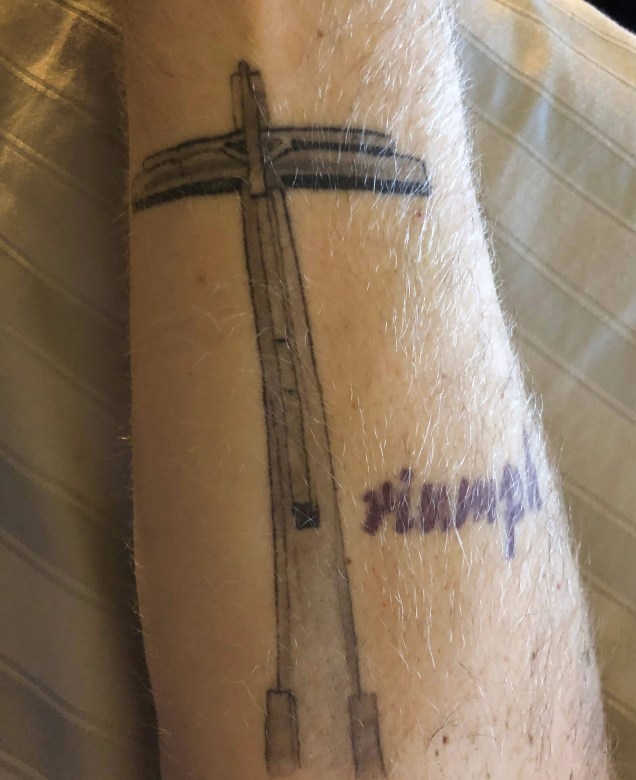
Above the orphanage in Baja where Jack served is a large, very distinct cross. It rises powerfully above a large hill and can be seen from all over the valley. This cross has been the sight of many marriage proposals, recommitments of faith, and other life-changing moments over the years. Jack ultimately had a drawing of the cross tattooed on his arm using the cross as the letter “T” for the word” triumph.” These trips had marked his life in every way possible.

triumph.jpg

As Jack’s life was winding down, one of the leaders came to the hospital in a nearby city to be there for him. As they talked, a nurse walked in that had been on one of these trips before Jack started, and knew all about it. Out of the hundreds of hospital staff who could have walked through the door, this nurse could understand Jack’s experience of faith through missions. They were able to excitedly share of their common experiences in that small town in Mexico.

One of his last requests to the mission leader was, “Make sure when my son is old enough, that he gets to Mexico. I want him to see the place that changed my life.” His other request is that his ashes be spread at the base of the cross overlooking the orphanage and the homes he helped build.

I share this story as an encouragement, an encouragement to end your life well. Jack’s story is one of the thousands of lives that are changed through short term missions and service trips every year. Most people live their lives without thinking too much about the ever approaching end; they make plans to do something “next year” until there are no more years left. Please use the weeks and years you have left in a way that matters. Don’t waste a day.

Jack passed away on May 3rd, 2019, surrounded by family. He is no longer battling cancer or the fights of this earth. He is now dancing in heaven. Close to five hundred people showed up at his memorial on a chilly Tuesday afternoon in Iowa. His ashes will be spread at the orphanage cross, as he requested.

You can help me by sharing this on Facebook or wherever you hang-out online.

If you would like to receive this blog in your e-mail each Monday, please click “follow” above.