It’s a Scary World

Screen Shot 2019-08-18 at 10.28.19 AMBulletproof backpacks are selling out right now across America as the school year is getting ready to start. This is directly due to the multiple mass shootings over the last few weeks. So many shootings took place in Chicago during one recent weekend, some hospitals stopped taking in new patients. Perceived gun violence has gotten bad enough that many other countries have issued a travel warning for people visiting the US. It is a scary time, but our reaction needs to be balanced, needs to be wise, and needs to look at the bigger picture.

The key word in that last paragraph was “perceived” gun violence. With multiple 24-hour cable news channels competing with countless news websites, it’s a race to see who can make today’s news more scary, more threatening, more personal. If you were to believe everything you see or read, you would never feel safe, anywhere. But, if you step back and look at the real numbers, the reality is, we have never been safer. Murder rates in the US have dropped by almost half since 1990. Violent crime overall has seen a considerable decrease in the last two decades (see footnote). The one cause of death that is increasing across all age groups is suicide. We, as a country, and more importantly, as a church, are doing something very wrong. We are focusing on the wrong things.

For magicians, one of the most essential tools of the trade is misdirection. A magician will create a distraction, a burst of smoke, a flourish of a scarf, etc. to draw you away from what they are actually doing. You focus on the distraction and miss the real action, the real issue at hand. The enemy is very good at this. He can get us to focus on trendy or scary things that, in the end, don’t matter. We end up worrying about things that we have no control over, or things that have no lasting importance. The enemy has used misdirection to the fullest.

We can see how the enemy uses the misdirection of fear in so many areas. “I want to give to that great charity, but I need to plan for my future.” “I want to help that homeless lady over there but what it if she takes advantage of me?” “I want to help with the Sunday school class, but I’m afraid the kids won’t like me.” Fear is a crippling factor in so many decisions, and the enemy just stands in the corner and smiles, knowing he has done his job of misdirecting us.

Living in Mexico, I spend a lot of my time discussing the perceived fears that so many people have. “Isn’t Mexico dangerous?” No, not really. Many places in the US are dangerous, but the country overall isn’t, you need to have some common sense and be aware. Mexico is the same as the US, a vast country with incredible people. Mexico does have some rough areas, just like the US. The perceived fear that so many people have about Mexico is working to prevent them from experiencing the joys and growth that come from serving in short-term missions. The enemy is smiling over in the corner.

The point of this is, fear is sin. There are many sins the church generally doesn’t like to talk about and almost embraces: gluttony, greed, etc. The one sin many churches are outright celebrating is fear. Fear sells. Fear gives a rallying point. “We need to be afraid of those people, that politician, this trend.” Fear is used very effectively by the world to sell us things and to keep us engaged. Too many churches are using this marketing approach (fear) to run their ministries. We are not of this world, and we should not embrace its techniques to reach people.

It’s the unspoken sins that sneak in and slowly destroy. Fear is a slow, insidious sin that destroys our faith. If we trust in God and know that all things work together for good, why are we so afraid? If we believe we have an all-powerful Father in heaven who only wants great things for his children, why can’t we trust Him?

Every time we say “I’m afraid,” what we’re actually saying is, “I don’t trust God. God isn’t big enough to know what’s best. God doesn’t love me enough to take care of me.” “Fear not” is a significant theme in both the old and new testament. Why do we glaze over these verses like they don’t apply to us? The story of David and Goliath we’ve read since childhood is all about fear versus trusting in God. The enemy wants us to be afraid, maybe we should avoid that.

Go back up to the picture at the top; you probably wondered why the guy has gunk in his teeth, but you didn’t notice the six fingers on her hand. Misdirection works. Don’t let the enemy misdirect you and lead you away from what you need to see and do. Fear not.

Footnote:  www.pewresearch.org/facts-about-crime-in-the-u-s/

You can help me by sharing this on Facebook or wherever you hang-out online.

If you would like to receive this blog in your e-mail each Monday, please click “follow” above.

Where Do Babies Come From?

pexels-photo-2760338Part of the job when running a large orphanage is answering a LOT of questions from people you meet. There is something about orphan care that brings out the curiosity in just about anyone. People hear stories or make assumptions about this type of work all the time. Don’t you get government funding? (No) Do you handle a lot of adoptions? (No) Do you ever get threatened by family members? (No) Can you use my old clothing? (Maybe) The questions seem to come from anyone we meet. We get it; there is something about orphan care that affects people at a different level than your average job. No offense to accountants or plumbers, but these jobs, while needed, don’t inspire deep, life-altering questions too often. 

There’s a reason almost every superhero is an orphan: Batman, Superman, Spiderman, etc. There is just something about the story of a child alone in the world that brings up emotions and reactions in anyone. It’s part of our collective human experience to be drawn to the orphan story.

One of the top five questions we get is, “Where do the children come from?” I sometimes respond with, “Soooo, you’re asking me where babies come from?” This usually gets an awkward laugh. I find a little humor helps to soften the harsh realities of what we do. The question of why children wind up in orphanages is never pleasant. This is complicated work. When you’re dealing with young children, often coming from traumatic circumstances, the realities are not what most people want to think about.

The question of why children come to an orphanage is, like any social work, profoundly complicated. Every case is different and tragic. The family unit is the ideal and ordained place for a child to be. No child belongs in a system. Unfortunately, we live in a deeply broken world made up of people who are frequently struggling with complicated and deep issues. Some people, unfortunately, should never have children or should never be let near children. With our home, most of our children are referred to us by Mexico’s version of Child Protective Service (DIF). Why they are brought to our home varies wildly.

The first assumption from people is that the many children in our home are orphans. The truth is, actual orphans, where both parents have died and there is no extended family to step in, are pretty rare. Unless you’re dealing with AIDS, war, or some catastrophic natural event, the odds of both parents of a young child dying are pretty slim. Children wind up in orphanages for much darker and varied reasons. I know that sounds odd: darker than dead parents? The truth is, this is a dark and sad world in which we live. The short answer to why children are in orphanages is: sin.

Parents unavailable to care for a child is one reason children are placed in orphanages or foster care. They might care about their child but are dealing with their own issues: prison, re-hab, etc. Often they can barely care for themselves, much less small children who need loving attention. They might be released from prison or overcome their addictions, but it takes time if it happens at all. These children need a safe place to wait and see if their parents ever recover.

Some children wind up in orphanages due to severe neglect or abuse. After twenty-five years in this line of work, you can imagine the nightmarish stories we’ve seen. Acts of neglect and abuse cut across all social and economic situations. There are just a lot of profoundly messed up people in this world. Unfortunately, broken people frequently take out their issue on the most vulnerable members of society, children. Many children wind up in orphanages coming directly from some horrific situations.

Oddly, the parents of children in our home I appreciate most are the ones who abandon their children. Dropping off infants in hospitals or other areas, or bringing older children directly to organizations like ours, people sometimes just leave their children. At least in the majority of cases, these people are self-aware enough to know that they would make horrible parents or can not give their child what they need. In most cases, they want what is best for their child, and they know they cannot provide that.

Some people assume that children wind up in orphanages due to financial hardship. In our experience, this is actually pretty rare. If we do believe it’s a straight economic issue, we will do everything in our power to keep those families together.

As you can see, why children come to an orphanage is a complicated question. The only constant is that it should never happen. No child belongs in a system or institution. Unfortunately, in every country in the world, children are born into circumstances that require long-term care where a family is not in the picture. Orphans are near to the heart of God, and we as a church and a society need to do better when it comes to orphan care.

Everyone knows where babies come from. The complicated question is, what do you do with them once they arrive?

You can help me by sharing this on Facebook or wherever you hang-out online.

If you would like to receive this blog in your e-mail each Monday, please click “follow” above.

Just Say No

pexels-photo-271897A few years ago, I was at a leadership conference and heard a comment that floored me. “Jesus didn’t help everyone.” “But, but, but…He was JESUS, of course He helped everyone!” I screamed silently to myself. But it was pointed out that Jesus didn’t heal everyone, feed everyone, or fix every injustice He encountered. He walked past many people who could have used His help. He found balance; He helped who He could. The most important thing is, He did the will of His Father in Heaven.
This is a very specific blog, written to those who can’t say “no” when they see a need. Most people don’t have any problem saying no and use the word way more than they should. They are skilled at avoiding those around them who need help. This is written to the people in full-time ministry who cannot find balance, who cannot say “no” to the countless needs they observe. Stop. Stop now. If you’re following Jesus’ example is important, remember, He learned to say “no” when it was needed. By not finding the balance, we are doing damage to ourselves, and to those around us. We cannot help everyone.

We all know people who are working long hours, without taking a day off, and want everything to be perfect. It’s exhausting to be around them. They are working “for the ministry” or “for the Lord,” but their relationships are suffering, their health is suffering, their marriages suffer, and they can suck the joy out of most situations. The joy that comes from serving with a peaceful heart is lost in the battle. I can write about this from first-hand experience. I used to be that guy.

I work alongside someone right now that’s in that place, he does excellent work, but anyone can see him heading directly at a brick wall by not taking time to breathe. We had one volunteer in our orphanage, who was a CRAZY perfectionist. She would work for weeks, 18 hours a day, only to collapse and be useless for a week or two while she recovered. That is not how life should be.

Early on, about six months after my wife and I moved in to help run the orphanage, we had a visitor. Agnes, the lady who ran the home for decades, was coming by. We had never met Agnes, and I was terrified. Everything we did was held up against her work. Every day I heard, “Well, Agnes never did it that way.” She was coming in to check on us and our work. Yikes. My fears turned out to be unfounded. She was the perfect example of grace and support. She did have one piece of very direct advice, “Get out.” she told us in no uncertain terms. She said it was OK to take time away, to recharge, to put our marriage first. That there would never be a perfect day; there would always be emergencies; we needed to practice self-care. We needed to learn to say, “No.”

There are many orphanages in our area of Mexico run by people who cannot say “No.” They take in any child who needs help, which sounds nice, but if they only have resources to help and care for 30 children, they are not doing a good job if they are caring for 80 children. Everyone suffers; no one is helped. Saying “no” is not in them, and people suffer. 

Jesus found balance. He spent time alone. The apostles often found Him alone praying, alone in the desert, asleep in the boat, early in the morning spending time with His Father. Even at the last supper, He was teaching, but it was also time breaking bread and hanging out with those He was closest to. He spent time with friends.

It took me many years of long hours to learn the balance; I’m still figuring it out. I’ve seen too many people in ministry burn out when they can’t find the time to rest, to recharge, to breath. When our crew started taking a dedicated day off each week, I flinched a little. “But that’s not what ministry is about!” I thought to myself. I now see the wisdom in it.

My favorite night of the week is a home fellowship that we host made up of full-time missionaries and ministry leaders in our area. We don’t DO anything other than eat and hangout. No agenda, no pressure, just vast quantities of carbs shared among friends. The official name of this gathering is M.E.A.T. Night. (Missionaries Eating And Talking). Not spiritual by any standard definition, no bible study, no deep prayer, just people hanging out. I feel on many levels it’s some of the best ministry we do.

If you’re in ministry full time, you want to follow the example Jesus sets for ministry. He knew when to say no; He spent time alone. He spent time with friends. He knew how to find balance; He did the will of His Father. You have permission to take a day off. As in all things, follow the example of Jesus.

You can help me by sharing this on Facebook or wherever you hang-out online.

If you would like to receive this blog in your e-mail each Monday, please click “follow” above.

Random Affection in Orphanages

orphanchild

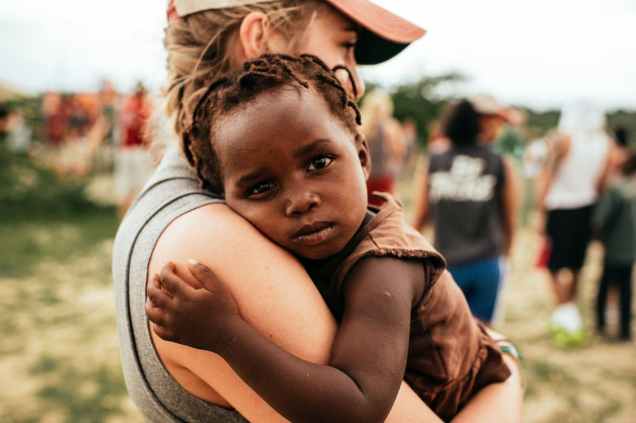
One of the realities of orphan care is that everybody considers themselves an authority. Just like parenting styles in a traditional family, opinions on orphanage styles tend to shift frequently on how to “do it better.” These opinions change depending on what’s trending in any given year. In the last few years, there’s been a lot written on the potentially harmful effects of too many visitors on the children in an orphanage. After working full-time in orphan care for over 25 years, I could not disagree more.

The current theory states that having visitors in orphanages on a regular basis leads to attachment disorder problems later in life because the children are bonding with random, different strangers every week. In my experience, children raised in dysfunctional orphanages will have a wide range of emotional problems later in life, just as anyone raised in a dysfunctional family. If the children are bonding with random strangers every week, this means there are many underlying problems in the orphanage already. The bonding issue is just a symptom.

Let’s look at two scenarios:

Scenario 1) In our orphanage, we have more visitors than almost any orphanage in the world. In a typical year, we host around 280 groups and have other “drop by” visitors on a regular basis. We enjoy hosting the groups, we enjoy leading them into service and short-term missions, and we believe when well-managed, these visits are healthy for everyone. So how do we avoid the random attachment? First, we have reliable, consistent staff and plenty of them. Our children do bond with adults, but it’s with consistent adults in their lives. We have an excellent child to staff ratios (about 4 to 1) and minimal staff turnover. Second, although we have a tremendous amount of visitors we intentionally limit the time they have with our children. We limit the visiting hours with our infants and toddlers, but more importantly, we encourage all of our groups to stay with us but travel out daily to serve in the community or with other ministries in the area. Our children see the “visitors” as just that, visitors dropping by to see our family. The majority of children who grow up in our home go on to have healthy marriages and families. In spite of all the visitors, most of our children turn out okay.

Scenario 2) In an orphanage that is understaffed and overcrowded, the children will seek random affection from any visitor that comes through. You can see this when you first arrive in a home. If children above the age of five are running over to hang on you and ask to be held, they’re starved for affection. A normal, well-adjusted 10-year-old doesn’t just walk up to a random stranger seeking physical contact; this is a symptom of much deeper issues in an orphanage. The children are not bonding with the staff and are severely lacking affection. They WILL have problems bonding later in life without a tremendous amount of healing. Most children raised in poorly run orphanages eventually produce children that wind up back in the system and have a tough time with healthy relationships. (Just like too many children from foster care.)

So how does someone, or a mission team, respond to these two examples? If you’re dealing with a healthy orphanage, one that has well-adjusted kids and is well run, continue to back their work. Find out what their needs are and keep supporting a healthy situation. Help them to continue to provide what their children need.

If you’re working with a home that’s not so great, it gets complicated quickly. A few years ago, we were helping an orphanage near us that was a pit. The orphanage was overcrowded, filthy, and the children were deeply starved for affection. We were praying for a change in that home but did not have a lot of hope with the current management. With eyes wide open to the situation, we continued to send teams to that orphanage on day trips. The teams would clean, prepare meals, and spend time with the children in need of attention. I would encourage the teams by telling them, “This home will probably never change, but for one memorable day, those children can know someone cares about them.” With these “hit and run” trips, it was far from perfect, but it was giving these children something.

Everyone knows that eating junk food all the time makes for a lousy diet. In a perfect world, we would all have access to regular, healthy, balanced meals. If someone is starving, the standards drop, and junk food is better than no food. If a child was starving, and all we had to give them was a candy bar, that candy bar would mean the world to them. Long term, you would hope that the situation would change, but I don’t think anyone would withhold the candy bar because it’s not the ideal, healthy option. “Junk food” affection, when it’s the only real option, is better than no affection at all. People not visiting an orphanage to avoid this attachment and bonding problem does not suddenly make healthy bonding occur if the orphanage is understaffed and poorly run.

Caring for orphaned and abandoned children is obviously a complicated issue. It’s an issue that has been around for thousands of years and will not be going away soon. To believe that not visiting orphanages will help the situation is like saying not providing services and meals to homeless will end the homeless situation across America. I wish orphanages didn’t exist, but if they have to exist, they should be great, and they need our help.

Please, continue to follow the fundamental teaching of our Christian faith in regards to orphan care:

Religion that God our Father accepts as pure and faultless is this: to look after orphans and widows in their distress and to keep oneself from being polluted by the world. James 1:27

You can help me by sharing this on Facebook or wherever you hang-out online.

If you would like to receive this blog in your e-mail each Monday, please click “follow” above.