But What Did You DO on Your Missions Trip?

housebuild1.jpgI recently had an interesting conversation with a visitor to our orphanage. She was on a mission trip to spend some time with our kids, learn about our ministry, and just see what missions was all about. She shared that several people from her church were disappointed that she wasn’t working on a “project.” She wasn’t building a house for a family; she wasn’t drilling a well, she was just being “present”, seeking God, and seeking how she could bless those she encountered. I told her she had the right idea. Jesus never built a house, never painted a wall, never passed out clothing. Jesus did encourage people, occasionally broke bread with people, He asked people a lot of questions. He was (and is) present in their lives. It’s a good model.

Most people, when planning a missions trip focus on a “project.” “We’re going to build a school.” “We’re going to organize an outreach/concert.” “We’re painting a local church.” There is nothing wrong with projects. Missions projects change communities, impact families, and help on the ground ministries, and missionaries do the long term work. But, when it’s all said and done, it’s just bricks, wood, and paint. What matters is the people, the growth, and the understanding that should flow from ministry.

One ministry that operates from our orphanage is a home building program. We coordinate homes built and funded by visiting mission teams for underprivileged families in our area. The groups receive a picture and information on the families well in advance of their trip so they can see who they’re serving and be praying for the family. We’ve already screened the families to make sure the need is real, and it will be a positive impact. Once the team arrives, they meet the family, and they work alongside them to build the home. The critical point of this is, the family is what matters, the house is irrelevant.

You just read that last line and might have thought, “The house is irrelevant? The house is the whole point!” The problem is the house isn’t the whole point. The house is good, it’s a huge blessing for the receiving family, but the project needs to be about the people and the relationships built between them.

We had one home building group who came for years, and they were VERY focused. They planned and coordinated the construction like a military invasion: organized, timed perfectly, well funded, and high quality. The problem was, it was ALL about the house. The family receiving the house was irrelevant. The team was kind of stressed the whole time under their own self-imposed pressure. The house was completed, there were some great photos for social media, but in the end, it felt empty. The house was built FOR the family, and not WITH the family.

Our best home builds are rarely the “nicest” house. The best home builds are the ones where long-term reciprocal relationships are formed; where the family and team spend real time together eating, working, and sharing together. We have teams that stay in touch with the families and come back months and years later for quinceañeras, weddings, and other family events. Most families receiving homes will prepare meals, help out, and bring what they can to the relationship. It’s people growing together; it’s not one group just giving shelter to another.

Missions and ministry need to be about the relationships. This seems like an obvious statement, but it’s so easy to go off track and focus on something important, and not what is MOST important. How many worship leaders make sure the performance is perfect but worshiping God is kind of an add-on? How many weddings focus on the party and details, but the actual commitment becomes just another detail after the cake, dress, and decorations are organized? It’s so easy, and way too common, to be distracted by details and miss the bigger, most important picture.

Do we actively listen and seek to understand others? Do we attempt to have a positive influence on other’s lives? Do we respect those around us and seek to not only share our perceived wisdom but actively look for what we can learn from those around us? Are we seeking to understand other people, cultures, and beliefs? It’s not about what we can do for others; it’s about what we can do together.

When on a mission trip, or in any ministry really, it’s so important to remain focused on what’s important. Jesus was, and is, about relationships, spending time with people, and seeking to grow closer to the people He met. The next time someone asks you what you did on your mission trip, tell them, “Not much, I just followed Jesus’ example.”

You can help me by sharing this on Facebook or wherever you hang-out online.

If you would like to receive this blog in your e-mail each Monday, please click “follow” above.


The Call to Inaction

pexels-photo-374044

In the classic book by CS Lewis, The Screwtape Letters, a senior demon (Screwtape) is writing letters to his nephew explaining how to break down Christians and the church. It’s obviously fiction, but the letters Screwtape writes point to so many of the subtle attacks the enemy uses to chip away at our faith. The battles discussed are eternal, the book is old (written during World War 2), but the idea of a slow wearing down of the faithful is very real today. We are in the midst of this battle.

Society today, and sadly, the church, seems to be embracing practices and attitudes in some areas that go directly against the teachings of Jesus. A slow and subtle shift from Biblical principles to a world view might be taking place. The enemy is doing a good job; he has a lot of experience with this. The following examples are going to piss some people off as these are hot-button issues. I could be wrong on some of this, but hey, it’s not the first time I’ve been wrong. Comment or e-mail if you want to fight with and/or correct me. I enjoy a good discussion on this stuff.

“Don’t help the poor as it creates dependency.” This can be read and heard in many circles today, and although at some levels it makes sense, this goes counter to some key teachings of Jesus. The wisdom of this world almost always goes counter to the things of God, but the things of God work. When the rich young ruler asked what he needed to do, he was told, “Sell what you have and give it to the poor.” It was not taught with a footnote, “Only give to them if they are deserving, be careful or they might ask for more help, and ask the poor why they got in that position.” When the Good Samaritan helped the man by the side of the road, there was no warning about unintended consequences; it was just a pure servant’s heart in action. Help the poor to move out of their situation in a healthy way, give them what they need in their situation. Biblically, we are commanded to help. When someone asks for our jacket, we’re told to offer our shirt also. It’s better to be taken advantage of one hundred times than turn away someone honestly in need.

“Don’t go on mission trips, it’s a waste of money, and it’s toxic.” There are a couple of popular books out that really seem to push this, and they tend to get a lot of attention. The problem is, although mission trips CAN cause harm, they don’t HAVE to. Most of what we do can cause damage when done in the wrong way. Weight gain, type 2 diabetes, high blood pressure, etc., are all caused by poor eating habits, but I don’t think anyone would advocate the idea of giving up eating. When done in the right way, not only is eating healthy for us, it’s essential for us to survive. People get injured every day working out or participating in sports; this does not mean we should never leave the couch. Almost anything we do, when done in the wrong way or to an extreme, is harmful. Obedience, even if it’s risky, is always the best way to go.

Is missions a waste of money? It can be, but there are worse ways that we waste money every day. The funds spent on service projects and backing local ministries, when done correctly, are world changing. Also, the money spent locally by visiting groups on short-term trips, aside from service projects, changes lives. In our small town the mission teams that come through keep the restaurants, minimarts, hardware stores, and other small businesses open. Short-term missions are the economic engine that keeps our town alive. No one in this area considers this a waste of money. Has a dependence on groups been established in our town? Absolutely, just like a restaurant is dependent on customers, a church is dependent on its members, or any situation where people depend on each other. Dependency depends on the situation. We are all dependant on someone or something. We all need to depend on God more.

“Be afraid.” At some point in the last few years, the church shifted from trusting in God to being afraid of doing anything that might be risky or offend someone. The phrase “fear not” is a common theme throughout the Bible, yet the church today frequently uses fear to influence people, not unlike most politicians. Paul gives us a great example of living fearlessly for the Gospel. At no point are we taught only to preach the Gospel if it’s prudent, to only serve if our safety can be guaranteed. We are not told to be afraid of foreigners, unbelievers, or the future. If we actually believe we serve an all-powerful God, and we are only visiting here anyway, what are we so afraid of?

The common thread in all of this is the call to inaction. “Don’t help.” “Don’t go.” “Don’t take a risk.” “Don’t do anything.” The problem is, ours is a faith of action, “Go into all the world.” “Give what you have to the poor.” “Visit widows and orphans.” The inaction of the bulk of the church is not working. In the US, churches are shrinking at a rapid pace. Young adults are leaving the church in record numbers. The church is doing something wrong. Maybe the problem is, as a whole, the church doesn’t do as much as it used to. The call to in-action has been heeded. Screwtape would be pleased.


If you would like to receive this blog in your e-mail each Monday, please click “follow” above.

You can help me by sharing this on Facebook or wherever you hang-out online.

The Missing Alleys of New York

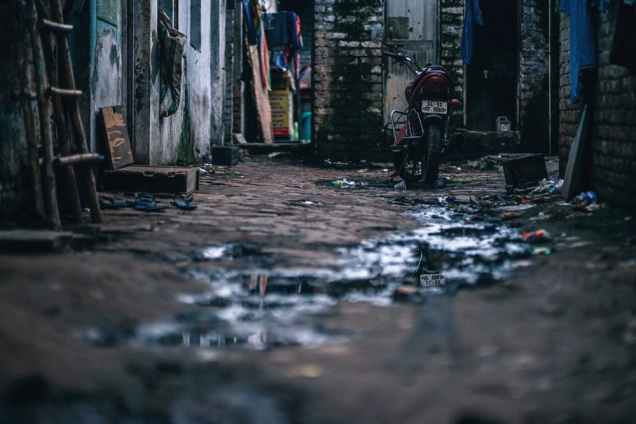
pexels-photo-917372Whenever we see New York in movies or TV shows, the plot winds up in an alley. Drug deals, dead bodies, etc., always wind up in an alley. Law and Order spent a LOT of time in New York alleys. There is just one problem with this: New York doesn’t really have alleys, it was designed in such a way as to not need them. But every director wants an alley to create that dark, dramatic scene. So the ONE alley in New York that works for filming is in everything. From this single alley, most people assume New York is just a weird maze of back alleys of red brick, fire-escapes, and overflowing trashcans. Our assumptions are frequently wrong.

Many beliefs are just assumed to be true. “Smoothies are always healthy.” (not true) “A college degree will guarantee your future.” (not true) “The more money you pay for an item, the higher the quality.” (not always true) There are countless “beliefs” that we pick up every day that are not necessarily true. It’s good to question our assumptions, to confirm or change our beliefs, to learn what reality is. This applies to missions, but also at every level of our lives.

I once hosted an orphanage director from Kenya on a visit to our orphanage in Mexico. Driving through Baja Mexico, he was amazed at the new high-rises, beautiful homes, and modern highways. He was surprised to see Costco, Walmart, McDonald’s and many other major retail chains. From everything he knew to be true, he thought Mexico was all adobe huts and dusty roads like he had seen in The Three Amigos and every other movie cliche about Mexico. He was also pleasantly surprised to find out how safe Mexico is, compared to what he assumed. To be honest, when I visited Africa I was kind of amazed at how modern the capital of Ghana was. “Hey, look, KFC!” “Is that a mall?” We all have assumptions or preconceived ideas about the world. Frequently we’re wrong.

If we’re going to be effective in short-term missions, or any area of life, we need to be working from accurate information. When we travel to foreign countries, we need to do our research, so we know what to expect, what the needs are, and how to make a positive impact. We also need accurate details, so we don’t create unintentional harm.

So how do we learn what reality is when we’re planning a mission trip? We can’t know everything about where we are going, but here are a few tips to be as prepared as possible.

1) Talk to people who’ve been where you’re going. Ask them about surprises they had, changes they had to make mid-trip or things they would do differently. Anyone who goes on a trip learns something, we can learn so much from the mistakes and profound experiences of the countless people who have gone before us. You don’t have to re-invent the wheel.

2) Talk to your host or host organization from your destination, and really listen to them. Odds are, your host has helped facilitate many groups and teams before yours, and has seen the best and worst of what well-meaning people try to do. “Yes, dress appropriately.” “No, you don’t need to worry about translation.” “Yes, you are welcome to attend this church service or outreach, but this is what would be culturally helpful.” If your host is serious about directing you in the right direction, they can be a huge help. It’s also SO important to know what the actual needs are, and how to address them. Whether you’re going to spread the Gospel, help with construction, or something else, you need to know what the real needs are and how you can fit in with goals of the local church.

3) Read about your destination from a wide range of knowledgable sources, but read through everything with a filter of what you’ve heard from actual people with experience. Years ago, I was all set to visit Ghana in West Africa just as an Ebola outbreak spiked. EVERYONE here in the US said I should cancel; all the news media made it sound like the world was ending. I called people in Ghana, and their response was, “What Ebola outbreak? That’s two countries away.” If we had just listened to the accepted wisdom and stayed home, we would have missed out on a life-changing, impactful trip.

So much of what we think we know might be a little “off.” We all view the world through our filters or the filters of those around us. Take a mission trip, but go with as few preconceived ideas as you can. By going with your eyes open to whatever God has to show you, you might be surprised by the people, experiences, and opportunities God might open up for you. Avoid walking down those alleys that don’t exist anyway.

You can help me by sharing this on Facebook or wherever you hang-out online.

If you would like to receive this blog in your e-mail each Monday, please click “follow” above.
Why There Will Always Be Orphan Care

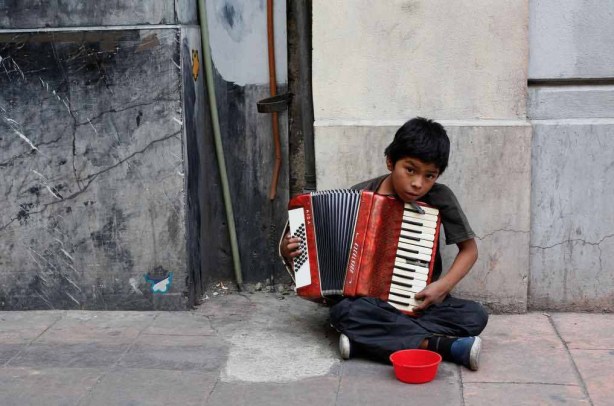
poorchildI recently had a conversation with someone who follows orphan care, and he made a statement that led to an interesting discussion. He claimed orphanages were ending in parts of the world. That many of the children were moving into foster care or larger care facilities. “So…into an orphanage?” I responded. “No, they are homes for children without other options.” He enthusiastically clarified. “So…orphanages?” “No no no,” he protested, “just big houses to care for children.” “So…orphanages?” We did not get far in the conversation. Calling an orphanage something different does not change the fact that it’s a system to care for kids who are abused, abandoned, or orphaned. If it looks like a duck, sounds like a duck, and has feathers, calling it a banana does not change the fact that it’s a duck.

I wish orphanages did not exist. The fact that society needs a place for children born into horrible situations, who are abused, who have parents on drugs, is terrible. That wars, aids, and natural disasters happen every day leaving children to fend for themselves, is a fact that needs to be addressed. We live in a broken world. We, as a society, fail children way too often. Until we live in a perfect world, kids will be victims, and they need to be rescued and cared for.

To say that we should close all orphanages because children should be with families is a worthy goal, but it’s not living in reality. It’s like saying let’s close all the hospitals in the US because the billing system is a nightmare. “But if everyone worked out, lost weight, and quit smoking, we wouldn’t need hospitals!” If you could get everyone to look after their health more, we could cut down on hospitals, but cancer, accidents, etc. would still make hospitals a necessity for many people. Even the healthiest people age and eventually wind up in the hospital. You could make inroads, but ending hospitals because you don’t like hospitals makes no sense. It just isn’t reality. The idea of ending orphanages is just as crazy.

There has been a tremendous push in the last few years for the church to take up the biblical call to care for orphans through adoption and quality foster care. This is fantastic. Everyone who can, should be caring for the less fortunate, the marginalized, those who can’t care for themselves. The problem is, even if adoption doubled or tripled in most countries it would just begin to address the problem. Inroads could be made to address the issue, but to eliminate orphanages does not take into account the many situations where adoption or other placement is very difficult or impossible.

The latest estimates say there are 150 million orphaned or abandoned children in the world. If a child is in a system, orphanage or foster care, they have a 2% chance of being adopted. Adoption is not a reality for most children who need it. Adoption, when done right, is a beautiful, biblical, life-changing event. But adoptions are just too rare to make any real impact on the vast majority of children who need a home.

Orphanages should be the last resort after healthy family reunification, adoption, or some style of foster care. But countless children still need attention after all other options are exhausted. Severe special needs children, children with multiple siblings, or children with extreme behavior issues are complicated to place. There are also many children left in limbo because the parents are still in the picture in some way but can not (or should not) care for their children. Parents in prison or parents dealing with substance abuse might take their children back when or if healing does take place.

So given that orphanages need to exist, they should be outstanding. Back to the hospital analogy; I’m not crazy about hospitals, but if I’m in one, I want it to be the best hospital possible. Orphanages should be beautiful, inviting places. Orphanages should give the children as much stability, attention, and love as they possibly can. Around the world, so many children are left in systems that, due to lack of funding or lack of caring, are horrific places to grow up. We need to do better.

If you’ve adopted or have worked in foster care, THANK YOU. Keep up the difficult work you’ve been called to do. If you work in orphan care, thank you for being the last line of defense before children wind up on the streets. It’s a worthy calling.

If you would like to receive this blog in your e-mail each Monday, please click “follow” above.

You can help me by sharing on this on Facebook or wherever you hang-out online.