What About Dad?

50984016_10216681108634208_1859912021047246848_o.jpgFather, dad, pops, whatever word you use for the male parent in your life, it can bring up deep and complicated emotions. Our earthly father, and our relationship with him, for good or bad, will influence us for our entire lives. When you’re dealing with an orphaned or abandoned child, this can be profoundly complicated. Where does their security, and definition of fatherhood, come from?

It’s the rare movie scene that causes almost every male to tear up, the end of Field of Dreams is one of those scenes. When Ray Kinsella (Kevin Costner) plays catch with his dad as the sun sets it will squeeze a tear out of almost any man. That moment of healing between a father and son, the symbolic act of the “catch” as something is passed between them is powerful. There is just something about the relationship we have with our father that is universal. It’s not always great. Eventually, we realize that our parents are just flawed individuals like everyone else, but that relationship will brand us and follow us. It is reflected in the way we live out our lives, and how we parent our own children.

My wife and I were blessed with great fathers; men who lived as faithful providers, good examples, and loving husbands. They both lived by a defined moral compass. Although we’ve both lost our fathers over the last few years, their influence remains and continues to guide us. There are many things I remember fondly about my dad. He lived in a precise and consistent way: same job his whole adult life, ate dinner at the same time every night followed by the evening news, we were at church EVERY Sunday in the same pew. His temperament never changed; he was a rock. The worst I ever heard him cuss was the occasional “ah hell.” He gave me my love of Steinbeck novels, fine woodworking, and classical music. He made me who I am and I miss him deeply.

For any of us, our relationship with our earthly father is intertwined and woven together with our image of who our Heavenly Father is. Grace, acceptance, stability, discipline, love, all of the emotions and attributes we believe about our God are viewed through a window tinted by the image of our earthly father. Our heavenly Father is perfect; our earthly fathers are flawed. For many people, believing in a perfect Father after being abandoned or abused by their earthly father takes many years of healing, if it happens at all.

Restoring the image of a healthy father figure is essential to the long-term healing of a child who has been orphaned or abandoned. This restoration does not happen over-night, and it needs to been done with great care. Whether you’re caring for a child in an orphanage, one in foster care, or one you’ve adopted, this healing of the father image needs to happen if the child is ever going to grow into a healthy adult. It’s also critical if a child is going to have a healthy image of who God is.

If a child, especially a male child, does not have a male showing what a healthy person is, they will seek out whatever examples they can to see how to live their lives. I’ve seen this happen to young men who are raised in poorly run orphanages. They leave home and have no history of a strong male example to draw from as they make life decisions. How to act as a man of God, how to treat women with respect, how to walk with dignity. They spend much of their lives approaching life, and relationships, in a broken way. Their marriages fail, their faith never matures, and they’re left with finding their way in life from an unhealthy stew of input from wherever they can find it.

I do not believe the healing of the father image happens in counseling or “quality time,” although both of these things play a part. Healing takes time. A lot of time. Years of consistent healthy male examples in the life of a child. A child needs to watch healthy men of God living out their lives on a day to day basis. They need to watch healthy decisions, reactions, and actions take place for many years for the healing to take place. By seeing a solid male in action, showing grace, stability, guidance, love, and acceptance, a child can begin to understand who God is. Much more than we can ever realize, although we are flawed, we represent who God is to our children. We need to truly take on the image of Christ if we are to have a hand in the healing of broken children.

A few days ago, I was at a BBQ with several of the orphaned children (now adults) who were raised in our home. Midway through the party, I watched as a great young man, now married with three children, patiently and slowly showed his attentive eight-year-old son the proper way to season and grill steak. This might seem like a simple act, but I watched this man represent what it means to father someone, and show the patient guiding hand that our heavenly Father represents (The steak was pretty good also).

If you’re caring for orphaned or abandoned children stay the course. Healing doesn’t happen quickly. Continue to live a life representing who our Heavenly Father is. You are being watched more than you realize, they will follow your example.

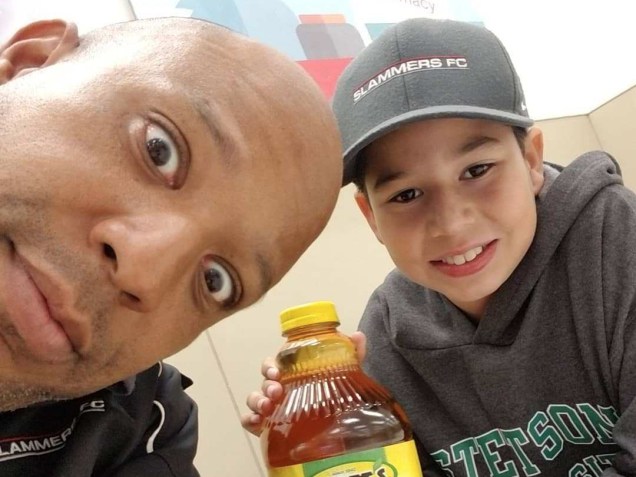
The above photo is of Ramon Reid and his son. Ramon knows what putting fatherhood into action is all about. We need more men like Ramon in this world.

You can help me by sharing this on Facebook or wherever you hang-out online.

If you would like to receive this blog in your e-mail each Monday, please click “follow” above.
Why There Will Always Be Orphan Care

poorchildI recently had a conversation with someone who follows orphan care, and he made a statement that led to an interesting discussion. He claimed orphanages were ending in parts of the world. That many of the children were moving into foster care or larger care facilities. “So…into an orphanage?” I responded. “No, they are homes for children without other options.” He enthusiastically clarified. “So…orphanages?” “No no no,” he protested, “just big houses to care for children.” “So…orphanages?” We did not get far in the conversation. Calling an orphanage something different does not change the fact that it’s a system to care for kids who are abused, abandoned, or orphaned. If it looks like a duck, sounds like a duck, and has feathers, calling it a banana does not change the fact that it’s a duck.

I wish orphanages did not exist. The fact that society needs a place for children born into horrible situations, who are abused, who have parents on drugs, is terrible. That wars, aids, and natural disasters happen every day leaving children to fend for themselves, is a fact that needs to be addressed. We live in a broken world. We, as a society, fail children way too often. Until we live in a perfect world, kids will be victims, and they need to be rescued and cared for.

To say that we should close all orphanages because children should be with families is a worthy goal, but it’s not living in reality. It’s like saying let’s close all the hospitals in the US because the billing system is a nightmare. “But if everyone worked out, lost weight, and quit smoking, we wouldn’t need hospitals!” If you could get everyone to look after their health more, we could cut down on hospitals, but cancer, accidents, etc. would still make hospitals a necessity for many people. Even the healthiest people age and eventually wind up in the hospital. You could make inroads, but ending hospitals because you don’t like hospitals makes no sense. It just isn’t reality. The idea of ending orphanages is just as crazy.

There has been a tremendous push in the last few years for the church to take up the biblical call to care for orphans through adoption and quality foster care. This is fantastic. Everyone who can, should be caring for the less fortunate, the marginalized, those who can’t care for themselves. The problem is, even if adoption doubled or tripled in most countries it would just begin to address the problem. Inroads could be made to address the issue, but to eliminate orphanages does not take into account the many situations where adoption or other placement is very difficult or impossible.

The latest estimates say there are 150 million orphaned or abandoned children in the world. If a child is in a system, orphanage or foster care, they have a 2% chance of being adopted. Adoption is not a reality for most children who need it. Adoption, when done right, is a beautiful, biblical, life-changing event. But adoptions are just too rare to make any real impact on the vast majority of children who need a home.

Orphanages should be the last resort after healthy family reunification, adoption, or some style of foster care. But countless children still need attention after all other options are exhausted. Severe special needs children, children with multiple siblings, or children with extreme behavior issues are complicated to place. There are also many children left in limbo because the parents are still in the picture in some way but can not (or should not) care for their children. Parents in prison or parents dealing with substance abuse might take their children back when or if healing does take place.

So given that orphanages need to exist, they should be outstanding. Back to the hospital analogy; I’m not crazy about hospitals, but if I’m in one, I want it to be the best hospital possible. Orphanages should be beautiful, inviting places. Orphanages should give the children as much stability, attention, and love as they possibly can. Around the world, so many children are left in systems that, due to lack of funding or lack of caring, are horrific places to grow up. We need to do better.

If you’ve adopted or have worked in foster care, THANK YOU. Keep up the difficult work you’ve been called to do. If you work in orphan care, thank you for being the last line of defense before children wind up on the streets. It’s a worthy calling.

If you would like to receive this blog in your e-mail each Monday, please click “follow” above.

You can help me by sharing on this on Facebook or wherever you hang-out online.

Kicking a Child Out of an Orphanage

cryingAt what point do you kick a child out of an orphanage? Last week I received a call from a new, well run orphanage with this very question. Yes, it does happen. The single hardest decision we make as a home is: at what point do you “give up?” At what point do you remove a child from an orphanage?
I still remember the first child we moved out of our home over twenty years ago. Sergio was about twelve; he was a terror child. I liked him, everybody did, and in his case, that was part of the problem. He was smart, well liked, a natural leader. The problem was, he was using all his natural gifts in the wrong ways. He could manipulate anyone, break into any building, get the other kids into trouble to shift blame, he was brilliant. He was also half our headaches. Incredibly foul language, stealing whenever possible, and leading others into trouble was Sergio’s full-time job. He was very good at his job.

We tried everything to shift Sergio’s efforts. Counseling, grounding, extra projects, more counseling, prayer, moving him into new dorms, etc. I still remember when we decided to kick him out, to give up and move him to another orphanage. I remember him pleading with me for a second (40th?) chance. His tearful begging to stay in our home as we loaded him into a car is permanently seared into my memory. For many days and weeks I second guessed our decision: “Did we do the right thing?” But, almost immediately after he left, it was like a heavy blanket of oppression was lifted off our home. The stress level dropped way down, the darkness lifted, the other children seemed incredibly relieved, joy returned to our home: we had made the right call for the home. But, did we make the right call for Sergio?

Sometimes a child just doesn’t fit. For whatever reason, not every orphanage, or family, is the best fit for every child in need. It’s not talked about a lot, but even in adoptions, sometimes it does not work, and a child winds up back in the system. Truly incredible, loving couples sometimes just cannot break through the walls and challenges of a wounded child. There are many stories of “failed” adoptions where the children are sent back. We’ve received children back after an adoption goes sideways. It’s easy to judge a couple for giving a child back until you’ve walked a few weeks or months in their shoes. Until you’ve lived with a violent child, who does not respond to the best, loving efforts, you cannot understand. People are messy.

It’s taken me years to reach a semi-peace with the fact that not every child “fits” every home. In the case of the orphanage who called me recently, it was an easy call: “Move the child NOW.” This new orphanage is just starting out, and the government sent them a young child with autism, this home does not have the training, nor ready for the challenges, that an autistic child brings to the table. It’s not fair to the home, the staff, and most importantly the child. This child needs special attention, and people with the calling and training to raise them in the best way possible. Many times, moving a child out of home can be the best thing for the child, if they wind up in a situation better suited for their particular needs.

Think of a church. Could you grow as a Christian in a church that was not comfortable or a good fit for you? We each need to find a church, school, medical center, whatever, that best fits our needs at a particular place in our lives. This does not mean that a church or school is “bad” or has failed, it just says that they are helping people in ways that don’t fit our needs. People each have different areas and wounds that need addressing; we can not be all things to all people and do it well. There are many specialty orphanages: deaf children, autistic children, HIV positive, etc. that are the perfect fit for specific children. Some homes do better with rebellious teens, children with attachment issues, etc. Not every child fits every home. That is OK. It is so much better to realize this and act on it than force a child to be raised in a place that cannot give them all that they need to grow into healthy adults.

A couple of times a year now, we choose to move a child to another orphanage. Several times a year, we take in children that have been removed from other orphanages. It occasionally takes a few moves until a child finds a home that fits their specific needs, history, and temperament. This isn’t necessarily a bad thing; it’s just finding the right “fit” for a child.

A few years ago a car pulled onto our property and Sergio, the child we had kicked out years ago stepped out. Sergio had grown up and moved on with his life. He brought his wife and two children back to show them where he had lived for a few years. Sergio came over and, to my great surprise, thanked me for kicking him out. He told us that it was the wake-up call he needed to turn his life around. He landed in a smaller home, with much tighter discipline that he desperately needed. It was a good day.

If you run an orphanage, take in foster children, or run a school, please realize you can not help in every situation. You have gifts, callings, and talents that can impact specific children. Keep up the efforts, and reach those you can. You’re already doing more than most people ever dream about.

If you’re looking for a thoughtful gift for the missions pastor or leader in your life, our book on short-term missions is now on Christmas special on Amazon – $5 off  – Reciprocal Missions – short-term missions that serve everyone

Please share on Facebook, or whatever social media works for you.

Breaking the Cycle of Orphan Care

IMG_7507 2Most of the time, orphan care seems like a losing game. The bulk of the time it just doesn’t work the way we envision it. Often, a child is brought to a home with so much baggage that it’s almost impossible to help them reach a healing place emotionally. Frequently, a child is in an orphanage (or foster care) for a short period and then returned to the family, and the cycle of abuse or neglect continues. Orphan care can be a discouraging, heart-wrenching journey. But it can work some of the time. The times orphan care does work makes all of the other times worth it.

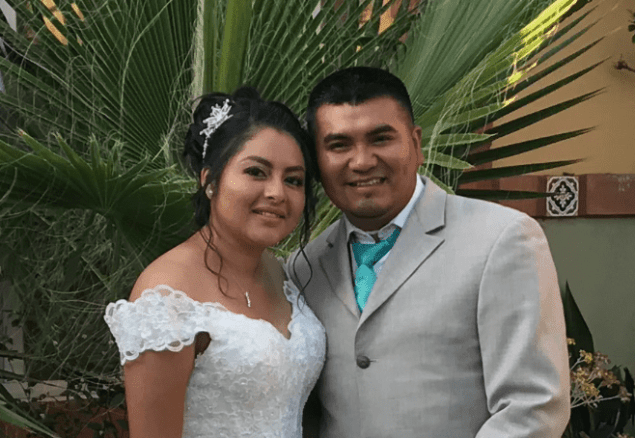
Recently, two great young adults married. Weddings go on all the time, but this marriage was a little different. Both had been raised in an orphanage. For reasons that aren’t important here, they were each brought to an orphanage with other siblings at a very young age. They were raised in this large home, and it was the only family that they knew for many years. They grew up independently, she going on with her education, him apprenticing in construction and learning various marketable trades. After they were out and on their own, they started dating and continued to make healthy life decisions as they planned for the future. A few years later, once she graduated, and he had established his own successful construction firm, they decided to marry. Today they are constructing their own home and building a wonderful life together. They’re a joy to be around. Granted I am biased; I so am proud to call Jerri and Yury two of my many children.

So how did these two beat the odds of becoming healthy productive adults while being raised in the system? I’m not saying we have all the answers, and I’m not saying every child brought to us has the same outcome, but it can work. We have found that many of the children raised in our home for years have gone on to be healthy productive members of society. Today there are doctors, lawyers, businessmen, many healthy individuals that can look back and say they were raised in an orphanage. It can work.

Many factors go into what makes a successful orphanage, even defining what “successful” means can get complicated. But, there are two factors that we’ve found to be the most impactful for children who need long-term care and healing.

1) Consistency. We all need a stable environment. Most children in the system anywhere in the world are moved to new homes, returned to blood relatives and then removed again, moved to another home, etc. If we each had to change homes, schools, friends, churches, etc. every month or two we would have some serious issues also. Constantly shifting living arrangements is not how people are designed to live and grow. God is consistent; He does not change. We all need a certain level of security in our lives. Over time, we’ve found that children given a loving, consistent upbringing will eventually learn what it means to feel comfortable, to know they are loved and wanted. We all need this.

Part of consistency is building traditions into our lives — the same activities for the holidays, the traditional meals, celebrations, and events that occur annually. The simple rituals that happen in most families: birthday cakes, the tooth fairy, etc. almost never occur in the lives of children who are in the system. They never know what the next week will bring, they don’t know what to look forward to. We need to be consistent in our care and model stability in these fragile lives.

2) A Servant’s Heart. We are designed to serve others. Most child-care systems never give the children the privilege of serving others. Children are fed and cared for, but a life of just receiving is an empty life. It also creates a victim mentality that does not make for healthy relationships in adulthood. By allowing children to experience the joy of serving others, it gives them purpose. When a child is abused or abandoned it can be hard to show them they have value. When a child has been thrown away, it teaches them at a profound level that they have no worth. By showing them they that can have a positive impact on others, it shows them they have great things to offer the world. Service shows them they have value. Service shows them God wants to use them to impact other people’s lives in a positive way.

An attitude of service makes us all healthier. It makes us better workers, bosses, spouses; it just makes us better people. Christ’s example to us is a perfect servants heart. We need to not only follow that example ourselves, but we also need to instill that humble servant’s heart in the children we are raising. A humble servant heart is the most empowering gift you can give a child. It will heal them, and change them for the better.

Does orphan care always have a happy ending? No. But it can work. Even in the cases where we feel it’s failed, we need to know that the seeds we plant in the hurting children we encounter are what matters. Those seeds can grow down the road; they can impact lives. If you are in orphan-care, please know your work matters a great deal. Your efforts are needed, work through the discouraging times. It can work, hang on to the times when it does.