
I Hate Orphanages

pexels-photo-236153

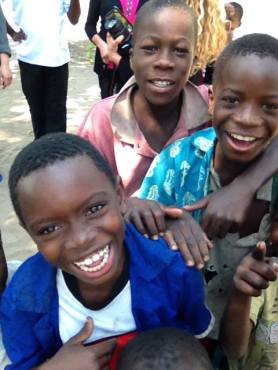
I wish orphanages didn’t exist. A child in an orphanage means the enemy has won a battle, a battle to break a child and parent bond or destroy a family. Orphaned and abandoned children exist because we live in a broken world. I wish we didn’t need the foster care system and I hate orphanages, but if these types of homes have to exist, they should be GREAT.

People frequently ask me “why does a child wind up in an orphanage?” There are a lot of misconceptions about this; most people assume all kids in orphanages are “orphans” who have no living family. The short answer to why most kids are in orphanages is “sin.” Severe abuse, neglect, abandonment, substance abuse by the parents, etc. are all results of flawed people who have fallen into deep sin. Some people should just never have kids. Unless you’re dealing with AIDS, war, or severe natural disaster, true orphans where both parents have died are kind of hard to find. Frequently, a parent might still be around, but for many reasons, they just can’t/won’t care for their child or have chosen to abandon their child or children. In any country, you can read stories every week of babies left at hospitals, fire stations or even in trash cans. Today, in many countries, there are thousands of children that are sold into slavery every year. We live in a deeply broken, profoundly messed up world.

Some people believe orphanages break up families to fill their dorms; this does happen in some cases, but less than you might think. There is an assumption that many children are in homes world wide due to poverty, this happens also, but most of the time there are other, deeper underlying issues. In most cases, it’s not easy to say what’s best for a child: A marginally abusive/neglectful situation or an orphanage?

In our home, as in any healthy ministry, we do everything we can to keep families together if it’s truly in the best interest of the child. The family is the ideal model, and every child deserves a healthy family. Every child needs the love, acceptance and loving guidance of their parents. If a parent needs short term help, counseling, etc. to keep the family together in a healthy situation, that should always be the first choice. If there is some extended family that can help that’s an excellent second choice. Sometimes all that’s needed is daycare to keep a family together so the parent can work and still care for their children.

Unfortunately, sometimes, it really is in the best interest of the child to break up the family. You can imagine some of the horrific stories of the children in our care. We had a five-year-old brought to us after the step dad held him against a hot stove for wetting the bed. We had a two-year-old dropped off late one night with bruises over much of his body and a broken leg after the mom lashed out in a drunken rage. We took in a girl who had just turned fourteen and was pregnant after being raped by her step dad. (he is now in prison) These types of stories are much too common. Even the most ardent defenders of family would be hard pressed to defend keeping some families together.

A well meaning, well-educated individual once passionately shared with me that orphanages are a broken system and that they should all close down. I agree that it’s a broken system, but saying all orphanages should be closed is like saying the health care system in the US is broken so all hospitals should be closed. Just because we close a broken solution, doesn’t mean the problem goes away. I so wish there were better options for the countless children who fall through the cracks of society.

If the family is not in the picture, and adoption is a real alternative, it should always be encouraged. Unfortunately, adoption is not a reality for the vast majority of children living in any care situation. The latest figures available are that only 2% of children living in care situations world wide ever get adopted. Most have multiple siblings, are “too old” to adopt, or they have some living family that still has a claim on them. Depending on adoption for a child’s future is very much like depending on the lottery for your retirement: It might work, but not likely.

A couple of years ago, eleven-year-old Pablo (not his real name) was brought to us after being removed from his home due to neglect on the part of his mom. He had been bouncing around the system for a while. He hadn’t been in school, was in bad shape physically, and had spent way too much time on the streets. After a few days here, he expressed amazement that he was getting three meals a day and asked if that was normal. His mother is currently working with the government to receive custody of Pablo. Mom visits from time to time but is still not doing very well; she’s dealing with some long standing substance abuse issues. Pablo is now doing great in school, just graduated top of his class, and has become a real part of our family. We know we don’t replace loving parents, but here Pablo has a loving home with people who deeply care about him, great opportunities, and a future that was just a dream a few years ago. Very recently, Pablo came to us with a request. He knows his mom is working to get him back, but he’s also bright enough to know he has no future with her. He has asked that if his mom gets custody, and if it’s OK with her, if he could still live here. He wants to stay here so he can continue in school, work for a better life, and just visit his mom. We sincerely hope and pray that his mom gets her life in order but until that happens, we want to provide a great home to Pablo, and the many other Pablos who are out there.

Perspective in Short-Term Missions

workers-construction-site-hardhats-38293Few things are black and white in this life. Many people pass judgment on short-term missions from a purely sending perspective or as a bad use of funds. “Why spend so much money sending our team to Africa, what difference can they make?” “I’ve read that mission teams do more harm than good.” It’s so important to look at difficult, complicated, multi-level situations from many perspectives. Frequently, if we honestly try to put ourselves in the other person’s shoes, we see things in an entirely different light.
A few years ago a member of my American staff here in Mexico was very vocal about how terrible all the new factories in Mexico were. Through her studies in college, she learned how the factories were abusing the workers and taking advantage of the low wages in Mexico. She had never actually been to one of these factories though or talked to the workers. After she had passionately shared for a while, a good friend of mine who was raised and educated in Mexico walked in. He was very familiar with the factory systems and had many friends and family members working in manufacturing. As neutral as I could, I asked him “what’s your feeling on the factory programs?” His immediate response was “send more,”. Living in Mexico with the factories, he saw them providing much-needed jobs at a higher pay scale than had been seen in generations. Yes, the workers are making less than their American counterparts but they we’re making more than any of their peers. The factories provided good health care, in many factories there was free childcare, and the workers actually had a lot of rights. Perspective is critical before we pass judgment.

What are the unseen blessings of sending groups? How do the receiving organizations and communities see short-term missions? Although there has been a great deal written in the last few years about the damage short term mission can do, you would be hard-pressed to find a single hosting organization who doesn’t want more teams to visit. Why is this? Don’t they see or understand the “damage” groups bring? Of course they see it, but the benefits to the missions organizations, the communities, and people in the field far out way the headaches of hosting most groups.

How many orphanages, churches, schools, or medical centers would not exist without the teams that built them or support them? How many long term missionaries would be in the field today if they had not first taken a short-term trip? In twenty-five years serving in Mexico, I’ve never met a long-term missionary that didn’t start out on a short-term trip.

When done right, short term missions can have a real and dramatic impact, beyond anything we might imagine. A few years ago we had a well-meaning group sign up with our organization to build a house in our town through a home building program that we run. When they signed up, they were sure they would have a large team and the funding. As the trip dates got closer a few people dropped out, and then a few more dropped out. They were left with six high school girls, one leader, and almost no funding. On paper, from a logical standpoint, not the ideal group to build a house or go on a missions trip for that matter. In most people’s eyes questions were raised: What are six high-school girls going to do? What difference can they make? Shouldn’t they just stay home and use the money more effectively? In spite of the reasonable questions that were raised, this group REALLY felt they were supposed to take this trip. They reached out to us and asked what to do. I told them to come, join our team for a week, and we’d find a way for them to serve.

Once the group arrived, I paired them up with a few local construction guys that I work with. The plan was to help pour a cement foundation for a house in town. The family receiving this blessing had been on our waiting list for a while, living in an old trailer. This single child family had a believing wife and a husband that was more-or-less the town drunk.

For a week the girls worked alongside my local team. The father could NOT figure this out. It confused him. A lot. He stood for hours with his arms crossed trying to figure out two things; Why are these odd, blond, American girls helping his family? And why were these local construction guys having such a good time? My guys are all strong believers. They were picking on each other as guys do, flipping wet cement at each other, laughing a lot, and having a blast. They weren’t cussing, they weren’t drinking, and the father couldn’t understand any of this. He had never seen or experienced healthy male relationships before, and he just didn’t get it. At no point was the gospel presented in words, there was no pressure on anyone. This project was just a collection of Christians from two cultures serving a needy family. The collective team was putting Christ’s love and example of service into action.

The week ended, the girls left, and it might have ended there. But the seeds of Christian service had been planted; the father witnessed Christ’s love in action. The following Sunday he was at our local church, the next week he came to the Lord. No one, including him, knew at the time but he was very sick and he died about 90 days later. Because this small, unskilled, under-funded team (that didn’t speak Spanish) pressed forward; this man is now dancing in heaven.

If we go into any area of our lives with an attitude of empathy, of trying to see things from the other person’s perspective, we will be more effective. As we approach short-term missions we need to move past our preconceived ideas of the people we’re serving, the needs we think we’re addressing, or even why we are going. Go with a plan, but be sensitive and open to just being present and experiencing God alongside others. Maybe God is just sending you to change you through the people you’ll encounter.

Short-term missions change us

971174_10200726932789783_914982034_nI have been receiving and hosting short-term mission teams in Baja Mexico for almost twenty-five years. Between the two organizations I lead we hosted 325 groups in 2016. Short-term missions are important but not for the reasons and justifications everyone gives for short-term missions. You think you’re going to put up a building, distribute food, or most importantly share the gospel. God has an entirely different agenda.

God works in ways beyond the ways this world works, His ways don’t make any sense in the eyes of the world: “the first shall be last, whoever would be great must learn to serve, to save our lives we must give it away.” When we raise funds, make plans, sacrifice our time to go and serve others, God has a very different objective than we do. God is always thinking of us and seeking ways to bless us, to shape us, to cause growth in us, to help us take on His image. We might screw it up, but God rejoices when we try, just as any loving parent rejoices when they see their child grow and try new things.

Short-term missions work because it changes the lives of the people who go. God is faithful and unchanging. Almost every individual or group we’ve hosted over the last two decades has the same reaction at some level: “I’m leaving with so much more than I came with.” When we take a chance and step out of our comfort zone, we grow. When we interact and serve with people from other cultures, it expands our world view. When we see how people live in other countries, it gives us, a deeper perspective on the conditions in our own country and humanity as a whole.

When we go and serve others, we’re putting our faith into practice. Jesus was a man of active faith. Jesus encouraged those He encountered, He spent time sharing His heart, He fed, He healed, He focused on those around Him. If we say we are a follower of Christ and we’re not actively serving others, we are hypocrites. Taking the time and resources to go and serve people in other countries changes us as we exercise our faith. People exercise to feel better, look better, and to be healthy. We need to be actively working out, stretching, and exercising our faith.

It is the very rare exception to find a full-time missionary who did not start out in short-term missions. We need to try walking before we run. Not everyone is called into full-time international missions, but some are. Is that calling on your life? Until we go and experience serving at a different level, it’s very hard to hear that voice calling us into something deeper. Today, there are missionaries around the world who got their start with a week serving in Mexico. THIS is why we host short-term missions.

At one point I had been living and serving in Baja for over fifteen years and thought I had a pretty good handle on what it meant to serve in the missions field. I was wrong. A few years ago my wife and I were asked to go with a small team to Malawi, a tiny, very impoverished country in the middle of Africa. Although I live in Mexico, I had never seen that level of poverty. It changed me. My hope is that we had an impact on the orphanage where we were serving, but I left with a greater understanding of what financial poverty looked like and the effect it has on people. At one point a desperate mother begged my wife and me to take her three-year-old child. She knew her child had no future in that country and no chance in life where they were. How scared and hurting must a mother be to give away her child? My life, my walk, my ministry was changed profoundly by my short experiences in Africa.

Short-term missions matter. Send your team, lead your team, go yourself. You will be better for it as you walk in the footsteps of Jesus and allow God to use you and to change you.

Getting Started

OK, I’ll try to be different from 90% of the bloggers out there who commit to regular posting and are about as faithful as people who commit to diet or to work out. (I’ve not done well in those areas either.)

My hope is that someone, somewhere might learn from my abundant mistakes and avoid many of the pitfalls I fell/ran into over two decades in the missions field caring for orphans. I’ve seen tremendous blessings and experienced deep joy, I’ve also walked through storms and attacks that I would wish on no-one. Most of all, I’ve realized that God sees a bigger picture, He’s in control, and we’re just along for the ride.

Over the years I’ve been blessed to have great people to guide, coach, correct, and pray over me. No one works alone. I invite you to join me in my ramblings; please fight with me a little, let’s talk about issues that matter. Together, something might happen that will make us both a little better.

Along with blog posts, you might have noticed the Q & A link above. It’s just what it means. When people send me questions, I will do my best do answer them. If a question stands out as unusual or insightful, I’ll post the question and my response.

Thank you for making it this far. My prayer is that what I’m doing here might have some positive impact on your walk and ministry.