
Migrant Caravans and a Missions Response

migrant.jpgIt’s been interesting to see the response to the migrant caravan moving through Mexico and landing at the US border. From both countries and every political persuasion, there are strong opinions and emotional reactions. Usually, this blog is not used as a platform to discuss current events, but this topic is (quite literally) in my backyard. I’ve spoken with ministry leaders serving the migrants, some of the US border guards, and politicians here in Mexico. I’ve had churches contact me in fear, and other churches contact me asking how to help. I’ve also had the profound privilege of spending time with the migrants themselves, serving with others, and serving alongside some great people in the “caravan.”

Within the group assembled in Tijuana are families, some young teens traveling alone, some single men, etc. They’re a cross-section of any society in the world. Are there some scary people? Not as many as the media would lead you to believe. Generally, this is a large group of people who left a horrible situation hoping to make a better life. They were mistaken or misled into believing it would be simpler than it is. Now they’re stuck; some are going home, some are finding jobs and settling in Mexico, some are still holding out hope for the golden ticket into the US. All are scared, tired, cold and hungry. They are like any of us, looking for a secure future and a place to raise a family.

The topic of the migrants is a hot-button issue. People have been VERY clear on social media and elsewhere about their specific opinions. Even here in Mexico, the response is very divided; many people are stepping up to help feed and care for people in the camps, others are protesting and complaining about their presence here in Baja.

So what should our response be to the migrant caravan? Politics and agendas aside, there are clear biblical directions as to what our response needs to be.

“I was naked, and you clothed me, I was sick, and you visited me, I was in prison, and you came to me.” Then the righteous will answer him, saying, “Lord, when did we see you hungry and feed you, or thirsty and give you drink? And when did we see you a stranger and welcome you, or naked and clothe you? And when did we see you sick or in prison and visit you?” And the King will answer them, “Truly, I say to you, as you did it to one of the least of these my brothers, you did it to me.” Matthew 25:36-40

It’s interesting to see that Jesus mentioned, “I was in prison, and you visited Me.” Well…this seems kind of extreme. Jesus never specified whether or not the person made bad decisions to wind up in prison, He never said the person in prison deserved it, He was just pointing out that we need to visit and help those who need help. Period. There is not a lot of wiggle room here. It doesn’t matter if we agree with why they’re in the position they’re in, it doesn’t even matter if we are put at risk or not, we are called to help.

You have heard that it was said, ‘Love your neighbor and hate your enemy.’ But I tell you, love your enemies and pray for those who persecute you, that you may be sons of your Father in heaven. Matthew 5:43-44

Hmmm, “pray for our enemies?”, This also seems kind of extreme. But our faith is also called to be extreme. Even if we disagree with why people are in the caravan, even if we feel they should just go home, even if we know from our gut they should never be permitted into the US, we are still called to pray for them. We are called to show grace and shower blessings on them as God has blessed us.

Our response to the needs around us, and more importantly the people in need around us, says a great deal about the maturity of our faith. Are we responding like spoiled children defending our toys? Or are we showing grace and generosity to those around us? Our response in challenging times and circumstances means more than we can possibly understand. Our response is a stronger testimony than a thousand sermons. It matters how you respond to an enemy, perceived or otherwise.

Are we more loyal to our politics? Or to God and our faith in Him? We have a guidebook to tell us how we are to respond. We have a faith that directs us. Political parties come and go. Men will always fail us eventually. Stick with the only cause that is truly worth fighting for.

The migrant problem will eventually fade away; our response might be brought up later on: “I was hungry in the migrant camp, and you fed Me.”
If you have questions or would like to know how to donate to help migrant families in need, please contact me at my e-mail. My team and I will point you in the right direction.

Please share this blog wherever you hang out online.

Kicking a Child Out of an Orphanage

cryingAt what point do you kick a child out of an orphanage? Last week I received a call from a new, well run orphanage with this very question. Yes, it does happen. The single hardest decision we make as a home is: at what point do you “give up?” At what point do you remove a child from an orphanage?

I still remember the first child we moved out of our home over twenty years ago. Sergio was about twelve; he was a terror child. I liked him, everybody did, and in his case, that was part of the problem. He was smart, well liked, a natural leader. The problem was, he was using all his natural gifts in the wrong ways. He could manipulate anyone, break into any building, get the other kids into trouble to shift blame, he was brilliant. He was also half our headaches. Incredibly foul language, stealing whenever possible, and leading others into trouble was Sergio’s full-time job. He was very good at his job.

We tried everything to shift Sergio’s efforts. Counseling, grounding, extra projects, more counseling, prayer, moving him into new dorms, etc. I still remember when we decided to kick him out, to give up and move him to another orphanage. I remember him pleading with me for a second (40th?) chance. His tearful begging to stay in our home as we loaded him into a car is permanently seared into my memory. For many days and weeks I second guessed our decision: “Did we do the right thing?” But, almost immediately after he left, it was like a heavy blanket of oppression was lifted off our home. The stress level dropped way down, the darkness lifted, the other children seemed incredibly relieved, joy returned to our home: we had made the right call for the home. But, did we make the right call for Sergio?

Sometimes a child just doesn’t fit. For whatever reason, not every orphanage, or family, is the best fit for every child in need. It’s not talked about a lot, but even in adoptions, sometimes it does not work, and a child winds up back in the system. Truly incredible, loving couples sometimes just cannot break through the walls and challenges of a wounded child. There are many stories of “failed” adoptions where the children are sent back. We’ve received children back after an adoption goes sideways. It’s easy to judge a couple for giving a child back until you’ve walked a few weeks or months in their shoes. Until you’ve lived with a violent child, who does not respond to the best, loving efforts, you cannot understand. People are messy.

It’s taken me years to reach a semi-peace with the fact that not every child “fits” every home. In the case of the orphanage who called me recently, it was an easy call: “Move the child NOW.” This new orphanage is just starting out, and the government sent them a young child with autism, this home does not have the training, nor ready for the challenges, that an autistic child brings to the table. It’s not fair to the home, the staff, and most importantly the child. This child needs special attention, and people with the calling and training to raise them in the best way possible. Many times, moving a child out of home can be the best thing for the child, if they wind up in a situation better suited for their particular needs.

Think of a church. Could you grow as a Christian in a church that was not comfortable or a good fit for you? We each need to find a church, school, medical center, whatever, that best fits our needs at a particular place in our lives. This does not mean that a church or school is “bad” or has failed, it just says that they are helping people in ways that don’t fit our needs. People each have different areas and wounds that need addressing; we can not be all things to all people and do it well. There are many specialty orphanages: deaf children, autistic children, HIV positive, etc. that are the perfect fit for specific children. Some homes do better with rebellious teens, children with attachment issues, etc. Not every child fits every home. That is OK. It is so much better to realize this and act on it than force a child to be raised in a place that cannot give them all that they need to grow into healthy adults.

A couple of times a year now, we choose to move a child to another orphanage. Several times a year, we take in children that have been removed from other orphanages. It occasionally takes a few moves until a child finds a home that fits their specific needs, history, and temperament. This isn’t necessarily a bad thing; it’s just finding the right “fit” for a child.

A few years ago a car pulled onto our property and Sergio, the child we had kicked out years ago stepped out. Sergio had grown up and moved on with his life. He brought his wife and two children back to show them where he had lived for a few years. Sergio came over and, to my great surprise, thanked me for kicking him out. He told us that it was the wake-up call he needed to turn his life around. He landed in a smaller home, with much tighter discipline that he desperately needed. It was a good day.

If you run an orphanage, take in foster children, or run a school, please realize you can not help in every situation. You have gifts, callings, and talents that can impact specific children. Keep up the efforts, and reach those you can. You’re already doing more than most people ever dream about.

If you’re looking for a thoughtful gift for the missions pastor or leader in your life, our book on short-term missions is now on Christmas special on Amazon – $5 off  – Reciprocal Missions – short-term missions that serve everyone

Please share on Facebook, or whatever social media works for you.

Breaking the Cycle of Orphan Care

IMG_7507 2Most of the time, orphan care seems like a losing game. The bulk of the time it just doesn’t work the way we envision it. Often, a child is brought to a home with so much baggage that it’s almost impossible to help them reach a healing place emotionally. Frequently, a child is in an orphanage (or foster care) for a short period and then returned to the family, and the cycle of abuse or neglect continues. Orphan care can be a discouraging, heart-wrenching journey. But it can work some of the time. The times orphan care does work makes all of the other times worth it.
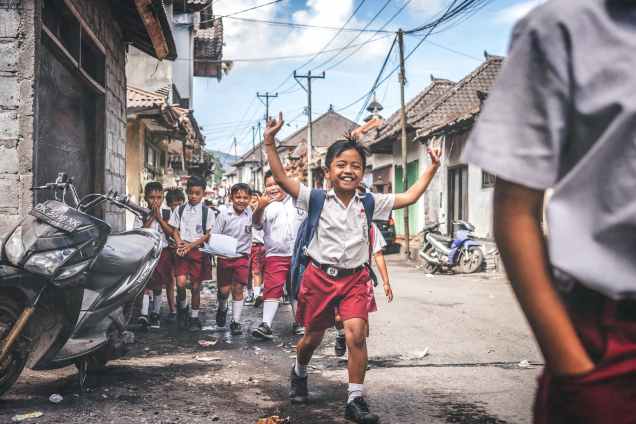
Recently, two great young adults married. Weddings go on all the time, but this marriage was a little different. Both had been raised in an orphanage. For reasons that aren’t important here, they were each brought to an orphanage with other siblings at a very young age. They were raised in this large home, and it was the only family that they knew for many years. They grew up independently, she going on with her education, him apprenticing in construction and learning various marketable trades. After they were out and on their own, they started dating and continued to make healthy life decisions as they planned for the future. A few years later, once she graduated, and he had established his own successful construction firm, they decided to marry. Today they are constructing their own home and building a wonderful life together. They’re a joy to be around. Granted I am biased; I so am proud to call Jerri and Yury two of my many children.

So how did these two beat the odds of becoming healthy productive adults while being raised in the system? I’m not saying we have all the answers, and I’m not saying every child brought to us has the same outcome, but it can work. We have found that many of the children raised in our home for years have gone on to be healthy productive members of society. Today there are doctors, lawyers, businessmen, many healthy individuals that can look back and say they were raised in an orphanage. It can work.

Many factors go into what makes a successful orphanage, even defining what “successful” means can get complicated. But, there are two factors that we’ve found to be the most impactful for children who need long-term care and healing.

1) Consistency. We all need a stable environment. Most children in the system anywhere in the world are moved to new homes, returned to blood relatives and then removed again, moved to another home, etc. If we each had to change homes, schools, friends, churches, etc. every month or two we would have some serious issues also. Constantly shifting living arrangements is not how people are designed to live and grow. God is consistent; He does not change. We all need a certain level of security in our lives. Over time, we’ve found that children given a loving, consistent upbringing will eventually learn what it means to feel comfortable, to know they are loved and wanted. We all need this.

Part of consistency is building traditions into our lives — the same activities for the holidays, the traditional meals, celebrations, and events that occur annually. The simple rituals that happen in most families: birthday cakes, the tooth fairy, etc. almost never occur in the lives of children who are in the system. They never know what the next week will bring, they don’t know what to look forward to. We need to be consistent in our care and model stability in these fragile lives.

2) A Servant’s Heart. We are designed to serve others. Most child-care systems never give the children the privilege of serving others. Children are fed and cared for, but a life of just receiving is an empty life. It also creates a victim mentality that does not make for healthy relationships in adulthood. By allowing children to experience the joy of serving others, it gives them purpose. When a child is abused or abandoned it can be hard to show them they have value. When a child has been thrown away, it teaches them at a profound level that they have no worth. By showing them they that can have a positive impact on others, it shows them they have great things to offer the world. Service shows them they have value. Service shows them God wants to use them to impact other people’s lives in a positive way.

An attitude of service makes us all healthier. It makes us better workers, bosses, spouses; it just makes us better people. Christ’s example to us is a perfect servants heart. We need to not only follow that example ourselves, but we also need to instill that humble servant’s heart in the children we are raising. A humble servant heart is the most empowering gift you can give a child. It will heal them, and change them for the better.

Does orphan care always have a happy ending? No. But it can work. Even in the cases where we feel it’s failed, we need to know that the seeds we plant in the hurting children we encounter are what matters. Those seeds can grow down the road; they can impact lives. If you are in orphan-care, please know your work matters a great deal. Your efforts are needed, work through the discouraging times. It can work, hang on to the times when it does.

Best Orphanage Ever

When visiting orphanages, you never know what you’re going to find. There are some incredible orphanages. There are more than a few horrible orphanages, most land in the fuzzy middle doing the best they can with the skills and resources at hand. Every now and then I come across an orphanage that shifts my perception of what an orphanage can be.

Several years ago I was asked to go and evaluate an orphanage in Tijuana. This happens from time to time, a US group wants to help an orphanage, but they would like an outside opinion first. My wife and I made an appointment with the director and hit the road to do an evaluation.

As we followed the directions and got closer and closer to the location, we kept turning to each other and saying “This can’t be right. Please tell me this is not the right location.” We were driving through twisting dusty hills into one of the worst areas in Tijuana. We finally found the “street,” it was just a very rocky dirt alley leading up to a ramshackle two-story apartment building with a couple of mangy dogs asleep outside. As we stepped out of our car we were hit by the stew of smells that are produced when too many people are living in too small an area: a mix of burning trash, poorly built septic systems, greasy food, and spilled motor oil. The sounds matched the smells: dogs barking, a rooster crowing nearby, some loud ranchero music playing down the street with too much bass, you get the idea.

The director met us and brought us inside. The orphanage cared for about 12 children in a tiny two bedroom apartment downstairs from a drug dealer. There was so little room inside that they had set up a homework and play area in a 20ft x20ft dirt yard with a tarp strung across to create some shade. Their only van had been stolen two days before we got there. The furniture and flooring were well-worn, many years past what most people would use. What happened in the next 20 minutes would shift my perception and priorities when it comes to orphanage management. It also shifted my understanding and definition of what poverty is, versus a poverty mentality, and what it means to bloom in whatever situation you land.

I encountered joy.

Although the apartment was tiny and overcrowded, it was immaculate and welcoming. The children each came over to shake my hand and thanked me for coming. We heard about their focus on education as a few of the children showed off their homework. They laughed as they shared of the ways they found to stretch their rice and beans diet. While I was there, one of the girls was carefully ironing each school uniform so they would be presentable and polished for the following school day. Although they might have been poor in a material sense, the had a dignity about them that showed a wealth beyond what most people experience.

In that home, we met a healthy, enjoyable, inspiring group of people. You could feel the affection the children had for the directors, and see the love and caring attitude the directors had for the children. Through the leadership of that home, the challenges of living in those circumstances forged an incredible family from the wounded children brought to them. It was deeply inspiring.

As we got back in the car, I turned to my wife and said, “That is the best home in Baja, including ours.” As we drove away, I called the group in California who had asked for the evaluation, and I surprised them with the strength of my opinions. My exact words were, “Throw money at this couple, give them anything they want.”

There are countless ways to judge an orphanage. Most people will look at programs, nutrition, maybe the quality of buildings or staff ratios. All of these things are important, but the most essential part of an orphanage is the heart and passion of the people running it. The same thing that makes a family healthy makes an orphanage healthy, the parents.

Frequently, the American mindset is: if there is a problem with an orphanage (or almost any situation) give more money to the problem. This does not help long-term in many cases. Yes, money is needed to run an orphanage, but if the leadership is dysfunctional or is leading from the wrong motivations, it will just be a dysfunctional orphanage that eats and dresses better. A dysfunctional church with a lot of money is still a dysfunctional church. A dysfunctional family with money is still a dysfunctional family.

Think of the families in your circles. My guess is there is very little correlation between material wealth and an emotionally healthy family. In most families, once the basics are covered, adding more “stuff” really doesn’t add quality of life. We all know happy, close, poorer families. We probably know some fairly dysfunctional families who have a great deal of money. The reverse can also be true, having money doesn’t make you dysfunctional, it just doesn’t guarantee functional either. Orphanages are just big families, it all comes down to mom and dad. Do they have a handle on things? Do they see the big picture? Are they healthy emotionally? Money can’t buy this.

You’re probably asking, “Whatever happened to that small orphanage? Today, many years later, they’ve moved to a much better location and the last I checked that have about 50 fortunate children in their care.

In orphanage work, or any ministry, always back solid leadership. Everything else is fluff.

If you would like to receive this blog in your e-mail each Monday, please click “follow” above.

You can help me by sharing on this on Facebook or wherever you hang-out online.