
The Failure of the Individual and Short-Term Missions

pexels-photo-670720At some point, over the last few decades, there has been a subtle yet consistent shift away from the idea of community, to the rise of individual above all else. It’s not working. Addiction and suicide are at an all-time high; in many age groups suicide is the leading cause of death. The church is shrinking at an alarming rate. Depression and loneliness are rampant.

As society shifts from focusing on the community as a whole to focusing on each individual’s desires and achievements, we are losing the very thing that gives us meaning. At almost every turn, technology and shifting attitudes are slowly driving society apart and leading people into their own little cocoons. We need to be connected; we are created to interact with a wide range of people; we are called to sacrifice for others. It’s time to look at how to foster a sense of community again.

Years ago, there was “appointment TV viewing,” the whole family would sit together and watch the same show along with millions of others across the country at the same time. This sounds quaint or primitive now that we can each have our own on-demand screen in front of us and watch exactly what we want when we want it. The downside of on-demand is that, with a few exceptions, that bonding through community viewing doesn’t happen. Outside of the Superbowl or a major news event, there is no common discussion the next day about the latest show that we all watched.

The idea of each of us having our own screens is a small example of how the priority of community is shifting. Few people would argue the fact that America has never been so divided. People have always had opinions, but now that we can watch the news on TV or online catered and designed to reinforce our already deeply held beliefs, we don’t need to listen to any opinion that might call into question where we stand. If we never listen to the other side, they become a bigger and more dangerous enemy in our minds — not a great way to build community.

Subtle changes are taking place all around us. If we want to “eat out” we don’t have to sit with people we don’t know; we can just open the app and have the food brought to our home. We don’t need to go to the mall anymore and interact with real people to buy things; Amazon is just a click away. When was the last time any of us hung out in a book store and browsed around with others with the same interest? When we go to buy groceries, we can self-check to avoid the two minutes of contact with the cashier.

More people are living alone than at any time in the history of America. Fewer people are getting married than at any time in history. Half of all children in America are now born into un-wed situations. Examples of the collapse of community are all around us. Too many people are living in their own little world, and missing out on the interactions and messiness that makes us human.

Even within the ever-shrinking church, many people who are “members” choose to sit at home on Sunday and watch the service online. Interacting with real people is just too much trouble. For the people who are present, as the collection plate is passed in church, many people miss out on the ritual of offering tithes as one body because they’ve already given online automatically.

Although we need a personal relationship with Christ, and God desires that, it’s crucial to recognize the importance of the Church body as a whole and what that means. As we read the Gospels, Jesus spoke to many individuals, but He often spoke about the collective body of believers. The bride of Christ is one, not millions of individual brides. When the apostles asked Jesus how to pray, He gave the Lord’s Prayer as an example. There is not one personal pronoun in the Lord’s prayer. Not one petition for an individual. OUR Father…OUR daily bread…forgive US OUR sins…lead US.  You get the idea. The body of Christ needs each other; we need each other.

So what does this little rant have to do with short-term missions? One of the many benefits of short-term missions is the building of community. You can sit in the same church with the same people for years and never really get to know them. Spend a week traveling in Uganda, or Mexico, or Kenya, and you will get to know them, whether you want to or not. You will see them without makeup and before coffee. You will be forced to sleep in the same room and hear who snores. You will see how each person reacts to difficulties and joys. You will be forced to become a little more transparent. You will learn more about the people in your church, and they will learn more about you, than in ten years of Sundays.

Short-term missions also bring into focus what the Bible teaches about the body of Christ. By traveling out with a team to visit other churches and communities, we have the privilege of living and working with people from wildly different cultures, but with the same Heavenly Father. We get to spend time with our brothers and sisters. We get to experience worship in ways that are beyond what we could ever imagine. We get to bump up against people who are living and walking in faith that sets the bar higher than we might be used to. We have the profound and life-altering experience of living in community with the Church.

Experience community again, make it a point to spend time with people who stretch you. If you can, go on a short-term mission trip. It will change you for the better, your faith will be deeper, your connection to the church will strengthen, and you can help other believers around the world.

You can help me by sharing this on Facebook or wherever you hang-out online.

If you would like to receive this blog in your e-mail each Monday, please click “follow” above.

Human Sausage

pexels-photo-1098769A well worn saying claims that if you like laws and sausages, you should never watch either one being made. When you see what goes into making some things, it can really spoil the enjoyment. The same should be said about the complexities of trying to help some children at risk. Most people have no idea how frustratingly difficult kindness can sometimes be. What is a beautiful, loving, and positive thing on the outside, is grinding and painful once you see what goes on in the background.
I’m aware of, or involved with, a few examples of bureaucratic quagmire that are currently taking place in order for good people to help children in need. There obviously needs to be laws in place to guide and protect children at risk, but what happens when those children, through no fault of their own, land just outside of the parameters of the laws created to protect them in the first place?

There are two couples that I’m aware of that have jumped through ridiculous hoops and accomplished something that is very rare. Two different American couples have adopted children in Mexico, including one boy with special needs. There were lengthy, expensive, complicated procedures, interviews, background checks, etc. It’s not unlike adopting in the US, but both these couples accomplished something everyone said was impossible. These children have been legally adopted; in the eyes of the law, they are the children of these two adoptive families. After this complicated and frustrating process is when the bureaucracy kind of caves in on itself.

Although these children have been adopted, they are not US citizens. They can not legally enter the US. Everyone wants to help them, but this situation is so rare there is no system in place on the US side to recognize them as adopted. These families are stuck in a weird place not being able to bring their own children home. There is just no path set up for visas in this situation, no forms to fill out, no appeal process, this falls JUST outside the system. Even professional US immigration attorneys are at a loss. Good people are doing great things who are getting ground up in the system designed to help. Human Sausage.

The next example is even more complicated; Two sweet young sisters, one fourteen, one fifteen, are currently in Tijuana. One of them is pregnant through assault. They escaped abuse in their home country and traveled across Mexico alone with many of the migrants hoping for a better life in the US. They are now living in a crowded migrant center in Tijuana. Many people in our area want to help them but are stuck in a bureaucratic maze. Several local orphanages wish to take them in and help them, but technically they are not in Mexico legally, so helping these girls puts the orphanage licensing at risk. The local child protective service wants to help them but since there is no paperwork the government workers don’t know what to do, and they are not chartered to help foreign children. Politicians and highly placed government workers from both the US and Mexico are aware of the girls’ situation but have been unable to find a way through the dozen agencies involved in “protecting” these girls. The girls have shelter, they are being fed, but none of it is legal. A situation has come up where these girls fall JUST outside the system designed to help the children who fall through the cracks of society. Human Sausage.

Talk to anyone who works in foster-care in the US. You will generally find good people doing their best to help children, often handcuffed and frustrated by a mountain of bureaucratic roadblocks that grow larger every month. Many children are helped; some fall through the cracks. Human sausage being ground up by the system.

The point of this rambling complaint is to encourage you to support those who battle the system every day to help the children who society has left behind. Until you’re in the middle of working to help children, you have no idea how soul-crushing it can be some days.

The second point of this ramble is, strangely enough, meant to encourage those who are in the middle of these types of frustrating circumstance. Please know you are not alone. What you’re doing is worth the headaches, the lost sleep, the skipped vacations used to help others who’ve fallen through every last safety net society has in place. Keep it up; it matters.

If you can get past the idea of what goes into the making of sausage, you know how enjoyable and unrecognizable the end product can be. All of the grinding, at the end of the day, changes lives. Keep it up.

You can help me by sharing this on Facebook or wherever you hang-out online.

If you would like to receive this blog in your e-mail each Monday, please click “follow” above.

What About Dad?

50984016_10216681108634208_1859912021047246848_o.jpgFather, dad, pops, whatever word you use for the male parent in your life, it can bring up deep and complicated emotions. Our earthly father, and our relationship with him, for good or bad, will influence us for our entire lives. When you’re dealing with an orphaned or abandoned child, this can be profoundly complicated. Where does their security, and definition of fatherhood, come from?
It’s the rare movie scene that causes almost every male to tear up, the end of Field of Dreams is one of those scenes. When Ray Kinsella (Kevin Costner) plays catch with his dad as the sun sets it will squeeze a tear out of almost any man. That moment of healing between a father and son, the symbolic act of the “catch” as something is passed between them is powerful. There is just something about the relationship we have with our father that is universal. It’s not always great. Eventually, we realize that our parents are just flawed individuals like everyone else, but that relationship will brand us and follow us. It is reflected in the way we live out our lives, and how we parent our own children.

My wife and I were blessed with great fathers; men who lived as faithful providers, good examples, and loving husbands. They both lived by a defined moral compass. Although we’ve both lost our fathers over the last few years, their influence remains and continues to guide us. There are many things I remember fondly about my dad. He lived in a precise and consistent way: same job his whole adult life, ate dinner at the same time every night followed by the evening news, we were at church EVERY Sunday in the same pew. His temperament never changed; he was a rock. The worst I ever heard him cuss was the occasional “ah hell.” He gave me my love of Steinbeck novels, fine woodworking, and classical music. He made me who I am and I miss him deeply.

For any of us, our relationship with our earthly father is intertwined and woven together with our image of who our Heavenly Father is. Grace, acceptance, stability, discipline, love, all of the emotions and attributes we believe about our God are viewed through a window tinted by the image of our earthly father. Our heavenly Father is perfect; our earthly fathers are flawed. For many people, believing in a perfect Father after being abandoned or abused by their earthly father takes many years of healing, if it happens at all.

Restoring the image of a healthy father figure is essential to the long-term healing of a child who has been orphaned or abandoned. This restoration does not happen over-night, and it needs to been done with great care. Whether you’re caring for a child in an orphanage, one in foster care, or one you’ve adopted, this healing of the father image needs to happen if the child is ever going to grow into a healthy adult. It’s also critical if a child is going to have a healthy image of who God is.

If a child, especially a male child, does not have a male showing what a healthy person is, they will seek out whatever examples they can to see how to live their lives. I’ve seen this happen to young men who are raised in poorly run orphanages. They leave home and have no history of a strong male example to draw from as they make life decisions. How to act as a man of God, how to treat women with respect, how to walk with dignity. They spend much of their lives approaching life, and relationships, in a broken way. Their marriages fail, their faith never matures, and they’re left with finding their way in life from an unhealthy stew of input from wherever they can find it.

I do not believe the healing of the father image happens in counseling or “quality time,” although both of these things play a part. Healing takes time. A lot of time. Years of consistent healthy male examples in the life of a child. A child needs to watch healthy men of God living out their lives on a day to day basis. They need to watch healthy decisions, reactions, and actions take place for many years for the healing to take place. By seeing a solid male in action, showing grace, stability, guidance, love, and acceptance, a child can begin to understand who God is. Much more than we can ever realize, although we are flawed, we represent who God is to our children. We need to truly take on the image of Christ if we are to have a hand in the healing of broken children.

A few days ago, I was at a BBQ with several of the orphaned children (now adults) who were raised in our home. Midway through the party, I watched as a great young man, now married with three children, patiently and slowly showed his attentive eight-year-old son the proper way to season and grill steak. This might seem like a simple act, but I watched this man represent what it means to father someone, and show the patient guiding hand that our heavenly Father represents (The steak was pretty good also).

If you’re caring for orphaned or abandoned children stay the course. Healing doesn’t happen quickly. Continue to live a life representing who our Heavenly Father is. You are being watched more than you realize, they will follow your example.

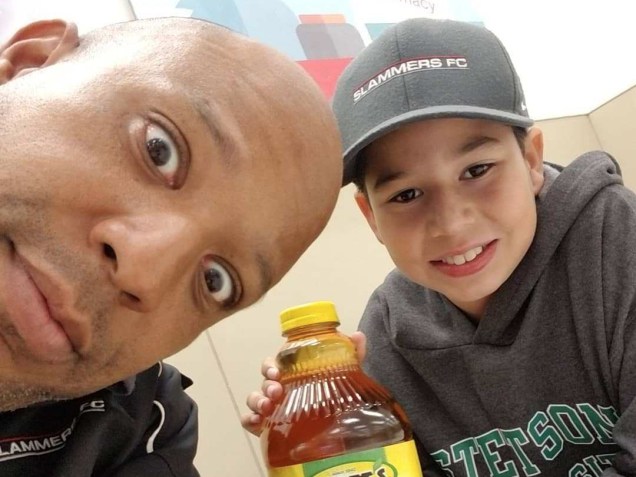
The above photo is of Ramon Reid and his son. Ramon knows what putting fatherhood into action is all about. We need more men like Ramon in this world.

You can help me by sharing this on Facebook or wherever you hang-out online.

If you would like to receive this blog in your e-mail each Monday, please click “follow” above.

The Red Phone to Joy

dreamlink_big-ideas_popsicle-hotline-1024-x-768In the Hollywood area of LA, there is a smallish hotel that is completely unorthodox. The Magic Castle Hotel was built a long time ago. The architecture is dated, the pool is right out of the 60s, to call it a hotel is kind of stretching the term. This place is really a glorified old-school motel. But, it is consistently ranked as one of the top five places to stay in Southern California. Five-star reviews across every website and rating group. They’ve taken a boring, run-of-the-mill motel, and turned it into one of the hottest places in town, by finding moments of joy.

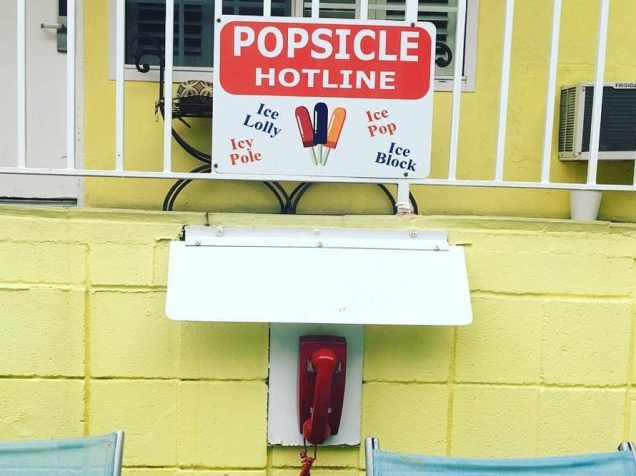
The staff of the Magic Castle does things that, by everyone else’s standards, make no sense. They have free candy bars and snacks all day at the front desk, free soda fountain and soft serve ice cream for anyone who wants it, they just give a lot of things away. But the service everyone talks about, the thing everyone remembers, is even weirder. By the pool is a tacky, bright red phone that is the “Popsicle Hotline” Pick it up, and the white-gloved wait staff will bring popsicles on a silver tray to where you’re seated, all free of charge. Popsicles are not expensive, they’re frozen, flavored, sugar water. But when they’re presented in this whimsical way, it is so surprising; everyone is enthralled by the experience. The team at the Magic Castle has taken something ordinary and, by creating these little moments of joy, have created something extraordinary. God wants to do the same thing in our lives.

The things of God make no sense when looked at through the logical eyes of this world. The first shall be last; you must give away your life to save it, etc. That God would pour out His grace on us as a free gift for the asking makes no sense. But God does not work by the rules that everyone else is expecting; He creates His own rules that run counter to the common sense of this world. He wants to bring joy, on a silver plater, to where we are.

It makes no sense that by serving others, we would find joy, but that is how it works in the things of God. The standard operating mentality of the world says, “Collect more toys, make more money, buy a bigger house, get recognition, these are the things that bring joy, these are the thing that matter.” God has an entirely different take on finding joy in this life. The idea of giving to others, serving others, taking the humble servant’s attitude is crazy when looked at through the harsh eyes of the world, but it works.

The team I work with here in Mexico has the privilege of seeing people experience joy every week. We host short-term missions teams from around the US here in northern Mexico. They come down to serve in home building, medical outreach, ministry construction, or any number of areas where they can give from their talents. Every group is different, every group has different skills, and every group has different expectations. There are a few common denominators though; people are more alike than everyone likes to think. People from different cultures, different incomes, etc. tend to have the same reactions to some things. God’s rules universally apply to everyone.

Almost every group we host has the same responses to a service trip, “I’m leaving with so much more than I came with.” “I’ve experienced such joy.” etc. These are the types of comments we get from everyone. They come to give, they come to serve, they come to bless, and are blessed beyond measure. They find joy in the everyday acts of service they share with others.

God designed us to serve. The last example Jesus showed the apostles was foot-washing. God only wants great things for us, and He knows that serving others brings joy. Representing God’s servant’s heart to others brings those moments of depth that raise our lives to a higher level. Once again, the rules that God works under make no sense when viewed from a worldly perspective, but the rules of God work.

So how do we find joy? How do we experience those moments of surprise that bring depth to our lives? We can create them; we can reach out for that very cool red phone on the wall and order them delivered to us. God has given us the magic red phone to joy; He wants to deliver this to us on a silver platter. By seeking out those small moments of service we can find every day (not just on a mission trip) we can experience a connection with others, we can have an impact on others, we can make a difference.

Service does not need to be huge. A kind word to someone in hurting, helping someone load their groceries, shoveling someone’s sidewalk, are all simple acts that bless others and change us for the better. Live your life in an unorthodox way, live under God’s rules, find those moments of surprising joy.

You can help me by sharing this on Facebook or wherever you hang-out online.

If you would like to receive this blog in your e-mail each Monday, please click “follow” above.