
YOUR Kingdom? Or THE Kingdom?

pexels-photo-1266005If you’re focusing on building YOUR orphanage, please stop now. If you’re worried about orphan care everywhere, you have the correct attitude to care for orphans, carry on. It’s not about your kingdom; it’s about THE Kingdom. This applies to orphanages, churches, or any ministry you can mention.

When we first moved to Mexico and started receiving short-term teams, we quickly realized we did not have enough projects, or the right projects, for many of the groups coming down. We began coordinating projects in our town and with other local ministries. Then we did something that we didn’t know was fairly radical at the time. (We still don’t know a whole lot, we knew even less back then.) We started sending teams to other orphanages to serve. For a long time, this concept seemed to confuse people. The other orphanages wondered what our ulterior motives were, the groups didn’t know why we were sending them elsewhere, but we just saw it as spreading the wealth and helping people be as effective as possible. Aren’t we all worried about helping orphans?

We continue to send teams to other orphanages, and many now embrace our efforts to help orphan care wherever it happens. When you step back and look at it, it might be a little weird. It’s like a pastor getting up one Sunday and saying, “We’re kind of crowded, how about some of you visit another church from time to time?” Do we occasionally “lose” a team to another orphanage they visit? Sure, but maybe that’s not a bad thing. We are all called to different ministries, and we connect in different ways. If a group meets a new orphanage and decides they would rather work with them, great, everyone is happy, and we have room for more groups.

You can observe how rare it is for ministries to work together in any town in America; it is SO rare for churches to hang-out with each other. How many intersections have two or three churches that never talk to each other? I understand significant theological differences can come into play, but at the end of the day, if we serve the same God, then why is it so hard to work together? I once had the youth leader of a sizable visiting church ask me whether or not we support and work with smaller orphanages, I responded, “Sure, all the time. Does your church support smaller youth groups in your town?” He got the point I was making and became very quiet, it lead to some great discussions.

A few weeks ago, Strong Tower Ministries, an organization I help lead, coordinated an incredible event. (It wasn’t my project, someone brighter than I did the whole thing) Leaders from seven different human trafficking organizations, most of them working in the Tijuana area, were invited to come together for a weekend. Although they are all fighting human trafficking and helping people caught in the sex trades, most of the leaders had never met each other. Our team threw them together for a weekend in a big house, with a loose agenda, and piles of great food (priorities…). This is a group of people battling at the front lines of ministry, and you could feel the intensity of the people present. Over two days they shared, coordinated efforts, learned from each other, worshiped, and made plans to meet again. It was a weekend that will impact people and ministries for years.

“It is amazing what you can accomplish if you do not care who gets the credit.” Harry S Truman

The idea of ministries serving each other is starting to catch on in our area. Our small town in Mexico has about 4000 people and 12 churches. After several meetings lead by one of the churches, this coming Easter most of the churches are “closing for the day.” The collection of churches from our town are renting out a local rodeo stadium, and a combo Easter service is being planned. Worship will be lead by a new group made up from multiple churches, one pastor is taking the sermon, another making an invitation, each pastor will take a portion of the service. Each church is bringing what that can to make the service incredible. The collective body of Christ is coming together as one to celebrate Jesus’ resurrection in the center of the town for all to see. Wouldn’t it be great if this were to happen in towns everywhere?

Jesus spent a great deal of time talking about humble service. Humility isn’t putting yourself down or thinking you’re worthless. Humility is not thinking about yourself at all. If we put aside our desire to look better to others or to be in charge, if we didn’t care about building our own kingdoms, the church would look very different. Whose glory are you seeking? It’s a question we should ask ourselves daily.

You can help me by sharing this on Facebook or wherever you hang-out online.

If you would like to receive this blog in your e-mail each Monday, please click “follow” above.

Short-term Missions Start at Home

teamI’m a huge advocate of short-term missions. There is something about traveling to another country to share, serve, and experience life with others that is life-changing. Short-term mission trips are incredible for all involved when they are done in a healthy, reciprocal way. The best way to become a great short-term missionary is to be a great missionary to your community at home. Missions and Christian service should flow out of us all the time, wherever we are.
Several years ago, after I had been living in Mexico for a while, I was on the phone venting to a friend of mine after an exceptionally difficult week. I shared that I was involved in so many mission activities that I didn’t know where the line was between my missions life and my private life. He paused for a minute, and then responded with a few words that, although obvious, kind of shook my world, “Isn’t that the whole point? Our faith, our testimony, NEEDS to be our whole lives.”

The idea of anyone being a “missionary” for just a short trip is very odd when you step back and examine it. If we believe in the Gospel, and all that the Gospel is, it needs to be flowing out of us whenever and wherever we are. We can not compartmentalize our faith to a week-long trip or just a few activities to be checked off our “to-do” list. It needs to be who we are.

For many youth groups and churches, the short-term mission trip has become a staple of their annual activity, and this is a great thing. The important thing is to also be developing the heart of a missionary throughout the year and not just leading up to the week-long trip to Mexico, Africa, or Haiti. Why can’t any activity a youth group does be seen as missions? Throughout the year, we should be looking at any activity we do as part of our missions field. To compartmentalize missions into one or two weeks misses the whole point. We are called to serve others, build a relationship with others, and share the gospel through every part of our lives.

Even when a team is serving with us here in Mexico, we often see the compartmentalization of missions. “This is our schedule: work on these days, and then a fun day.” “We’re working for the morning, but then we’re going to the beach.” It’s like a switch gets flipped back and forth: “Christian / just a person / Christian again.” Fun days and beach days are great; we’re called to have a day of rest. But we need to be aware of those divine appointments that God has set up for us wherever we are, not just when the planned activities are taking place. We also need to be keenly aware that we represent the Gospel, for good or bad, wherever we are. We’ve seen way too many teams put on great programs with polished dramas, then turn around and destroy their testimony by going into our community and being rude and obnoxious in stores, restaurants, and with their general interactions with others.

It’s hard to imagine the early apostles compartmentalizing their evangelistic efforts. “Next week I’m traveling to Ephesus, planning some great activities.” “We’re practicing a really great drama for Corinth.” Yes, they traveled to all those locations, but I’m sure they were sharing the Gospel with their immediate neighbors, people in the market place, and people they just met along the road. Jesus had set that example. He obviously spoke with large crowds and presented very focused teachings, but He also shined at small gatherings, with the woman at the well, and whenever and wherever He interacted with others. This needs to be our goal as Christians.

The best training for short-term missions is becoming a missionary to your community. If you’re planning on building a home for someone in Mexico, practice by volunteering to do home repairs for someone in your church. If you’re going to do food distribution in Haiti, volunteer at a local food bank in your home town for a few hours a week. If you want to reach the broken or lonely in Africa, visit a retirement home and build some relationships down the block from where you are now. If you’re going to serve the world, start with washing the dishes for others in your own home.

At no time in history has it been so easy or cheap to travel around the world, this gives us incredible opportunities to share and serve with others. But, if we’re not sharing and helping with others who we live with and interact with every day, why should our lives be different because we’ve traveled to another country and are living out of a backpack?

Take a mission trip, go into the world and experience the profound joy of serving with others and representing Christ well. But practice at home first. Your walk with Christ will be better, your life will be better, and you’ll be a better missionary, wherever you are.

If you would like to receive this blog in your e-mail each Monday, please click “follow” above.

You can help me by sharing this on Facebook or wherever you hang-out online.

What About Dad?

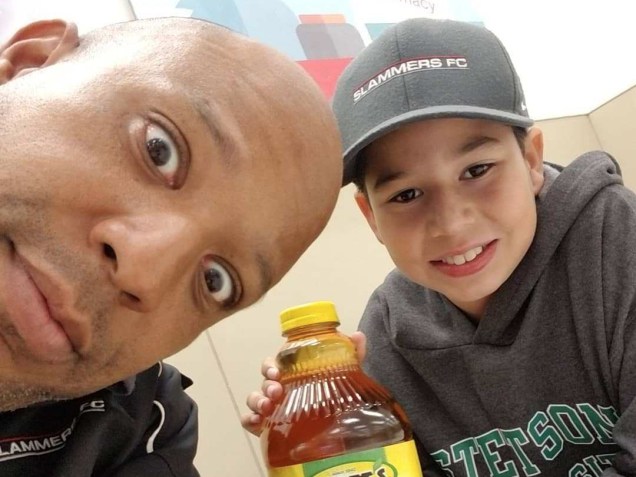
50984016_10216681108634208_1859912021047246848_o.jpgFather, dad, pops, whatever word you use for the male parent in your life, it can bring up deep and complicated emotions. Our earthly father, and our relationship with him, for good or bad, will influence us for our entire lives. When you’re dealing with an orphaned or abandoned child, this can be profoundly complicated. Where does their security, and definition of fatherhood, come from?

It’s the rare movie scene that causes almost every male to tear up, the end of Field of Dreams is one of those scenes. When Ray Kinsella (Kevin Costner) plays catch with his dad as the sun sets it will squeeze a tear out of almost any man. That moment of healing between a father and son, the symbolic act of the “catch” as something is passed between them is powerful. There is just something about the relationship we have with our father that is universal. It’s not always great. Eventually, we realize that our parents are just flawed individuals like everyone else, but that relationship will brand us and follow us. It is reflected in the way we live out our lives, and how we parent our own children.

My wife and I were blessed with great fathers; men who lived as faithful providers, good examples, and loving husbands. They both lived by a defined moral compass. Although we’ve both lost our fathers over the last few years, their influence remains and continues to guide us. There are many things I remember fondly about my dad. He lived in a precise and consistent way: same job his whole adult life, ate dinner at the same time every night followed by the evening news, we were at church EVERY Sunday in the same pew. His temperament never changed; he was a rock. The worst I ever heard him cuss was the occasional “ah hell.” He gave me my love of Steinbeck novels, fine woodworking, and classical music. He made me who I am and I miss him deeply.

For any of us, our relationship with our earthly father is intertwined and woven together with our image of who our Heavenly Father is. Grace, acceptance, stability, discipline, love, all of the emotions and attributes we believe about our God are viewed through a window tinted by the image of our earthly father. Our heavenly Father is perfect; our earthly fathers are flawed. For many people, believing in a perfect Father after being abandoned or abused by their earthly father takes many years of healing, if it happens at all.

Restoring the image of a healthy father figure is essential to the long-term healing of a child who has been orphaned or abandoned. This restoration does not happen over-night, and it needs to been done with great care. Whether you’re caring for a child in an orphanage, one in foster care, or one you’ve adopted, this healing of the father image needs to happen if the child is ever going to grow into a healthy adult. It’s also critical if a child is going to have a healthy image of who God is.

If a child, especially a male child, does not have a male showing what a healthy person is, they will seek out whatever examples they can to see how to live their lives. I’ve seen this happen to young men who are raised in poorly run orphanages. They leave home and have no history of a strong male example to draw from as they make life decisions. How to act as a man of God, how to treat women with respect, how to walk with dignity. They spend much of their lives approaching life, and relationships, in a broken way. Their marriages fail, their faith never matures, and they’re left with finding their way in life from an unhealthy stew of input from wherever they can find it.

I do not believe the healing of the father image happens in counseling or “quality time,” although both of these things play a part. Healing takes time. A lot of time. Years of consistent healthy male examples in the life of a child. A child needs to watch healthy men of God living out their lives on a day to day basis. They need to watch healthy decisions, reactions, and actions take place for many years for the healing to take place. By seeing a solid male in action, showing grace, stability, guidance, love, and acceptance, a child can begin to understand who God is. Much more than we can ever realize, although we are flawed, we represent who God is to our children. We need to truly take on the image of Christ if we are to have a hand in the healing of broken children.

A few days ago, I was at a BBQ with several of the orphaned children (now adults) who were raised in our home. Midway through the party, I watched as a great young man, now married with three children, patiently and slowly showed his attentive eight-year-old son the proper way to season and grill steak. This might seem like a simple act, but I watched this man represent what it means to father someone, and show the patient guiding hand that our heavenly Father represents (The steak was pretty good also).

If you’re caring for orphaned or abandoned children stay the course. Healing doesn’t happen quickly. Continue to live a life representing who our Heavenly Father is. You are being watched more than you realize, they will follow your example.

The above photo is of Ramon Reid and his son. Ramon knows what putting fatherhood into action is all about. We need more men like Ramon in this world.

You can help me by sharing this on Facebook or wherever you hang-out online.

If you would like to receive this blog in your e-mail each Monday, please click “follow” above.

“Isn’t that Dangerous?”

pexels-photo-1895146I recently met with someone who is running a unique and inspiring ministry in the heart of the red-light district of Tijuana. Four years ago, this petite single woman moved into an area of ministry that most people would never consider. She opened up a little store-front location to host times of worship and prayer in the midst of a spiritually dark area. Several days a week they hold prayer and worship services that are open to anybody (I’m not using her name for her protection). She now leads teams out into the streets to give the sex workers flowers and tell them they are beautiful. She has been threatened, yelled at, and attacked for her work. I’m sure she’s been told that she is crazy. Does this sound like someone else you might know or read about? Many people claim to be followers of Jesus; few people put His example into action like this amazing woman.

Is the woman you just read about doing some astounding work? Yes. Is she hanging out and befriending people most people would never spend time with? Absolutely. She is many things, but the one adjective that is never used to describe her is “afraid.” She is oddly and sadly unique in much of the church today.

This month, my wife and I will have completed twenty-five years living in “dangerous” Mexico. We get asked a lot of questions about our work in orphan care and short-term missions. The one question we get asked far more than anything else is, “Isn’t Mexico dangerous?” The vast majority of people’s first question is about safety, not about the work, not about what God is doing, not about abandoned children. The first question is almost always about the risk involved. We’ve never gotten sick from the food or water. We’ve never been robbed or shot at while in Mexico (Ironically, I was robbed while in San Diego last year). Are some parts of Mexico dangerous? Absolutely. Does it matter? No. Life is dangerous; get over it.

As you read through the Bible, note that being concerned, first and foremost, about our safety was not what Jesus instructed us to do. When the apostles woke Him in the boat to calm the storm, He rebuked them for lack of faith, calmed the storm, and went back to sleep. How many of us lose way too much sleep worrying about things that never (or rarely) happen. “Fear not” comes up a lot in the Bible. “Cover your butt,” “Watch out for scary people,” “Don’t do anything risky,” doesn’t come up so much.

Fear can have an incredible influence on people. A great deal of marketing is in some way based on fear. “Buy this insurance to protect yourself from any disaster.” “Buy this clothing, or you might not be cool.” “Try this diet, or you might stay fat.” Politics is almost all based on fear. “Vote for me; the other guy wants to raise taxes.” “The other party wants to take your guns, your rights, your money, etc.” “We can’t let THOSE people into our country; they are different than us and scary.” Watch any cable news, and you will hear versions of these statements every few minutes. Fear can have a corrosive and powerful influence. Fear can rob us of joy and prevent us from experiencing everything this life has to offer.

Unfortunately, when it comes to fear, way too many churches are indistinguishable from the world. A few years ago I was staying with a worship leader of a mid-sized church in a friendly, middle-class suburb in the US. As we were leaving for the church, he loaded his gun and holstered up. When I asked about it, he said that at any service there are two or three people armed for security reasons. I have no problem with basic security, but I found it deeply ironic that the person who is leading worship, the one singing about trusting God with all, that He is our rock and fortress, would be packing heat. (Write to me and yell if you like, I’m actually pro second amendment, I’m just using this to make a point). “Yes God, we trust you with all, but I feel better when I can shoot at someone.”

The point of this rant on fear in the church is to bring up what it does to short-term missions or any area of service. Fear can rob us of incredible opportunities, and prevent us from experiencing all that God has planned for us. When we’re held in place, and prevented from taking a risk for God due to fear, what is that saying? “I trust you God, but I’d rather just show up on Sundays and watch from my pew, wouldn’t want to take a risk now would I.” The Christian faith is an active faith. Go. Serve, Give, Sacrifice. Not because we’re called to, it’s because we can’t help but act when we realize what God has done for us, and how grateful we are to Him.

There are some things you should definitely be afraid of. Be afraid of being out of God’s will. Be afraid of reaching the end of your life and having regrets. Be afraid of wasting the precious few years you have left.

You will die. The US will collapse eventually. Some of the things you fear will come to pass, just know that ultimately it just doesn’t matter. Our God is bigger than anything we will encounter in this life; it’s a good thing this life is only a temporary situation. Ultimately, we’ve already won. The world says we should be afraid. We are not of this world. Live accordingly.

If you would like to receive this blog in your e-mail each Monday, please click “follow” above.

You can help me by sharing this on Facebook or wherever you hang-out online.