“I’d Rather Help Kids in America.”

colorchildIt doesn’t happen often, but now and then, people have an odd reaction when they hear that I work at an orphanage in Mexico. They say, “I’d rather help kids in America.” This statement brings up so many uncomfortable and unhealthy issues. The snarky side of me really wants to say, “Great, what are you doing for kids in America?” I can almost guarantee they aren’t doing anything for anybody.

The idea that we should only help people in our own country goes against everything Jesus taught. We are called to help wherever there is a need. The fact that mankind has set up arbitrary lines and fences across land masses doesn’t change the fact that there are needs everywhere. When I get asked, “Why Mexico?” my response is, “This is where my feeble efforts can have more of an impact.” In much of the US, children in need have a variety of safety nets, both private and government run. In most of the world, kids fall through the cracks. The other reason I like serving here is “return on investment,” a small donation in the US can help, the same amount used in poorer countries can dramatically change lives. We need to be helping wherever we feel called, and where we can have the most significant impact.

The bigger question about where and who to serve is, in-spite of our first reaction, what’s the difference? More and more, it’s becoming a little “gray” as to what nationality is. I don’t want to go down the road of the current immigration debate, but it’s not always clear where a child should be. Questions of nationality are not always easily figured out.

Although our children’s home operates in Mexico, we sometimes find that a child in our care is, in reality, a legal American citizen who wound up in Mexico. It’s always interesting to see the reaction to that, both from the child and from others who find out. It shifts identity, expectations, and entitlement. We are in large part defined by our history; it’s who we are. Our heritage also identifies us, it’s where we come from. But sometimes it’s hard to pin down. A child born in the US to someone undocumented is legally a US citizen; it’s in our constitution. If the parent winds up back in Mexico for whatever reason, what should that child’s nationality be considered? They are legal US citizens with all of the rights and privileges that brings; they are also Mexican by blood. But why should that matter if the child is in need?

Years ago, we received a cute little blond-haired, blue-eyed, little boy. Wow, the drama that caused. He was an American, born outside of Chicago, abandoned by a parent on drugs with a neighbor here in Baja. It was interesting to see and listen to the reactions people had. We had a few American children in our home at the time but because this one child was “white” people went crazy. Someone called Child Protective Serves in the US, a network news crew showed up, it was a big deal. We kept asking ourselves, “Why is this child more deserving of attention just because of his skin tone?” “Why is everyone stepping over other needy children to get to this one with blue eyes?” We know the answers, but it’s still frustrating. Because of the attention this one child received, within 30 days he was placed with a family in Southern California. A child going back to the US almost never happens, and never quickly. This little boy just happened to win the genetic lottery. Why are the other children not deserving of a healthy loving home?

Ultimately, we are all the same family. The plot of dirt we happen to be born on should not impact whether or not we’re deserving of help, opportunities, and people who care for us. I’m not blind to the differences between countries, but if we share one Heavenly Father, aren’t we all by definition one family? If we have the right perspective, if we see the bigger picture, we need to be working to balance the scales. We need to raise children up, wherever they’re from, with opportunities to grow, learn, and become all that God has laid out for them to be.

Should we be helping kids in America? Sure. We should also be helping wherever there is a child in need, wherever there is an injustice, wherever God is looking down and asking, “Who will help this child of mine?”

Matthew 25:40 “Truly I tell you, whatever you did for one of the least of these brothers and sisters of mine, you did for me.”

Please share on Facebook or wherever you hang-out online. Thanks.

If you would like to receive this blog in your e-mail each Monday, please click “follow” above.
Orphan Identity: Victim or Victor?

pexels-photo-346796-e1535913334664.jpegWe all have an identity. We are more than just going through life; we are someone. It’s part of our human experience that we identify as more than just a person; we label ourselves as a way of distinguishing ourselves from the many people around us. We might be an athlete, a vegan, or a foodie. We might be a cancer survivor or recovering alcoholic. We’re German American, ginger, or a Buckeyes fan. Even within our faith, we define ourselves: Southern Baptist, Catholic, Methodist, etc. Sometimes we’re born into an identity, sometimes we choose the identity, sometimes society lays an identity on us, but it’s part of who we are. It helps define us. There is a reason the many DNA testing businesses out there are doing so well, people want to know their history, they want to define who they are in some way. “I’m 59% German, 33% Irish, but I have 8% Indian in me.”
For an orphan, identity can be complicated. By definition, a child in an orphanage usually has no history. They frequently don’t know where they came from; they are often brought in with no birthday, no birth certificate, nothing to mark their existence other than they’re alive and breathing. Starting from zero is hard.

A big part of orphan care is helping children shape their identity from scratch. Caregivers tend to focus on the basics: food, shelter, medical care, maybe education. The basics are essential (that’s why they’re called the basics) but there is a deeper level that needs to be addressed once the basics are met. We need to build, or in some cases re-build a child’s identity. To help them see themselves, and identify as, someone of value.

The very word “orphan” brings up all kinds of reactions from people, usually not good. Pity is usually the first reaction, in some cultures contempt: “no one wanted you.” The reaction to being labeled orphan is almost never a positive force. It’s our job to change that.

In many orphan or foster care situations the child embraces the pity reaction, and their identity becomes “victim.” They define themselves by what’s been done to them by their families, and by society. Living in victimhood is a tough road, it means you’re always a little less than others, and it also means you feel entitled to the pity that comes your way. Less is expected of you. When less is expected, that usually results in, something less. If great things are expected, great things can happen.

In some ways, we’re all orphans. We’ve all been hurt, we’ve all been abandoned, and we’ve all been victims of the world. How do we redefine ourselves and build a healthy identity that was intended for us? The first step is to realize we are not orphans, our Heavenly Father has adopted us into the greatest family of all. This is no small thing; it marks us, it sets us apart, it gives us an inheritance beyond words or understanding.

John 14: 18-20 “I will not leave you as orphans; I will come to you. Before long, the world will not see me anymore, but you will see me. Because I live, you also will live. On that day you will realize that I am in my Father, and you are in me, and I am in you.”

To get this across to a young child is a challenge, but if we treat them as the royal children they are, and not as victims, they will begin to see themselves as worthy of love, worthy of belonging. They will take on the identity we place on them, they will see themselves as we see them: as special, precious children in God’s sight and ours.

Shifting identity starts with small details: attentively listening to a child, giving them the attention they desire, having a special cake on their birthday (even if it’s a made-up date). Letting them know they are special goes a long way in moving them from victim to victor.

Another profoundly powerful way to move someone from victimhood is to show them the joy of serving others. Along with the obvious blessing of being part of a family, comes the responsibilities of being part of a family. Jesus came to serve others, and we are asked to do the same. As a child might “help” their parent to fix the car or prepare dinner, being allowed to help in our own feeble way builds a healthy pride, pride of being part of the family, part of something bigger than us. There is something profoundly healing for us as we reach out to help others. By showing someone, even a young child, that they have the power to influence positive change in someone else’s life is profound. It gives them power, and it brings joy, it’s deeply healing. Service moves people from someone to be pitied, to someone representing God. This is a big deal. This creates an identity that is larger than anything the world might place on us.

Our identity defines us. Who are you? And who do you encourage those around you to be? Expect and encourage people to live in the identity of our Heavenly Father. There is no greater label, identity, or way of looking at life.

Life Isn’t Fair

salvery2In running an orphanage, we get asked the same questions by many different people. One concern or question that comes up a lot from child sponsors is, “If I get a gift for the child I sponsor, won’t the other children feel bad?” Maybe I’m a jerk (it’s been brought up before), but my response is, “These kids are growing up in an orphanage, they know more than anyone: life is not fair.” Our kids have been dealt a lousy hand. Through no fault of their own, they have been abused, abandoned, and left alone in the world until they are brought into our care. Are they any less worthy of a family than the children they go to school with? From a very young age, our children understand at a deep level; justice is hard to come by in this broken world.
At some level, we all think the world should be fair. Listen to young children and the idea of fairness come up a lot. “He got more than I did, it’s not fair.” “You won because the sun was in my eyes, it wasn’t fair.” As we get older, we understand the world better, and we experience more and more that “fair” is hard to come by. One person gets laid off, and others don’t. One person comes from a broken home; the next person has both parents. A tornado or fire moves through a town, destroys some homes and jumps entirely over others. We can scream about it not being fair, but fair and just are terms that don’t apply in too many circumstances in this broken world.

Our Heavenly Father is fair and just, but this world is a dark messed-up place. We face injustices all around us. So what are we to do? We need to work to balance the injustices we can. We can’t control natural events or illnesses, but there are some things in our sphere of influence that we need to be aware of, and we need to be working to solve. We need to push the scales in the right direction when we can, to bring the world into a fairer more just place.

Micah 6:8 says: “He has shown you, O mortal, what is good. And what does the LORD require of you? To act justly and to love mercy and to walk humbly with your God.” The reactions to justice and mercy are very different. Love mercy, but ACT justly. To act justly requires us to move, it requires effort, it’s working to change the outcome or circumstances.

We’ve all read the story of the good Samaritan. He came across an injustice and acted accordingly. He couldn’t solve all the world’s problems, but he could address the one injustice before him. He is the perfect example of “acting justly.” He knew what the Lord required of him.

If we open our eyes, there are ways to work against injustices all around us. Some big, most small, but all important.

I’ve had the privilege of visiting and building a relationship with City of Refuge Ministries in Ghana; they give a stable, loving home to children rescued out of slavery (yes, slavery is still a massive issue in much of the world.) Recently, IJM, another great organization rescued two boys from slavery and placed them with the City of Refuge team. You can read about it here: police-rescue-children-from-forced-labor-in-ghana. Some might say, “It was just two boys.” This is how change happens, one or two people at a time. These organizations are doing incredible work. Are you called into rescuing children from slavery? Maybe, probably not, but you can support others who do this frontline work. Even if you don’t address huge injustices or hurts in this world, there are small acts we can all do; everything counts, we need to ACT justly.

The good Samaritan didn’t rescue child slaves, he didn’t change the world as a whole, but he changed the world of the one person in his sphere of influence, he helped the one before him. If you know how to cut hair, offer your services to a homeless shelter. Volunteer to read to children at a community center or mentor a child from a broken home. Find out who is out of work in your church or school and offer to bring them a meal (or surprise them with an anonymous box of groceries on their porch). Through small acts of kindness, we can tip the scales in the right direction.

The Christian faith is not a spectator sport. We need to be that light on a hill this world so desperately needs. Jesus spent His time addressing the injustices he saw around Him; this is the example he gave to us, this is what we are called to do. Acting to move the world towards justice does nothing to ensure or enhance our salvation, Jesus did that, but a big part of our faith is taking on His image and representing Him well.

Act justly, love mercy, and walk humbly with your God. Good advice.

Please share with others on Facebook or wherever you hang out online.

Stop Hitting Kids With a Hammer

hamerI recently went out to lunch with a friend from Thailand. He’s an American who moved there several years ago with his family to open an orphanage. Within a couple of years, he had a revelation and shifted his entire ministry from orphanage work to doing everything in his power to keep healthy families together, he is passionately anti-orphanage. We had a great time.

Now you might be asking why I would take the time to meet with someone who is working against what I’ve spent most of my life building. He’s never going to be a donor, he’s never going to “come around” and open an orphanage again. He knows we’re not closing down our home and we’re not a donor (he mainly travels for fundraising). So why do we make it a point to get together whenever we can? It’s an “iron sharpens iron” thing. We make each other better, we both understand that we are an important part of the eclectic mix of ways to care for at-risk children.

Most of the time if there is a serious issue people feel passionately about, there is very little room for them to look at it from a different angle. Once someone is set on their ideal, everyone else must be wrong. A short glance at most Facebook feeds is a good example. So many people are feverishly posting about their pet topic, while “un-friending” anyone who might disagree with them or have the nerve to question an opinion.

The problem is, in most of the larger issues plaguing society, there might be several answers to the same question. How do we help with the homeless situation? How do we address the opioid problem in the US? How do we improve education? Ask 20 different people these questions and you’ll get 20 different, frequently very strong, opinions. Maybe, just maybe, the answer is; we need several different answers and many of them might be right.

Every society has a percentage of children that wind up in the “system,” whatever that system might be. There have been orphaned and abandoned children for thousands of years and we still haven’t figured out what to do about it. Most countries shift over decades from orphanages to foster care, neither are great. Some policies push for keeping families together at all cost, this is frequently a nightmare for the child due to abuse or severe neglect. So what is the answer? We need it all. We need every tool in the box. We need to understand each child and situation is different and should be handled in its own way. This is NOT easy.

Keep families together: This is ideal, whenever a family is broken up it’s a horrible thing. Some families need a little push of coaching to keep it together. Maybe it’s marriage or financial counseling. Maybe a free or cheap daycare so both parents can work. Perhaps a short-term loan or a one time gift to keep a family from becoming homeless or having their children wind up in the system. Sometimes, when abuse or severe neglect is going on, it is best to break up the family.

Foster Care: When a family can’t, won’t, or shouldn’t care for their child, and extended family is not an option, foster care can work. It’s not great, and it always depends on the quality of the foster family. Foster care is the direction many countries go to over time. It works, but it’s not an ideal situation. Lack of stability is a real problem as children are moved around for many reasons. Put yourself in a child’s place; if we had to change housing, churches, schools, relationships, etc. every few months, we’d probably have some issues also.

Orphanages: Orphanages have been used for a very long time. Unfortunately, many orphanages around the world are underfunded or run by the wrong people with the wrong motivations. Some outstanding homes do a great job with the children, raising them up to be healthy physically, emotionally, and ready for life. The problem is the great homes are the exception. Many homes are run by people that love children and want to help, but they are in over their heads when it comes to fundraising, staff training, etc. Without solid management, orphanages can be a disaster.

Adoption: Adoption, when it works, can be fantastic. We love to see our children adopted into loving, stable homes. Unfortunately, many children are not adoptable. Once a child is over five years old, the odds of adoption drop to almost nothing. Many children have multiple siblings, or there could be a family member still in the picture that might eventually be able to take them back. For the vast majority of children in any system, adoption doesn’t happen.

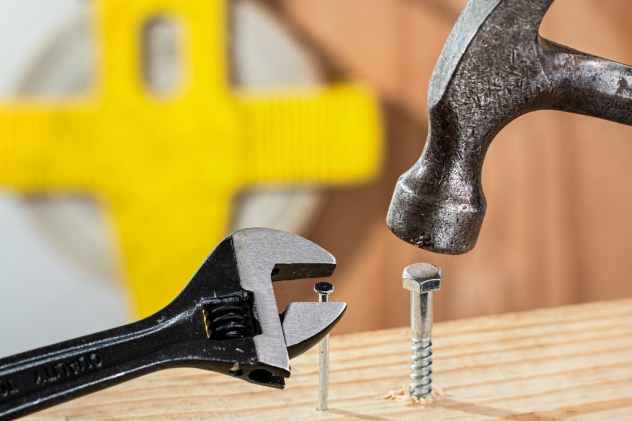
Listed above are just four options for children at risk. We need to use them all and stop trying to fit every child into the one system we are personally in favor of. Sometimes a child isn’t a good fit for one particular system of care. You might have heard the saying: “When all you have is a hammer, everything looks like a nail.” If we stay focused on the one solution we have at our disposal, we miss out on the many other tools that might be available. We need to use the correct tool for the job of helping at-risk children. We need to stop hitting kids with a hammer and reach for the right tool.