Breaking the Cycle of Orphan Care

IMG_7507 2Most of the time, orphan care seems like a losing game. The bulk of the time it just doesn’t work the way we envision it. Often, a child is brought to a home with so much baggage that it’s almost impossible to help them reach a healing place emotionally. Frequently, a child is in an orphanage (or foster care) for a short period and then returned to the family, and the cycle of abuse or neglect continues. Orphan care can be a discouraging, heart-wrenching journey. But it can work some of the time. The times orphan care does work makes all of the other times worth it.

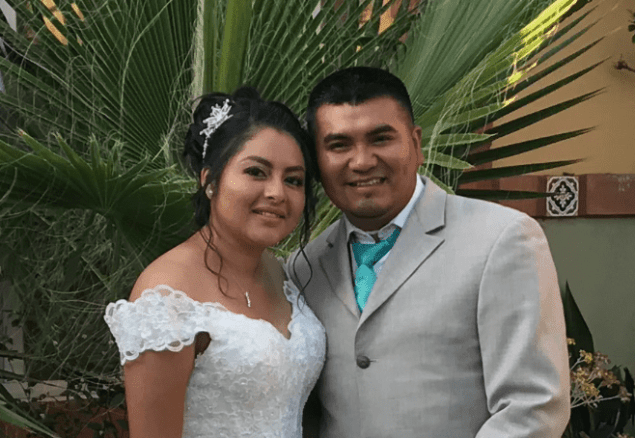
Recently, two great young adults married. Weddings go on all the time, but this marriage was a little different. Both had been raised in an orphanage. For reasons that aren’t important here, they were each brought to an orphanage with other siblings at a very young age. They were raised in this large home, and it was the only family that they knew for many years. They grew up independently, she going on with her education, him apprenticing in construction and learning various marketable trades. After they were out and on their own, they started dating and continued to make healthy life decisions as they planned for the future. A few years later, once she graduated, and he had established his own successful construction firm, they decided to marry. Today they are constructing their own home and building a wonderful life together. They’re a joy to be around. Granted I am biased; I so am proud to call Jerri and Yury two of my many children.

So how did these two beat the odds of becoming healthy productive adults while being raised in the system? I’m not saying we have all the answers, and I’m not saying every child brought to us has the same outcome, but it can work. We have found that many of the children raised in our home for years have gone on to be healthy productive members of society. Today there are doctors, lawyers, businessmen, many healthy individuals that can look back and say they were raised in an orphanage. It can work.

Many factors go into what makes a successful orphanage, even defining what “successful” means can get complicated. But, there are two factors that we’ve found to be the most impactful for children who need long-term care and healing.

1) Consistency. We all need a stable environment. Most children in the system anywhere in the world are moved to new homes, returned to blood relatives and then removed again, moved to another home, etc. If we each had to change homes, schools, friends, churches, etc. every month or two we would have some serious issues also. Constantly shifting living arrangements is not how people are designed to live and grow. God is consistent; He does not change. We all need a certain level of security in our lives. Over time, we’ve found that children given a loving, consistent upbringing will eventually learn what it means to feel comfortable, to know they are loved and wanted. We all need this.

Part of consistency is building traditions into our lives — the same activities for the holidays, the traditional meals, celebrations, and events that occur annually. The simple rituals that happen in most families: birthday cakes, the tooth fairy, etc. almost never occur in the lives of children who are in the system. They never know what the next week will bring, they don’t know what to look forward to. We need to be consistent in our care and model stability in these fragile lives.

2) A Servant’s Heart. We are designed to serve others. Most child-care systems never give the children the privilege of serving others. Children are fed and cared for, but a life of just receiving is an empty life. It also creates a victim mentality that does not make for healthy relationships in adulthood. By allowing children to experience the joy of serving others, it gives them purpose. When a child is abused or abandoned it can be hard to show them they have value. When a child has been thrown away, it teaches them at a profound level that they have no worth. By showing them they that can have a positive impact on others, it shows them they have great things to offer the world. Service shows them they have value. Service shows them God wants to use them to impact other people’s lives in a positive way.

An attitude of service makes us all healthier. It makes us better workers, bosses, spouses; it just makes us better people. Christ’s example to us is a perfect servants heart. We need to not only follow that example ourselves, but we also need to instill that humble servant’s heart in the children we are raising. A humble servant heart is the most empowering gift you can give a child. It will heal them, and change them for the better.

Does orphan care always have a happy ending? No. But it can work. Even in the cases where we feel it’s failed, we need to know that the seeds we plant in the hurting children we encounter are what matters. Those seeds can grow down the road; they can impact lives. If you are in orphan-care, please know your work matters a great deal. Your efforts are needed, work through the discouraging times. It can work, hang on to the times when it does.
Best Orphanage Ever

When visiting orphanages, you never know what you’re going to find. There are some incredible orphanages. There are more than a few horrible orphanages, most land in the fuzzy middle doing the best they can with the skills and resources at hand. Every now and then I come across an orphanage that shifts my perception of what an orphanage can be.

Several years ago I was asked to go and evaluate an orphanage in Tijuana. This happens from time to time, a US group wants to help an orphanage, but they would like an outside opinion first. My wife and I made an appointment with the director and hit the road to do an evaluation.

As we followed the directions and got closer and closer to the location, we kept turning to each other and saying “This can’t be right. Please tell me this is not the right location.” We were driving through twisting dusty hills into one of the worst areas in Tijuana. We finally found the “street,” it was just a very rocky dirt alley leading up to a ramshackle two-story apartment building with a couple of mangy dogs asleep outside. As we stepped out of our car we were hit by the stew of smells that are produced when too many people are living in too small an area: a mix of burning trash, poorly built septic systems, greasy food, and spilled motor oil. The sounds matched the smells: dogs barking, a rooster crowing nearby, some loud ranchero music playing down the street with too much bass, you get the idea.

The director met us and brought us inside. The orphanage cared for about 12 children in a tiny two bedroom apartment downstairs from a drug dealer. There was so little room inside that they had set up a homework and play area in a 20ft x20ft dirt yard with a tarp strung across to create some shade. Their only van had been stolen two days before we got there. The furniture and flooring were well-worn, many years past what most people would use. What happened in the next 20 minutes would shift my perception and priorities when it comes to orphanage management. It also shifted my understanding and definition of what poverty is, versus a poverty mentality, and what it means to bloom in whatever situation you land.

I encountered joy.

Although the apartment was tiny and overcrowded, it was immaculate and welcoming. The children each came over to shake my hand and thanked me for coming. We heard about their focus on education as a few of the children showed off their homework. They laughed as they shared of the ways they found to stretch their rice and beans diet. While I was there, one of the girls was carefully ironing each school uniform so they would be presentable and polished for the following school day. Although they might have been poor in a material sense, the had a dignity about them that showed a wealth beyond what most people experience.

In that home, we met a healthy, enjoyable, inspiring group of people. You could feel the affection the children had for the directors, and see the love and caring attitude the directors had for the children. Through the leadership of that home, the challenges of living in those circumstances forged an incredible family from the wounded children brought to them. It was deeply inspiring.

As we got back in the car, I turned to my wife and said, “That is the best home in Baja, including ours.” As we drove away, I called the group in California who had asked for the evaluation, and I surprised them with the strength of my opinions. My exact words were, “Throw money at this couple, give them anything they want.”

There are countless ways to judge an orphanage. Most people will look at programs, nutrition, maybe the quality of buildings or staff ratios. All of these things are important, but the most essential part of an orphanage is the heart and passion of the people running it. The same thing that makes a family healthy makes an orphanage healthy, the parents.

Frequently, the American mindset is: if there is a problem with an orphanage (or almost any situation) give more money to the problem. This does not help long-term in many cases. Yes, money is needed to run an orphanage, but if the leadership is dysfunctional or is leading from the wrong motivations, it will just be a dysfunctional orphanage that eats and dresses better. A dysfunctional church with a lot of money is still a dysfunctional church. A dysfunctional family with money is still a dysfunctional family.

Think of the families in your circles. My guess is there is very little correlation between material wealth and an emotionally healthy family. In most families, once the basics are covered, adding more “stuff” really doesn’t add quality of life. We all know happy, close, poorer families. We probably know some fairly dysfunctional families who have a great deal of money. The reverse can also be true, having money doesn’t make you dysfunctional, it just doesn’t guarantee functional either. Orphanages are just big families, it all comes down to mom and dad. Do they have a handle on things? Do they see the big picture? Are they healthy emotionally? Money can’t buy this.

You’re probably asking, “Whatever happened to that small orphanage? Today, many years later, they’ve moved to a much better location and the last I checked that have about 50 fortunate children in their care.

In orphanage work, or any ministry, always back solid leadership. Everything else is fluff.

If you would like to receive this blog in your e-mail each Monday, please click “follow” above.

You can help me by sharing on this on Facebook or wherever you hang-out online.

Crazy Cat Lady Orphanages

cat2People often don’t think about it, but orphanages tend to have distinct personalities. Some great, many not so great, but every orphanage has its quirks, weirdness, and oddities. Not unlike many churches: the legalistic one, the liberal one, those crazy charismatics, the one with the GREAT coffee, etc. Just like people tend to land in gray or shifting categories: the jock, the musician, the quiet guy, the goth girl. I’m sure you get the idea.

I’ve had the privilege to visit and/or help in a wide range of orphanages. The financially needy but well-run homes I love, the well funded but questionable homes are a big problem, the “family business” orphanages are hard to deal with, but the ones that are most frustrating are the “crazy cat lady orphanages.” The people with a big heart who can not say no to a child in need, they become overwhelmed, and everyone suffers. (In the future I might write more about the different styles of homes.)

I was talking with the leader of a national orphanage training organization, and I mentioned my observations. They smiled when I used the term “crazy cat lady,” they knew exactly what I was talking about. They responded, “Yup, and why is it always single females trying to save a hundred kids?” I had never noticed the single female part, but it was interesting that it wasn’t just me noticing this real problem in orphanage circles.

At first, most people would say, “Ahhh, sweet, what big hearts, they’ll help anyone.” But in reality, we all have limits; there is only so much any of us can do if we’re going to do it well. These homes are marked by the sheer number of kids they are trying to help, with little or no resources. One home in Tijuana had an odd reputation, the director had a huge heart, nice old lady, but she could not say “no” to anyone. She would take in any child brought to her. This sounds nice until you realize she didn’t have space, food, or staffing to care for the children she already had. She had resources for about 35 kids and usually housed 90. It was a nightmare. To make matters worse, if a women came to her from an abusive situation, she would “hire” the women to help care for the kids. Coming right out of abuse themselves, these women were not emotionally ready to care for 10,15, or 20 kids. These women could barely care for themselves. You see the problem.

Another time I was asked by a volunteer to consult with an orphanage about an hour away. She drove two other people and me into the hills of Tijuana, and we came up to a very sketchy area. We stopped and walked up to a three-story brick building that did not look too solid, with bars on the few windows it had. The building had one exit, one working toilet, the make-shift kitchen was on the first floor with the propane tank right next to the ancient stove (fire/death trap waiting to happen). I was given a tour and found about 50 children, filthy, lice-infested, no chance of an education. My first thought was, “These kids would be better off on the streets.” In speaking with the director, she said everything I feared: “I just can’t say no to a child in need.” “If only I had “X” I could do so much more.” She wasn’t asking for help with what she had; she wanted to build a huge building to care for 200 kids. The home had actually been shut down a few times by the government, but she kept moving to the next location and taking in new kids. Like a lady living with hundreds of cats, when the government removes the cats, a whole new crop shows up in the next few months. Crazy cat lady, but they hoard children instead of cats.

So what’s the point of discussing these challenging orphanages? Three points to consider:

1) Leadership matters. If someone has a big heart but does not have the skills to use it in the right way, it can lead to some complicated situations. Crazy cat lady orphanages are not run by bad people; they’re usually really great people, they just have some issues that get in the way of them being as effective as possible. Being truly self-aware is very rare, these people do not see the problems that are evident to all those around them. How we lead, and who we choose to follow, matters a great deal.

2) If you’re helping in an orphanage, or another ministry, like the ones described here, please be open to discussing the issue with the director in a loving, biblical way. First on your own, then with someone else. They may not listen, but you have an obligation to approach the issue in a healthy way.

3) If you are the “Crazy cat lady” in your area of ministry, learn that it’s OK to say no sometimes – give yourself a break. We need to know our limits. Most people probably don’t do enough to help those around them which isn’t good but trying to help everyone can be just as big a problem. No one can help everyone; we’re not called to. No one person can help every homeless person in their city. No one person can care for every foster child, this is OK, do what you can. Jesus did not help everyone; He helped those He could. He spent time alone, and He did the will of His Father, that is all we are asked to do.

Help, serve, give all you can. But it’s crucial to understand there is a balance and it’s so important to know your limits. A few less cats is not a bad thing.

Please share on Facebook or wherever you hang-out online.

If you would like to receive this blog in your e-mail each Monday, please click “follow” above.

Orphan Identity: Victim or Victor?

pexels-photo-346796-e1535913334664.jpegWe all have an identity. We are more than just going through life; we are someone. It’s part of our human experience that we identify as more than just a person; we label ourselves as a way of distinguishing ourselves from the many people around us. We might be an athlete, a vegan, or a foodie. We might be a cancer survivor or recovering alcoholic. We’re German American, ginger, or a Buckeyes fan. Even within our faith, we define ourselves: Southern Baptist, Catholic, Methodist, etc. Sometimes we’re born into an identity, sometimes we choose the identity, sometimes society lays an identity on us, but it’s part of who we are. It helps define us. There is a reason the many DNA testing businesses out there are doing so well, people want to know their history, they want to define who they are in some way. “I’m 59% German, 33% Irish, but I have 8% Indian in me.”

For an orphan, identity can be complicated. By definition, a child in an orphanage usually has no history. They frequently don’t know where they came from; they are often brought in with no birthday, no birth certificate, nothing to mark their existence other than they’re alive and breathing. Starting from zero is hard.

A big part of orphan care is helping children shape their identity from scratch. Caregivers tend to focus on the basics: food, shelter, medical care, maybe education. The basics are essential (that’s why they’re called the basics) but there is a deeper level that needs to be addressed once the basics are met. We need to build, or in some cases re-build a child’s identity. To help them see themselves, and identify as, someone of value.

The very word “orphan” brings up all kinds of reactions from people, usually not good. Pity is usually the first reaction, in some cultures contempt: “no one wanted you.” The reaction to being labeled orphan is almost never a positive force. It’s our job to change that.

In many orphan or foster care situations the child embraces the pity reaction, and their identity becomes “victim.” They define themselves by what’s been done to them by their families, and by society. Living in victimhood is a tough road, it means you’re always a little less than others, and it also means you feel entitled to the pity that comes your way. Less is expected of you. When less is expected, that usually results in, something less. If great things are expected, great things can happen.

In some ways, we’re all orphans. We’ve all been hurt, we’ve all been abandoned, and we’ve all been victims of the world. How do we redefine ourselves and build a healthy identity that was intended for us? The first step is to realize we are not orphans, our Heavenly Father has adopted us into the greatest family of all. This is no small thing; it marks us, it sets us apart, it gives us an inheritance beyond words or understanding.

John 14: 18-20 “I will not leave you as orphans; I will come to you. Before long, the world will not see me anymore, but you will see me. Because I live, you also will live. On that day you will realize that I am in my Father, and you are in me, and I am in you.”

To get this across to a young child is a challenge, but if we treat them as the royal children they are, and not as victims, they will begin to see themselves as worthy of love, worthy of belonging. They will take on the identity we place on them, they will see themselves as we see them: as special, precious children in God’s sight and ours.

Shifting identity starts with small details: attentively listening to a child, giving them the attention they desire, having a special cake on their birthday (even if it’s a made-up date). Letting them know they are special goes a long way in moving them from victim to victor.

Another profoundly powerful way to move someone from victimhood is to show them the joy of serving others. Along with the obvious blessing of being part of a family, comes the responsibilities of being part of a family. Jesus came to serve others, and we are asked to do the same. As a child might “help” their parent to fix the car or prepare dinner, being allowed to help in our own feeble way builds a healthy pride, pride of being part of the family, part of something bigger than us. There is something profoundly healing for us as we reach out to help others. By showing someone, even a young child, that they have the power to influence positive change in someone else’s life is profound. It gives them power, and it brings joy, it’s deeply healing. Service moves people from someone to be pitied, to someone representing God. This is a big deal. This creates an identity that is larger than anything the world might place on us.

Our identity defines us. Who are you? And who do you encourage those around you to be? Expect and encourage people to live in the identity of our Heavenly Father. There is no greater label, identity, or way of looking at life.