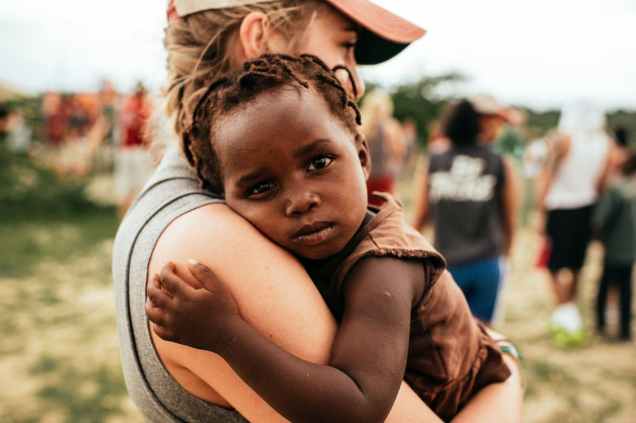
 One of the realities of orphan care is that everybody considers themselves an authority. Just like parenting styles in a traditional family, opinions on orphanage styles tend to shift frequently on how to “do it better.” These opinions change depending on what’s trending in any given year. In the last few years, there’s been a lot written on the potentially harmful effects of too many visitors on the children in an orphanage. After working full-time in orphan care for over 25 years, I could not disagree more.
The current theory states that having visitors in orphanages on a regular basis leads to attachment disorder problems later in life because the children are bonding with random, different strangers every week. In my experience, children raised in dysfunctional orphanages will have a wide range of emotional problems later in life, just as anyone raised in a dysfunctional family. If the children are bonding with random strangers every week, this means there are many underlying problems in the orphanage already. The bonding issue is just a symptom.
Let’s look at two scenarios:
Scenario 1) In our orphanage we have more visitors than almost any orphanage in the world. In a typical year, we host around 280 groups and have other “drop by” visitors on a regular basis. We enjoy hosting the groups, we enjoy leading them into service and short-term missions, and we believe when well-managed, these visits are healthy for everyone. So how do we avoid the random attachment? First, we have solid, consistent staff and plenty of them. Our children do bond with adults, but it’s with consistent adults in their lives. We have excellent child to staff ratios (about 4 to 1) and minimal staff turnover. Second, although we have a tremendous amount of visitors we intentionally limit the time they have with our children. We limit the visiting hours with our infants and toddlers, but more importantly, we encourage all of our groups to stay with us but travel out daily to serve in the community or with other ministries in the area. Our children see the “visitors” as just that, visitors dropping by to see our family. The majority of children who grow up in our home go on to have healthy marriages and families. In spite of all the visitors, most of our children turn out okay.
Scenario 2) In an orphanage that is understaffed and overcrowded, the children will seek random affection from any visitor that comes through. You can see this when you first arrive in a home. If children above the age of five are running over to hang on you and ask to be held, they’re starved for affection. A normal, well-adjusted 10-year-old doesn’t just walk up to a random stranger seeking physical contact; this is a symptom of much deeper issues in an orphanage. The children are not bonding with the staff and are severely lacking affection. They WILL have problems bonding later in life without a tremendous amount of healing. Most children raised in poorly run orphanages eventually produce children that wind up back in the system and have a tough time with healthy relationships. (Just like too many children from foster care.)
So how does someone, or a mission team, respond to these two examples? If you’re dealing with a healthy orphanage, one that has well-adjusted kids and is well run, continue to back their work. Find out what their needs are and keep supporting a healthy situation. Help them to continue to provide what their children need.
If you’re working with a home that’s not so great, it gets complicated quickly. A few years ago we were helping an orphanage near us that was a pit. The orphanage was overcrowded, filthy, and the children were deeply starved for affection. We were praying for a change in that home but did not have a lot of hope with the current management. With eyes wide open to the situation, we continued to send teams to that orphanage on day trips. The teams would clean, prepare meals, and spend time with the children in need of attention. I would encourage the teams by telling them “This home will probably never change, but for one memorable day, those children can know someone cares about them.” With these “hit and run” trips it was far from perfect, but it was giving these children something.
Everyone knows that eating junk food all the time makes for a lousy diet. In a perfect world, we would all have access to regular, healthy, balanced meals. If someone is starving, the standards drop, and junk food is better than no food. If a child was starving, and all we had to give them was a candy bar, that candy bar would mean the world to them. Long term, you would hope that the situation would change, but I don’t think anyone would withhold the candy bar because it’s not the ideal, healthy option. “Junk food” affection, when it’s the only real option, is better than no affection at all. People not visiting an orphanage to avoid this attachment and bonding problem does not suddenly make healthy bonding occur if the orphanage is understaffed and poorly run.
Caring for orphaned and abandoned children is obviously a complicated issue. It’s an issue that has been around for thousands of years and will not be going away soon. To believe that not visiting orphanages will help the situation is like saying not providing services and meals to homeless will end the homeless situation across America. I wish orphanages didn’t exist, but if they have to exist, they should be great, and they need our help.
Please, continue to follow the fundamental teaching of our Christian faith in regards to orphan care:
Religion that God our Father accepts as pure and faultless is this: to look after orphans and widows in their distress and to keep oneself from being polluted by the world. James 1:27
If you found this article helpful or interesting, please share with others.

 DJ from the orphanage