You Have a Greater Impact Than You Think

Africa3When you’re traveling on a short-term mission trip, how you’re perceived might be very different than you might imagine. Being accurately self-aware is difficult and very few people get it right. You have an image of yourself and who you are, other people have an entirely different image of you, and what you can do. Until we come to a closer understanding of how people actually see us, it’s hard to build relationships and move past the polite niceties of life.

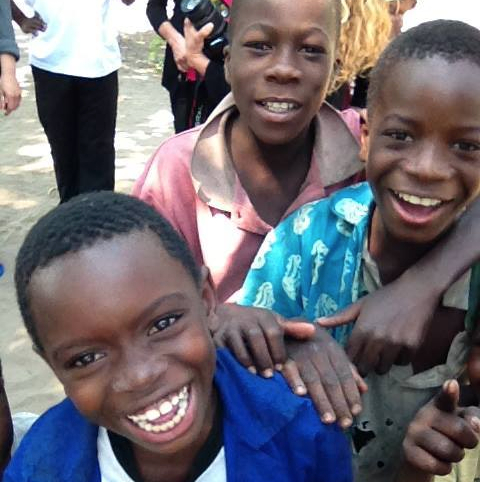
Years ago, I was visiting West Africa with my wife and a small team helping with staff training at an orphanage in Ghana. About an hour from the orphanage was a small grade school that had been, in large part, funded by a friend of ours from the United States. Our friend had asked us to stop by the school to say “Hi”, and to see how they were doing. It didn’t seem like that big of a deal. As is often the case in short-term missions, what we envisioned or intended turned out to be vastly different than what happened.

We had scheduled our “down day” from the work at the orphanage and had called the school to ask permission to come by in the morning to visit. Not a big deal, we thought we would meet with a teacher or two, maybe shake hands with the director, and hit the road. Yikes, were we wrong. When we pulled up, it looked like they had some traditional festival going on. We quickly found out that the “festival” was because some FRIENDS of the guy who funded the place were dropping by. They had suspended classes and put together a program with a few speeches honoring our visit; then each class performed a traditional dance for the benefit of our small team. After the dances they brought out some cookies and a few cokes for us as refreshments. It was a heart-warming, special time. It was also wildly awkward. We were nobody, we hadn’t done anything, but they shut the school down for us for the day. Afterward, it led to some great discussions and a lot of soul-searching among our team.

Money, or the perception of money, changes everything. In hindsight, we realized us showing up to that school was like Bill Gates and Warren Buffet (two of the richest people in the world) stopping by for dinner. Our team collectively was fairly broke, but in the eyes of the people at the school, we were wealthy beyond their imagination. Just the idea that we could pay to travel halfway around the world was a mind-boggling amount of money for them. We wanted to have a real conversation with the school director, but we could tell right away that it was just too weird all around. She was too intimidated by our perceived wealth and connections; she was too afraid to offend, the relationship was just out of balance. We did everything we could to tell them we were nobodies but it just wasn’t going to work.

We need to think about what our impact is in missions by just being present, for good or bad. We assume just showing up and watching might have no impact, but as we saw happen at the school, our visit might have wildly unintended consequences.

Here at our orphanage, we hold Sunday service on site in our small chapel. The service is kid-focused and a special, set-aside time for our family here in our home. We have a lot of visiting groups, and they’re sometimes surprised when they find out they’re not allowed in our service. “But we just want to watch and experience it.” OK, but if we add 10, 20, 30 Americans to our service, it just becomes a show for the American teams. It shifts the focus from our kids, and God, to a cultural presentation for our visitors. Not our goal.

We love our groups; we love when they visit, but for the good of the children in our home we need to maintain boundaries. If a group wants to experience a local service that’s great, we just send them to one of the many local churches in our area. We know their presence will change the dynamic of the local church service, but we’ve talked to the local pastors, and they’re fine with the groups joining in. The groups are welcome there. But the reality is they will change the “feel” of the service just by being present as foreigners. Foreigners that are perceived as being financially wealthy and well connected.

Short-term missions are important. Organizations around the world need help and want teams to come. I’m a huge advocate for short-term missions, and the powerful changes trips can bring into the lives of all those involved, both the teams going and the teams hosting. But it’s so important to do it in as healthy a way as possible.

We need to serve with humility, to serve with sensitivity, and to serve in a way that has as positive an impact as possible. Place yourself into the minds of the people you will be visiting, imagine the impact. Seek to be self-aware, to understand how people view you and be aware of how you are perceived. To be empathetic to others, to understand what they are experiencing, is one of the first steps to effective ministry.

Please share on Facebook or where you hang-out online.

You can receive these articles in your e-mail each Monday by signing up to “follow”

Reciprocal Missions – The Book

Screen Shot 2018-04-28 at 4.53.28 PMYou’ll notice this blog is a LITTLE different than my normal ramblings so I hope I don’t scare off my normal followers. (thanks for following by the way) This week marks what I hope is a milestone for the work I feel I’ve been called to. After more than a year of partnering with Phil Steiner, a fellow missionary with a heart for short-term missions, our book is available on Amazon. Reciprocal Missions – Short-term Missions that Serve Everyone (paperback or Kindle)
For anyone who’s met me, or read my blog, you know I’m passionate about short-term missions. Like many opinions I hold dear, not everyone agrees with me on this topic. There has been a great deal written in the last few years questioning the value of short-term mission projects. Some circles are condemning them as useless, damaging, or a waste of money. I get that, I’ve seen my share of mission trips that should have never happened. But, I’ve spent the bulk of my adult life hosting short-term mission teams here at our orphanage, and I can tell you without a doubt, short-term missions can change lives.

In Missions the idea of unintended consequences is nothing new. Well-meaning people trying to fix a problem can sometimes create a whole new set of problems. The fight against human trafficking has had a detrimental effect on international adoptions, the worthy effort to protect vulnerable children is causing unintended consequences or preventing adoptions. The consequences of people pointing out the many problems of short-term missions is that, unfortunately, many people have given up on short-term missions altogether. There is a lot to criticize, but that’s true of just about any human endeavor. We need to take a nuanced look at whatever we do and work to improve when we can. If we stopped doing everything that was challenging, we would be sitting on the couch the rest of our lives. God wants us to be challenged; He wants us to stretch and try new things, this is how we grow into the people we’re intended to be.

There is something God does in the hearts and lives of His people when they step out of their comfort zone, travel to a new place, and spend time observing and participating in ministry in cultures different from their own. We are part of a rich, dynamic, wonderful collection of believers around the world. It’s impactful and life-changing to go out and build relationships with fellow believers in central America, Africa, Cuba, or any area you might have a chance to serve.

Just like any effective ministry, in missions, relationships are key. Healthy, reciprocal relationships are critical to successful short-term mission trips. Without them, we will continue to do damage and be ineffective. The book we’ve released is a guide to help people navigate short-term missions in a way that honors everyone: the teams going, the ministries hosting, and the local communities.

Our book, Reciprocal Missions, has a slightly different flow than most. Phil (my co-author) and I each work through a section from our perspective—a topic in our particular area of expertise; then the other will briefly chime in, sharing their short take on the topic. I write from the perspective of the mission host; having received and hosted groups for over 25 years. Phil writes from the perspective of the short-term trip facilitator, bringing 20 years of experience leading groups into effective service and educational experiences. Our goal is that the dialogue provides insights into best practices for healthy short-term missions.

Purchase the paperback here               Purchase the Kindle here

Please share on Facebook or wherever you hang-out online.

Orphans Are A Big Deal To God

pexels-photo-798096Anyone who works with orphaned or abandoned children can quote James 1:27 by heart: “Religion that God our Father accepts as pure and faultless is this: to look after orphans and widows in their distress and to keep oneself from being polluted by the world.” It’s the go-to verse whenever one is teaching or sharing about orphan care. But references to orphans, and God’s heart for the orphan, are sprinkled throughout the Bible. If we want to care about the things that are important to God, orphans and orphan care need to be in that mix.

Below are a few biblical themes that come up often regarding orphans:

God has deep compassion for orphans: Hosea 14:3 “For in You the fatherless find compassion.” Psalm 68:5 “Father of the fatherless and protector of widows, is God in his holy habitation.” There are verses throughout the Bible that teach us that God has great compassion for the fatherless. He has profound and endless love for His children. He hurts for those who are hurting and seeks to comfort them. Biblically, it is clear that caring for orphans is close to the heart of God. His heart is with the outcast, those that society looks down on. Our God is one of profound compassion.

God seeks justice for orphans: Isaiah 1:17 “Learn to do right! Seek justice, encourage the oppressed. Defend the cause of the fatherless, plead the case of the widow.” We live in a broken world. There are great injustices in this world and there will be until we die. Different forms of abuse, corruption, and abandoned children are just a few of the many unjust issues that are so common. We are surrounded by so much pain that it’s easy to become blind to it. God is not. As painful as it might be, we cannot live in denial to the vile things that go on all around us. If we are walking with our Lord, we need to be defending those in need, the fatherless, those who can not defend themselves. Justice is a fundamental part of God’s character. He seeks to correct injustices and we are called to do the same. Psalm 82:3-4 “Defend the weak and the fatherless; uphold the cause of the poor and the oppressed. Rescue the weak and the needy; deliver them from the hand of the wicked.”

God’s people Share Their Resources with Orphans: Deuteronomy 10:18 “He defends the cause of the fatherless and the widow, and loves the alien, giving him food and clothing.” Deuteronomy 14:29 “And the Levite, because he has no portion or inheritance with you, and the sojourner, the fatherless, and the widow, who are within your towns, shall come and eat and be filled, that the Lord your God may bless you in all the work of your hands that you do.” We are called to give to others. We can not get around this one. Most people reading this have been richly blessed financially, and we need to be acutely aware that all this blessing isn’t ours. The riches we have are God’s, and we have a responsibility to use them for His glory and His work. I’m a big believer in having a “diversified portfolio” of giving. Yes, give to the church, but then spread the funds around to causes that matter to God. There are well-run organizations around the world who know how to use what little they have to create great impact for the Kingdom, and orphan care. Seek out responsible, well run organizations and back them. Money is like cow manure, spread it around and it can do some good, just stack it up and it really stinks.

God has adopted us into His Family, He wants us to do the same for others. John 14:18 “I will not leave you as orphans; I will come to you.” We have the incredible privilege to call God our Father. Through nothing we have done, other than accept this gift, we have been adopted into His family, and the family of believers. We have been given a Heavenly Father and countless brothers and sister in this world. By being adopted into this grand family, we are part of something richer and more profound than anything we can imagine. For an orphan or abandoned child, they know they are alone in this world, and they hurt to belong to a family. We might not think we could ever actually adopt a child, but it is something to consider. There is no greater gift we can give to another person than adopting them into our family. God has done this for us. If we can, we need to pay it forward. If we can’t adopt, we can help those who have or are adopting.

Orphan care is near to the heart of God. As we grow in our relationship with Him, we begin to take on His image. As we grow in our faith, our compassion for those hurting around us needs to grow. Our compassion for the abandoned, and caring for the orphaned and abandoned around us is a natural progression of our faith. Find your way to care for orphans. It’s important to God, it needs to be important to us.

Please share on Facebook or wherever you hang-out online.

You Are the Missions Field

crossThere’s something a lot of people don’t consider. When your mission team travels to Mexico, Africa, or some other country, you’re probably assuming you’re going to share the Gospel. The reality is, the missionaries and ministries you’re visiting see you as the missions field, they see you as someone who needs to experience the Gospel as you’ve never imagined.

When I took my first trip to Africa, I was surprised by the sheer number of churches. Every city, town, and village seemed to have more than their share of churches representing a wide range of denominational and non-denominational faiths. These churches weren’t just buildings; these churches were full and alive whenever the doors were open. There were Bible verses written on most cars, and about half the billboards were advertising churches or church events. I quickly realized that the people we came to serve already had plenty of people come and share the gospel. The population as a whole was more excited about God than any area I had visited in the U.S. It kind of surprised me. “Wait a minute, I thought we came here to share the Gospel?”

People have been traveling the world sharing the good news for a very long time. At this point, it’s actually kind of hard to find a country where missionaries haven’t been working and sharing for many years. When I was in Malawi, I visited a monument in honor of the missionaries who had come from England in the late 1700’s. I was not bringing a new message. So what was the trip to Africa about?

If you’re following trends, or you’ve been in a church lately, you’ll quickly notice that churches in the U.S. are shrinking and closing at a rate never seen before. In spite of all the programs, activities, and trying to keep up with social changes, people are leaving the church in droves. ( pewforum.org: america’s-changing-religious-landscape/ ) Most of the world now sees the U.S. as the missions field, as an area desperately in need of the Gospel.

Maybe we need to look at “missions” in a new light.

For as long as there have been missionaries, the model has been, “We have the Gospel, we need to go over to that country over there and share this with others.” Maybe we need to flip the tables on missions and say, “Those people, over there, in that country, have a faith that’s deeper, wider, and more life-changing than mine. What can I learn from them?”

Around the world, there are missionaries, ministries, and churches that are alive and thriving. In many countries where churches suffer under persecution or severe poverty, they are trusting God and living out their faith in ways that most Americans have a hard time imagining. When we travel on short-term missions, we have the incredible opportunity to bump up against heroes of the faith who are living, breathing, examples of how the early apostles lived and walked.

I’m not saying U.S. short-term missions teams don’t bring something incredibly valuable to the table. U.S. teams bring technical know-how, skilled labor, and tremendous resources that keep ministries around the world open and operating. There are clinics, schools, and orphanages in the majority of countries that might not be open without the assistance of the teams that travel the world to serve. Through teams visiting, ministries in developing countries can share at a deeper level about their work. They can share the many ways people can partner with them to change lives.

We as a church need to view missions as a reciprocal relationship. A symbiotic partnership where both parties, the teams traveling and the people hosting, have something precious to share with each other. The idea of reciprocal missions brings a level of respect to both parties, seeing each other as valuable and knowledgeable, each in their own way.

So how do we walk in reciprocal missions? As in any healthy relationship, we need to communicate. If you’re planning a trip, try to find out what the real needs of your destination are and how to help in those areas. Once you get to where you’re going, listen. Listen to your host, listen to their stories, attend church with them to experience what church is like for them. It really is OK to attend a church in another country and not have your leader preach, or your team perform a drama. Sometimes, just showing up to experience and support a church can be a profound experience.

When we have a team hosted by our ministry, we hurt for them when they’re “here,” but they’re not present. Their eyes are closed to the opportunities to learn. We have a great team here in Mexico, and we love to share with visiting missions groups. I recently offered to have one of my team share with a group around a campfire and was told, “No, we have our own programs, we don’t need your team.” Every night, they had their same leaders, share the same messages they could have heard at home. They missed a tremendous opportunity.

Go on a mission trip, but go with a little different agenda. Go to serve, but also go as an education, as an opportunity to stretch your faith, your walk, and what your life might be. If we go with a healthy, humble, servant’s attitude, everybody wins.

Please share on Facebook or wherever you hang-out online.

You can receive this blog in your e-mail everyone week by clicking “follow” and signing up!