
Reciprocal Missions – The Book

Screen Shot 2018-04-28 at 4.53.28 PMYou’ll notice this blog is a LITTLE different than my normal ramblings so I hope I don’t scare off my normal followers. (thanks for following by the way) This week marks what I hope is a milestone for the work I feel I’ve been called to. After more than a year of partnering with Phil Steiner, a fellow missionary with a heart for short-term missions, our book is available on Amazon. Reciprocal Missions – Short-term Missions that Serve Everyone (paperback or Kindle)

For anyone who’s met me, or read my blog, you know I’m passionate about short-term missions. Like many opinions I hold dear, not everyone agrees with me on this topic. There has been a great deal written in the last few years questioning the value of short-term mission projects. Some circles are condemning them as useless, damaging, or a waste of money. I get that, I’ve seen my share of mission trips that should have never happened. But, I’ve spent the bulk of my adult life hosting short-term mission teams here at our orphanage, and I can tell you without a doubt, short-term missions can change lives.

In Missions the idea of unintended consequences is nothing new. Well-meaning people trying to fix a problem can sometimes create a whole new set of problems. The fight against human trafficking has had a detrimental effect on international adoptions, the worthy effort to protect vulnerable children is causing unintended consequences or preventing adoptions. The consequences of people pointing out the many problems of short-term missions is that, unfortunately, many people have given up on short-term missions altogether. There is a lot to criticize, but that’s true of just about any human endeavor. We need to take a nuanced look at whatever we do and work to improve when we can. If we stopped doing everything that was challenging, we would be sitting on the couch the rest of our lives. God wants us to be challenged; He wants us to stretch and try new things, this is how we grow into the people we’re intended to be.

There is something God does in the hearts and lives of His people when they step out of their comfort zone, travel to a new place, and spend time observing and participating in ministry in cultures different from their own. We are part of a rich, dynamic, wonderful collection of believers around the world. It’s impactful and life-changing to go out and build relationships with fellow believers in central America, Africa, Cuba, or any area you might have a chance to serve.

Just like any effective ministry, in missions, relationships are key. Healthy, reciprocal relationships are critical to successful short-term mission trips. Without them, we will continue to do damage and be ineffective. The book we’ve released is a guide to help people navigate short-term missions in a way that honors everyone: the teams going, the ministries hosting, and the local communities.

Our book, Reciprocal Missions, has a slightly different flow than most. Phil (my co-author) and I each work through a section from our perspective—a topic in our particular area of expertise; then the other will briefly chime in, sharing their short take on the topic. I write from the perspective of the mission host; having received and hosted groups for over 25 years. Phil writes from the perspective of the short-term trip facilitator, bringing 20 years of experience leading groups into effective service and educational experiences. Our goal is that the dialogue provides insights into best practices for healthy short-term missions.

Purchase the paperback here               Purchase the Kindle here

Please share on Facebook or wherever you hang-out online.

You Are the Missions Field

crossThere’s something a lot of people don’t consider. When your mission team travels to Mexico, Africa, or some other country, you’re probably assuming you’re going to share the Gospel. The reality is, the missionaries and ministries you’re visiting see you as the missions field, they see you as someone who needs to experience the Gospel as you’ve never imagined.
When I took my first trip to Africa, I was surprised by the sheer number of churches. Every city, town, and village seemed to have more than their share of churches representing a wide range of denominational and non-denominational faiths. These churches weren’t just buildings; these churches were full and alive whenever the doors were open. There were Bible verses written on most cars, and about half the billboards were advertising churches or church events. I quickly realized that the people we came to serve already had plenty of people come and share the gospel. The population as a whole was more excited about God than any area I had visited in the U.S. It kind of surprised me. “Wait a minute, I thought we came here to share the Gospel?”

People have been traveling the world sharing the good news for a very long time. At this point, it’s actually kind of hard to find a country where missionaries haven’t been working and sharing for many years. When I was in Malawi, I visited a monument in honor of the missionaries who had come from England in the late 1700’s. I was not bringing a new message. So what was the trip to Africa about?

If you’re following trends, or you’ve been in a church lately, you’ll quickly notice that churches in the U.S. are shrinking and closing at a rate never seen before. In spite of all the programs, activities, and trying to keep up with social changes, people are leaving the church in droves. ( pewforum.org: america’s-changing-religious-landscape/ ) Most of the world now sees the U.S. as the missions field, as an area desperately in need of the Gospel.

Maybe we need to look at “missions” in a new light.

For as long as there have been missionaries, the model has been, “We have the Gospel, we need to go over to that country over there and share this with others.” Maybe we need to flip the tables on missions and say, “Those people, over there, in that country, have a faith that’s deeper, wider, and more life-changing than mine. What can I learn from them?”

Around the world, there are missionaries, ministries, and churches that are alive and thriving. In many countries where churches suffer under persecution or severe poverty, they are trusting God and living out their faith in ways that most Americans have a hard time imagining. When we travel on short-term missions, we have the incredible opportunity to bump up against heroes of the faith who are living, breathing, examples of how the early apostles lived and walked.

I’m not saying U.S. short-term missions teams don’t bring something incredibly valuable to the table. U.S. teams bring technical know-how, skilled labor, and tremendous resources that keep ministries around the world open and operating. There are clinics, schools, and orphanages in the majority of countries that might not be open without the assistance of the teams that travel the world to serve. Through teams visiting, ministries in developing countries can share at a deeper level about their work. They can share the many ways people can partner with them to change lives.

We as a church need to view missions as a reciprocal relationship. A symbiotic partnership where both parties, the teams traveling and the people hosting, have something precious to share with each other. The idea of reciprocal missions brings a level of respect to both parties, seeing each other as valuable and knowledgeable, each in their own way.

So how do we walk in reciprocal missions? As in any healthy relationship, we need to communicate. If you’re planning a trip, try to find out what the real needs of your destination are and how to help in those areas. Once you get to where you’re going, listen. Listen to your host, listen to their stories, attend church with them to experience what church is like for them. It really is OK to attend a church in another country and not have your leader preach, or your team perform a drama. Sometimes, just showing up to experience and support a church can be a profound experience.

When we have a team hosted by our ministry, we hurt for them when they’re “here,” but they’re not present. Their eyes are closed to the opportunities to learn. We have a great team here in Mexico, and we love to share with visiting missions groups. I recently offered to have one of my team share with a group around a campfire and was told, “No, we have our own programs, we don’t need your team.” Every night, they had their same leaders, share the same messages they could have heard at home. They missed a tremendous opportunity.

Go on a mission trip, but go with a little different agenda. Go to serve, but also go as an education, as an opportunity to stretch your faith, your walk, and what your life might be. If we go with a healthy, humble, servant’s attitude, everybody wins.

Please share on Facebook or wherever you hang-out online.

You can receive this blog in your e-mail everyone week by clicking “follow” and signing up!

“It’s Good Enough For Orphans.”

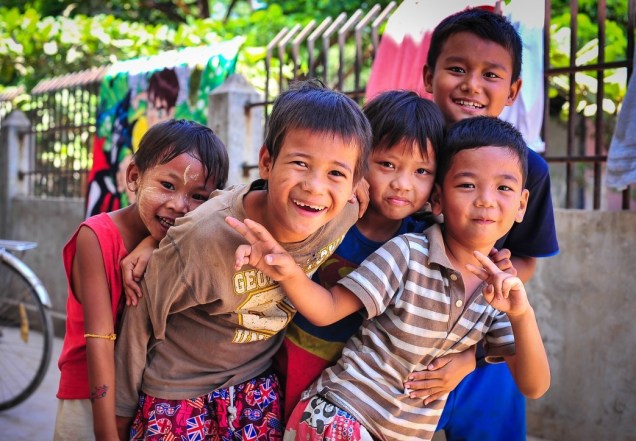
asia_children_joy_life_missions_myanmar_orphans_people-1174482-jpgd.jpegOver the years, I like to think I’ve become a patient man, my wife might disagree, but I still like to believe that I’ve mellowed. A few comments can still get me angry to the point that I reach for my blood pressure meds: “It’s good enough for Mexico,” or the more offensive “It’s good enough for an orphanage.” Or the similar thought process that’s the absolute most offensive: “It’s good enough for orphans.” There are times that behind my smiling facade, I want to punch someone.
There are a lot of definitions of “orphan” in the child care field: a child with no living relatives, a child that’s been abandoned, or a child that’s been removed from parents that are so abusive they’ve lost all parental rights. The common tragedy in all of this is a child who is alone in this world. Depending on who you talk to, and how the statistics are put together, there are around 150 million orphaned or abandoned children somewhere in the world. There is an astounding amount of need out there.

I only share these statistics to show the breadth and depth of the problem. It’s a broken world with a lot of messed up people, and there are a LOT of hurting kids out there. One of the problems is when you reduce orphans to a number it stops being a hurt, scared, child in need and becomes a figure on a spreadsheet or just another blog post. You can look at the big picture, but we as a church and individuals need to see the life of each individual child in need as a tragedy that needs to be addressed. Each abandoned child had his or her own story, needs, and horrible situations that have played out, and they are suffering because of it. They are not numbers in a system. They are precious children, created in God’s image, that society has failed to care for.

Most orphanages and foster care situations are fairly sad or outright horrible. There might be some great people involved, but they are frequently undertrained, underfunded, and under-appreciated. When people visit our home for the first time, the reaction is pretty predictable: “This place is great, it looks like Disneyland.” I’m not saying this to show how great we are; I’m saying this to show what low expectations people have of orphanages. So many orphanages are sad and depressing places that society has come to expect them to be bad. Sadly, society has also come to accept that an orphanage and foster care situation has to be less than it should be. We need to do better. We need a higher standard.

At our orphanage, we host a great number of short-term mission groups every year. We’ve seen the best and worst of teams. We can tell very quickly what the attitude of the group is, and how much thought went into their trip. There is one visiting group that has never donated funding, but we love to have them visit because of the way they love our kids. They perform dramas and run activities that draw our kids in, and shows them how important they are. You can tell this group wants to minister at a level that’s incredible, practiced, and worthy of our kids. We also have the groups that buy the ready-made craft from the back of a Sunday school supplies catalog and they just don’t care when they’re here. By their actions and attitudes, they are clearly saying: “It’s good enough for orphans.”

Once, I was speaking at a Rotary Club and during the “question and answer” time, I was asked by someone “How nice should an orphanage be?” You could tell by his tone that he thought our orphanage was a little too nice. I probably answered harsher than should have by replying: “Well, if you got hit and killed by a semi later today, how nice of a home would you like your children placed into?” By mentally placing our own kids into an orphanage, it brings into sharp focus the level of quality our work with orphans should have.

As Christians, whatever we do should be of the highest quality, especially orphan care. It’s not that we’re earning favor with God, it’s that we’re representing and serving our King. Jesus wasn’t kidding when He said, “Whatever you do to the least of these you do unto Me.” What are we offering our King?

Biblically it’s clear that the church, and individuals in the church, have a responsibility to care for orphans: James 1:27. “Religion that God our Father accepts as pure and faultless is this: to look after orphans and widows in their distress…” We have this example and mandate. Some churches do a GREAT job of seeking out and caring for the lost. I’ve encountered churches that are known for their culture of orphan care, foster care, and adoption. I recently spoke at a church gathering where over half the people present had either adopted children or been adopted, by someone in the church. All churches should be known as “The ones who care for orphans.”

Nobody is perfect. No ministry or individual is always going to get it right every time. But whether it’s serving in our community, or during a mission trip, it needs to be done with quality. We need to look at how we care for orphans and widows. We need to ask ourselves if we are saying with our attitudes and actions: “It’s good enough for orphans.”

Please share on Facebook or wherever you hang-out online.

It’s OK To Be Ripped Off Now And Then

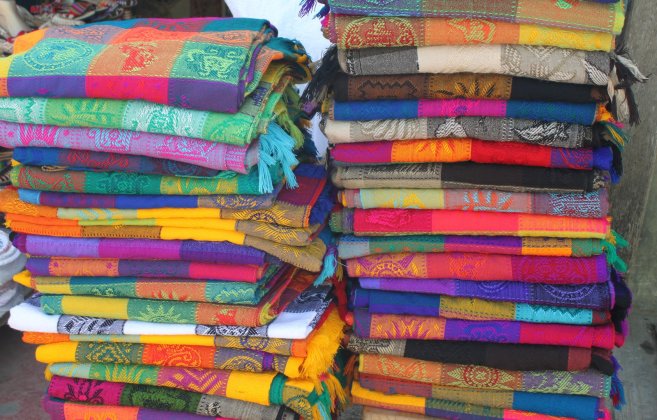
coloured-rugs-1636468A lot’s been written about the financial damage short-term missions can do to a community. Let’s look at it from a different angle. Americans love to spend money; we love to buy the blankets, jewelry, and trinkets to remember our journeys. Every youth group has that one kid who will buy the enormous sombrero. All this spending is a good thing. Sometimes the best thing you can do to help a community is let that “money spending” side of being American shine through.

The question of money in missions is a huge topic and comes up whenever short-term missions are discussed. “Short-term missions creates dependency!” “Don’t you know your project is taking jobs away from locals?” I understand the questions and concerns, but I also see the flip side of how short-term missions can positively impact the community from a financial standpoint. Our spending needs to support local business and local workers; this does not create dependency or steal jobs, this creates opportunity and jobs.

To have a positive financial impact, it’s important to not compartmentalize your missions trip. “OK, this is a rest day.” “We will be ministering on these days at this event.” “Today is a shopping day.” I hear these comments from groups all the time, and I understand it. We all like to have clean lines in our life, so we know what to do and when to do it. The problem is, ministry needs to be part of every moment of our lives, not something we schedule on Tuesdays and Thursdays. We have opportunities to minister all the time if we open our eyes to it. I’ve seen groups set up great giveaways of clothing, shoes, or food in town and then be incredibly cheap or condescending in every other area of their trip. “Our ministry time was yesterday.”

The shopping day is one area that most mission teams seem to disconnect from the rest of the trip, but it can be the most impactful service we bring to the table. We need to remember that we represent Christ all the time. Most groups go on a trip to serve the local people and do a fine job during scheduled activities, but when it comes time to negotiate for that Mexican blanket, look out. It’s “take no prisoners” time. It’s normal to see Americans who travel be borderline abusive and really grind the local vendors for that extra dollar. Later they might have dinner out somewhere without thinking about the cost. Then, they’ll pull out a calculator to determined the minimum tip they can get away with.

The idea of saving money is a good thing, we have a responsibility to be good stewards. We also need to be looking at what we do with the money we save. The idea of a group negotiating for the best deal in every situation hit home one day here at our orphanage. We have a gift shop with t-shirts, blankets, and the usual stuff. We use the proceeds from the shop to help care for the children in our home. One day I had a leader from one of the groups come in and try to negotiate on the price of our t-shirts. Think that through. He was here to serve our home, spent hundreds on travel to get here, and then decided to grind us on the cost of a t-shirt in our store.

If we want to bless a community and share with others, spread some money around to people who are working hard and are trying to earn a living. That two dollars you saved negotiating on the blanket might have fed that seller’s family that evening. That five dollars that your group saved on the tip after your dinner might have bought school supplies for the children of your waiter. If your team of 15 people stops at a taco stand, you might be half the sales that day and help keep that stand open supporting a family. It’s good to open the wallet now and then. Christians should be known for being good tippers.

If your team does a hit-and-run into a town and passes out money randomly it can do some real damage. Passing out money makes for uncomfortable interactions, and leaves the families you’re serving feeling degraded. Yes, they can eat better today or maybe buy some needed medications but they will be broke again in a couple of days. I’m all for helping people in need in a community. Our ministry runs a food bank, we build homes for families, we help support a free clinic, etc. but we try to do it in a way that builds the families up and not in any way embarrasses them. When your mission team buys locally, uses local caterers, and uses local transportation, you are directly supporting families in the community and allowing them some dignity.

All healthy relationships are reciprocal. If a relationship is just one person giving to the other it might feel good for awhile but ultimately it will break down, and people will be hurt. By allowing people, when possible, to play a part in their own well being, it builds everyone up.

Go and build the houses, run the medical clinics, do a quality job in whatever you do. But along with focusing on your project, it’s OK to overpay for that blanket, maybe buy two or three; it might be your best act of service all week.

Please Share on Facebook or wherever you hang out online.