
Dealing with Family in Orphan-Care

pexels-photo-262075Recently one of the boys we raised, who is now an adult and on his own, stopped by my office and asked if we could talk about a few things. He and his brother were dropped off at our home by their father over 20 years ago. Thier father visited once but then disappeared. Sadly this happens way too often.

Frequently, for one reason or another, a child or a group of siblings are brought to an orphanage and the family is never heard from again. Hopefully, whatever orphanage they’re left at has the resources and skills to help move that child from the pain of abandonment through the long journey to healing. An adoption is always a good option. But the reality is that once a child is over the age of about five, they won’t be adopted, especially if they have siblings. The orphanage will become their home; the orphanage staff will become their family.

When a child is dropped off, and they are old enough to know what’s going on, they begin the grieving process just as anyone who has lost a loved one. They have lost their family and life as they knew it. They begin to go through the various stages of mourning: grief: denial, anger, bargaining, depression, and acceptance. These can vary from person to person, but less than you might think. We humans are very predictable creatures.

Whether a child was abandoned or removed due to abuse or neglect, their first reaction is always denial. “No, really, my parents are going to come back for me.” or “My mom is in rehab, this time I know it’s going to work.” Our hope is that the child can eventually go back to a healthy family situation, but the painful reality is it’s not the norm. More often than not, if the family cares enough to visit, they sometimes make the situation harder by making false promises, to the child and maybe to themselves. “It will just be a few weeks, I really am coming back for you.” or “Your dad and I are getting back together, then we can take you home.” These types of promises rip the wounds open again leaving the child stuck in the denial stage, living in false hope.

The next stage in the healing process is anger. If a child reaches the point of being very pissed off at their parents, we are thrilled, this means they’re moving forward in the process. I remember one 11-year-old boy who had been with us about three months. He was here with two younger siblings and was starting to settle in. One Sunday, his mother showed up to visit. He was seriously angry; wanting nothing to do with her, he ran to hide behind one of the buildings on our property. I walked back to talk with him, and as I approached, I could see he was so angry he was trembling. I sat down with him and told him he could do whatever he wanted, “If you don’t want to visit your mom you don’t have to. Go hang out with your friends or spend time in my office; I don’t care.” I just confirmed to him what he already knew about his mom, that she’d done nothing to earn a visit and it was OK to be angry at her. I believe my response did two things. First, it shocked the heck out of him. Second, it showed him he was in a safe place and that we would be here for him. It turned out to be a pivotal day in his healing process.

I could write about the different levels of mourning, but I’m sure you get the idea at this point. The healing process is slow, painful, and depending on the person can take weeks, months, or sadly sometimes years. Our hope is that every child moves through the process and reaches acceptance as soon as they are able. Until an abandoned child (or anyone who has experienced tremendous loss) can reach that point of acceptance, it is incredibly difficult to begin to rebuild their lives.

Once a child reaches acceptance, they can start over. They can start taking school a little more seriously knowing they’re not ever going back to their old school. They can start making real friends knowing they probably won’t be leaving in a few weeks. Most importantly, if they’ve landed in a healthy orphanage or care situation, they can begin to bond with healthy adults who are committed long-term in the child’s life.

Even if a child reaches acceptance and begins to move on with their lives it doesn’t mean the pain has gone away; the pain just softens over time. For most children, as they move into adulthood, they reach a point where they will try and find their biological family. If, years later, reunions can be arranged, it’s not always the Hallmark moment we envision. Occasionally they can rebuild a relationship with their family, sometimes they’re rejected all over again. People are messy and messed up.

I opened up by sharing about the young man who came into my office. I’m incredibly proud of both him and his brother as they’ve grown into healthy, productive, men of God. The older brother is married with two children and has demonstrated an incredible commitment to his wife and caring for his family. It was the younger brother who came into my office. He wanted to talk over the situation that after twenty years he and his brother had recently found family in another state. He had just talked with his “biological” mother. He has no memory of her, but they’re planning on visiting her next summer. The draw to know your biological family is strong and we’re tremendously happy for them both. (I’m tearing up as I write this)

The second thing he wanted to talk with me about was also life-changing. We were planning a get-together with many of the children raised in our home, and he was asking permission to propose to his long-term girlfriend in front of his true family at the party. (She was raised in our home also.) I think he’s reached a good place, a place of wholeness; God has restored this abandoned child.

There is hope for an emotionally wounded child, if they are lead to the master healer, and allowed to grieve in His arms.

If you liked this, please share with others on Facebook or wherever you hang-out.

We All Need A Nest, Orphans Even More

pexels-photo-581087Human beings are pretty basic. Although we’re all individuals with different quirks and preferences, there are some basic needs that we all want to have met. Basic physical needs are obvious: food, water, shelter, etc. We all understand these needs, but then it gets a little more complicated. Especially for a child who has been orphaned or abandoned.

We all want our “nest,” our own stuff, our space. You’ve probably experienced this while traveling. You might be just a little nervous until you see your bag slide onto the luggage carousel at the airport. You feel a little better when you’ve dropped your stuff into your hotel room. Even if you’re camping or at a retreat center, you want to find and set up “your” bunk, then you can relax. When everything else is stripped away, a homeless person will defend their shopping cart or personal belongings. It’s a basic human need to have some sense of our own “stuff” to mark our space and existence.

When a child has been abandoned or removed from their home situation for some reason, in their mind their life is over. In a way it is. The life they’ve known is gone forever. Odds are they will never see their friends again, they will never be back in their old school, and will probably never see their old home again. This obviously doesn’t cover family that they might not ever see again. Even if they were removed from a horrible situation, it was their family; it was what they knew. How would you react if tomorrow EVERYTHING was removed from your life and you had to start over with just what you had on your back? Then try to do that when decisions are being made for and about you with no input from you. All control is gone.

Orphanage staff and foster parents usher children through the terror of that “first day” often. A while back we had a police cruiser pull up to our home, two officers and a child got out. The terrified ten-year-old boy was holding a small, kind of squished, plastic basket of strawberries. The short fat cop turned to me, kind of shrugged and said: “We didn’t know what to do. We got him a snack.” At least they tried.

We do a few things to make the first day a little better than it could be. We have systems in place where a child of the same age becomes a “mentor,” the new child’s first friend in our home who can show the new child around. This new friend explains how things work and what goes on. All this new information is received much better coming from another child, and not a scary adult.

One of the things we do that helps a child settle in is get them their “stuff.” They get their belongings to set up near their bed; they get to set up their nest. One of our staff goes to our stash and sets the child up with a few changes of nice clothes, some of their own toys, items to help them establish their space. We know full well we’ll need to speak into deeper areas of their lives over the following weeks, months, and years, but those first few hours are critical to the child settling in and realizing they’ve landed in a safe place.

It might seem odd that we focus on “stuff” so much, but it matters tremendously to a child (or anyone) in crisis. There are volumes written about caring for children in these situations. Every step of the journey to healing is important; the first day is just a small step in a very long path. The reason we focus so much on the clothing and toys is that it lets the child begin to create his or her own space again, it allows them to establish their identity.

The quality of clothing and belongings given to a child on their “first day” makes a statement. Too often, out of necessity or lack of thought, orphanages give the new child whatever used items that have been donated. We understand this, but it makes a strong statement: “You are not worth new stuff so you get what other people have gotten rid of.” Too often, a child who has been thrown away, a child who has been demonstrated to be trash, is given things that no one wants. What is that telling them? What kind of value does that place on their lives? Very often, the toys our children are given on the first day are the first new toys they’ve ever had. The items they are given will not restore them, will not heal them and will not bring their old homes back, but it helps give them a new sense of identity. It can show them that they are worthy. I’m not saying the child you’re helping needs high-end name brands, but whatever it is, it can show them that they are worth more than they realize.

While reading this, I’m sure some people are thinking “But stuff is just stuff, it’s not what’s most important!” I agree, it’s not what’s most important, but it’s a start. Anyone who says stuff doesn’t matter has never lost everything.

If you’re in orphan care, do what you can to bring a child’s first day from terrifying to passable. If you’re supporting an orphanage or people who do, please remember that the quality of items given matters more than you might think. Please show the children what they’re worth.

I’m currently setting up my 2018 speaking schedule, if you’re interested in having me share with your church or organization please let me know.  Click here for details.

The Enemy Hates Orphan Care

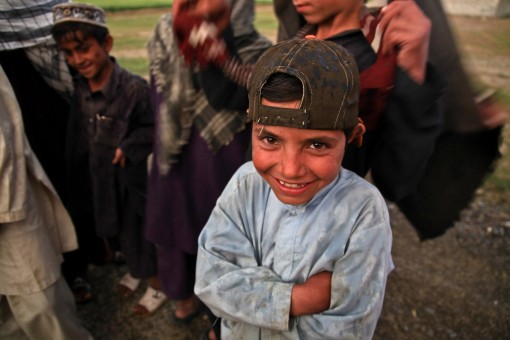
afghani_child_laughing_poor_dirty_poverty_happy_people-1143265.jpg!s

In any ministry, it’s important to realize the battle is real. The struggles and hurts that we encounter and confront are part of a bigger spiritual battle. We live in a broken world and the enemy is very skilled, effective, and relentless. Whether it’s a megachurch pastor caught in sin, or a small food-bank struggling due to lack of funding, the enemy works towards, and rejoices in, ministries failing. Recognize it, get used to it; it’s going to be part of your life.

Orphan care is very close to the heart of God. God cares deeply for the hurting and abandoned child. The book of James explains that true religion is caring for widows and orphans. The enemy attacks all ministries, but I believe orphan care is a priority target. Whenever I’m talking with someone about opening an orphanage, or orphanage care in general, we spend time covering the expected basics: funding, staffing, organizational issues, dealing with childhood trauma, etc. Then I pause. After the basics are covered I pull back the curtain and ask them if they’re ready to enter into the battle, are they ready to have their world rocked? It’s easy to say “yes” to that question when it’s hypothetical; it’s a very different when it’s part of your life.

I recently had breakfast with someone who, along with his wife, is preparing to open a new orphanage. I asked him again, as I’ve asked him many times over the last six months “Are you ready for this, REALLY ready for this? You will never have a normal week again.” The challenges are real.

Although we have everyday challenges on a regular basis, I figure about twice a year our orphanage goes through something major. Some unexpected event or series of events that try to hurt the home and undermine the work that’s going on here. Sometimes we can see immediately what the attack is, sometimes it’s a little more stealthy. However they come, we know the attacks are real, and it sucks to go through them. But, and this is an important point here, we know God is bigger than the enemy. He won’t only protect us during attacks; He can use them for our good and for His glory. We might not see how God can use everything BUT, we have His promise, and can rest on that promise in the midst of the battle.

Several years ago, one of our older boys came to me and told me his eye was bothering him. This isn’t that uncommon, and we made an appointment to have him checked out, not a big deal. Within 24 hours, he had lost all sight in that one eye. We suddenly realized this might be a bigger issue. As we moved from specialist to specialist, it was determined that he had a golf ball sized tumor that was growing and crushing his optic nerve. That afternoon sitting with him across the desk from the neurosurgeon, when we were told he had maybe days or weeks to live, is burned into my memory. As we worked to get him to a specialist in the US, something very powerful happened. We operate as a large Christian family and prayer is an important part of our lives, but this challenge really upped it a notch or two. Without any coaching from us, our children started a voluntary dawn prayer meeting, churches from across Mexico and the US began praying for him and the situation. A few miracles later and he had a passport, medical visa, and an appointment in the US with one of the top neurosurgeons in California. On the day before he was scheduled to leave, we had a soccer game here on site with a bunch of the local teens to send him off. Without any prompting from us, the soccer teams (made up mainly of non-believers) formed a circle around him to pray him off. After several surgeries, he is now doing fine, attending college, and waiting on tables to earn spending money. I would never wish to go through that again, but God used that cancer to create an incredible sense of unity here in the home, and brought our level of prayer to new heights.

The enemy can be very creative; the attacks are always different and present in different ways. Among our large team of multicultural staff, we have quite a few couples. We love that our children are seeing healthy marriages and families modeled as most of them have never experienced that before. We went through one season where every couple on our staff, Mexican and American, went through a rough patch in their marriage. We know any marriage can or will go through rough times, but to have a dozen couples go through rough times over the same few weeks is pretty odd. All of the couples made it through, and today they are doing fine. In hindsight, it’s easy to see how this was a spiritual attack. Healthy marriages are the basic building block of a healthy family, and the enemy was going to do everything he could to destroy these marriages. Fortunately for all of us, we once again saw that God is bigger than any attacks that might come our way, if we allow Him to take over.

I’ve only shared a couple of examples, but there are countless others: hepatitis outbreaks, wells going dry, we’ve had three children pass away over the years, challenges from the government, infighting among the staff, etc. The only thing normal for us is that we will never have a normal week. Please do not read any of this as complaining; we are rejoicing. We, as believers, know we have already won, that Christ has overcome the world.

If you’re in orphan care (or any ministry) and are going through trials, please know you’re not alone. The storms are where we grow and learn how to flex against the raging wind. It’s the storms that water and nourish us down to the roots. Rest in the fact that, if we trust in our heavenly Father, He will protect us. He will use everything we’re going through. The battles are real, but we know who has already won.

If you’d like to receive these articles by e-mail weekly please click “follow”.

Short-Term Missions is Money Well Spent

hiker-travel-trip-wander-163688

Short-term missions are a very big deal in the American church. One out of three churches will send a team internationally this year. Tens of thousands of people and many millions of dollars will be dedicated to these efforts. Why? Why do we as individuals, or a church body, put all of these resources into these trips? Sometimes it’s good to step back and just ask the simple, but important question: Are short-term missions worth all the funds and resources dedicated to them?

A very common argument against short-term missions is that they are not a good use of money. Or, to put it more bluntly, short-term missions are a complete waste of money. “Why doesn’t the short-term team just take all of that money and send it to where it can do some good?” “Why are we spending thousands of dollars on sending unskilled teenagers so they can just do busy work, take up space, and paint the same wall over and over again?” At first glance, these might seem like valid arguments. Let’s take a look at this.

We all waste money, so why should missions be any different? I know this is an odd thing to say, but we as individuals and as a church spend money on an endless list of things that aren’t necessary but are considered beneficial. How much money do we spend on summer camps, all-nighters, amusement parks, etc. every year with our youth groups? Someone could easily argue that any one of these is a waste of money. Does a church “need” glossy color fliers for everything? Does a church really “need” the trendiest coffee house, or antique style Edison bulbs on the stage to share the Gospel? If you say missions are a waste of money and are not holding the same standard to other areas, there might be some inconsistency in your argument.

“We should save the money on the trip and just send it to the mission or missionaries.” This comes up whenever the topic of money and short-term missions are discussed. On the surface, it’s very simple to understand this sentiment. The thousands of dollars spent on travel would have a profound impact in developing countries or underfunded missions worldwide. The flaw in this argument is that in the history of the church, I don’t believe this has ever happened. What youth group has ever done fundraising, asked for donations, and sacrificed for a foreign mission where they weren’t actively going and serving? It might happen, but not at the same level as if the youth group had skin in the game or if they were actually visiting the foreign country they were raising money for. Many churches have generous missions funds but nothing compared to the funding if they are actually sending teams into the field. Long-term, once a person has experienced a missions trip, they will frequently go on to fundraise and donate to the mission for years to come. Short-term trips do create long-term funding for missions work.

The expressed reasons for short-term missions usually come down to a combination of sharing the gospel, and meeting either emergency or ongoing physical needs. Sharing the gospel, and helping the needy are biblical principles, and we should use whatever resources we can. I used the term “expressed reasons” because so often there are reasons for short-term missions that are not expressed, but can be incredibly impactful and frequently the true reason for the trip. One area that can have a tremendous impact, but is hardly ever discussed, is the fact that short-term missions (when done right) can be an incredible education for the people going on the trips. A short-term mission changes the lives of the people participating.

Many people spend $20,000, $30,000, $40,000 a year to attend college and think it’s worth every penny. Almost nobody questions this expense because it’s seen as an investment in the student. People attend college to learn a trade, for a better career, but also to grow as individuals, to become well-rounded and get a bigger picture of how the world operates. These are valuable goals we should be seeking throughout our lives. The week or so someone spends in the mission field can accomplish more in the areas of personal growth, and expanding their world view, than a semester at a university. When you look at short-term missions from this standpoint, the money spent is money well invested in the maturity and education of the individual going on the trip.

There are many great churches where people can learn and grow, but nothing compares to experiencing the church in other parts of the world and putting the gospel into action. A person can read the DMV handbook, and maybe even drive a car in a video game, but until they get behind a wheel and drive on a real road, they won’t know what driving is like. There is something about traveling to another land for the Gospel that makes it more real to the person going. To walk in the example of the apostles, not just read about them. To spend time with people who have dedicated their lives to the service of others inspires and changes people. To meet and spend time with people from other cultures in their own homes broadens our worldview.

I have an obvious conflict of interest, the two organizations I lead specialize in hosting short-term missions. But I honestly believe these trips change lives. A week or so in the missions field frequently becomes a defining experience for many of the people participating. Not everyone on a missions trip will go into full-time missions, just as not everyone who walks into a church becomes a pastor, but I’ve never met a full-time missionary who didn’t start out in short-term missions.

Go on a trip, back a trip, and support those who are experiencing putting the Gospel into action. Missions is a wise use of funding and will change lives for the better.

If you like this, please share on Facebook or wherever you hang-out online. Thanks