
What Are We Called To Sacrifice?

cemetery_grave_graves_tombstone_old_cemetery_trees_halloween_rest-684833.jpg!s

Having been in full-time missions for as long as I have, I end up doing quite a bit of public speaking, usually on missions and the biblical call to service. Invariably, following the talk, someone will ask the question: “How do I find God’s will for my life?” I’m sure my deep and heartfelt response never fails to help, encourage, and inspire: “I have no idea.”

Our salvation through God’s indescribable grace is complete; we can add nothing to it. It is done. As believers, our natural response, flowing from a realization of how powerful this gift of grace is, is to seek God’s will in our lives. This is a good thing. I want to state it again though; nothing we can do adds to our salvation. How we live our lives is a testimony to our belief in the gospel and what God has called us towards. Ultimately, God’s will for our lives is summed up in Micah 6:8: …And what does the Lord require of you? To act justly and to love mercy and to walk humbly with your God.

I honestly believe very few people have a calling into long-term international missions. The mission fields in our homes, our schools, and our workplaces are in desperate need of people to share the gospel in their day-to-day lives. It is a glorious and beautiful thing that we can live out the gospel in both word and deed every day, wherever we are. The US is a hungry and needy missions field. But, what if there is a different calling on our lives? What ARE we called to do? What are we called to sacrifice?

A few years ago my wife and I went on a short-term missions trip to Malawi, a tiny country in the middle of Africa. We had been asked to consult with one of the many orphanages there created in response to the AIDS crisis. Malawi is land-locked in the southern half of the African continent and ranks as one of the poorest countries in the world. Accommodations and travel conditions can be “rustic” even on the best of days. A few days into the trip we were asked to drive to the northern part of the country, into one of the least populated areas, where a group was interested in opening a new orphanage. We saw this as both a chance to help another orphanage and, as a personal perk, we could see more of the country.

Our driver/guide and our team of four climbed into a rickety vehicle for the trek north. The car had obviously been on this road countless time before as it was the only road through the country. The car just naturally seemed to find every one of the thousands of potholes trying to shake the trim off the car, and the fillings out of our teeth. After about eight hours we arrived at our destination. For the last several hours of the trip, I had been finding a balance between silently complaining to myself, and patting myself on the back for making such a “sacrifice” to help. (I’m frequently an idiot)

Once we arrived in the village, we saw that it was nothing more than a random cluster of shortish adobe huts with grass roofs baking in the sun. Before we were done stretching after the long drive, our guide asked us to follow him to the edge of the clearing. With him leading the way, we came to a compact but very well kept cemetery. Now, we were not aware of every “local custom,” so the guide saw the look of confusion on our faces. To help us understand what was going on, he puffed out his chest and said with great pride and enthusiasm “This is where we bury the missionaries!” This did not help. At all. After seeing our even more confused looks, he went on to explain that this is a place of tremendous honor. The people buried here are the first missionaries who brought the Gospel to this area over 100 years ago.

I spent a long time walking through that cemetery. Few events are etched so deeply into my mind as the hours I spent walking from grave to grave reading the names and dates memorialized in that special place. They had died at 22, 26, 30 years of age. There are a few infants buried there who never saw age 2, born in a hut in the middle of Africa. These are people who traveled from Europe for months, through horrible conditions, for the chance to share the gospel with this small tribe of people. They left for the missions field knowing full well they would very likely not be coming home, at least not to their home in this world. These people knew what it was to sacrifice for the gospel.

What are we called to sacrifice for the Gospel? I don’t know. I, like you, am still figuring this out. But we need to be asking this question throughout our lives: What am I called to do? We have received a profound gift. If we believed in the gospel as deeply as we should, what wouldn’t we be willing to sacrifice to bring just one more person into the Kingdom? Whether you realize it or not, you’re dedicating your life to something. Does what you’re working for matter in the bigger picture? Does what you’re working towards matter at all?

To quote Frances Chan: “Our greatest fear should not be of failure but of succeeding at things in life that don’t really matter.”

If you enjoy this blog, you can receive weekly updates to your e-mail by “following with the button at the top right of the page.

Stealth Heroes

pexels-photo-339620I tend to come across a little cynical. I’ve been told that if I ever gave up sarcasm the only way I could communicate would be through interpretive dance. I’m a little more positive than I might seem. In the work I do, I do see the absolute worst in people. On the flip-side, I get to bump up against some truly outstanding and generous people. We could not care for our large family, and push forward in the work God has called us to do, without others. We’ve been privileged to see hundreds of incredibly generous, gifted, and creative people who faithfully show up to work alongside us.
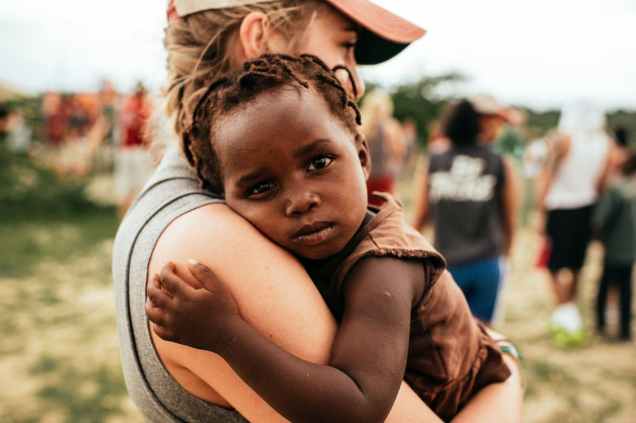
The “bad guys” get the press, but in the midst of the worst situations, the first responders and “helpers” show up. For every mass shooter, there are hundreds of stories of “normal” people stepping up to help the wounded and care for survivors. For every horrific story of abuse, there are thousands of untold stories of normal people reaching out to make a difference in the lives of people in need. There is an old line in the news industry: “if it bleeds it leads.” The bloodier and worse the story is the better it sells. But, these stories make up a very small percentage of any community.

Over many years of managing our orphanage, we’ve been privileged to see the very best of humanity. Here are a few of those stories.

A couple we barely knew started to donate monthly after they had a tour of our home. Monthly donors are not that uncommon, but they were donating about $500 a month – this is substantially more than most people commit to. We were very grateful, I just assumed that they were people of “means,” and our orphanage was just one of many things they donated towards. We sent them thank you letters, they sent us checks, and that was the extent of the relationship. After a few years, they asked about stopping by to touch bases. While we were out to dinner their story slowly came into focus, I realized I had made some VERY wrong assumptions. One of them was a school teacher, and one was a substitute teacher. They lived in a humble house in Arizona; their rent was less than what they sent to us. They spent most of their time reading and studying languages. They lived a very simple life. They had decided to take what little they had and make a difference. The $500 a month they were sending us was not a random donation among many; they were actively living below their means to support orphans. The $500 they were sending was a sacrifice. They will never be written about (other than here), most people will never know of their giving, but every day they chose to give to something bigger than they are.

About 12 years ago Doug “retired” from being an electrician. I put retired in quotes for a reason. He’s still a full-time electrician it’s just that now his reward is very different. Years ago Doug started doing the electrical work for a small ministry in Baja, and it took over his life. He could be laying on a beach, maybe fishing somewhere. He could be taking up bridge or gardening. Nope. He pulls wire. He installs light fixtures. About twice a week he travels from his home in California to one of the several projects in Baja where he is the “electrical guy.” His current project is a very large, free medical clinic being built in a small town about one hour south of the border. Sometimes his wife comes along, many times she doesn’t, but Doug is faithful to do his part to serve the needy in Baja. There will never be a statue in his honor, his work will never make the news, but he is literally bringing light to the darkness. He brings light with both wire, and with his infectious and ever-present smile. He has found joy, and his calling, in service.

Sometimes, people just think outside the norm. We have a LOT of groups that do crafts, play soccer, maybe make a meal for our kids. I’ve seen more piñatas than anyone should see in a lifetime. There are tried and true ways to help. All these things are good, but sometimes a group really knocks one out of the park. We had one small church approach us about trying something different. They came in and took over a large multi-purpose room and turned it into a day-spa. They brought in artsy candles, calm music, comfortable chairs, wall hangings and curtains for privacy, etc. Now, you might be thinking: “Why does five-year-old Jose need a day spa? That’s just weird.” This group had a different vision, they knew what it was like to care for others full time, and they knew our staff needed a break. They came in with the goal of serving the caregivers in our home. They gave pedicures to our cooks who are on their feet all day and have been for years. They gave manicures to the ladies in the nursery who use their hands to change dozens of diapers every day. They gave back rubs to the “playground staff” who need to chase, pick-up, and care for crowds of toddlers every day. To be honest, our staff was a little uncomfortable at first. They were not used to being cared for in this way. Once our staff understood what was going on, it turned into a very special event. It’s not often you get to see the example of foot washing that Jesus gives us, played out in such a tangible way.

I could go on for many pages sharing about the incredible people that God uses in creative and unexpected ways. The point is, there are many more people doing phenomenal things, than the few who shock us with evil. In the midst of natural or man-made disasters, remember that everyday people representing the best of humanity are there also.

If you enjoyed this, please share with others where you hang-out online.

So You Want to Open an Orphanage…

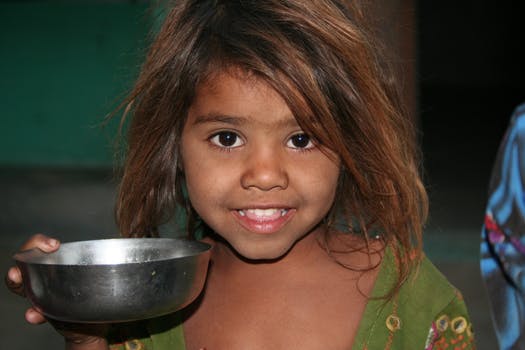
child-face-rajasthan-smile-46259

Do you feel called to open an orphanage? Trust me on this, lay down until the feeling goes away. If you still want to open an orphanage, continue reading.

I wish orphanages didn’t exist. The first choice for caring for abandoned children should be extended family. If extended family is not an option, then children at risk should be placed in healthy families. Unfortunately, placement with a family is just not an option for many children. Most orphanages are filled with children who, for one reason or another, are not adoptable or are very difficult to place. Orphanages care for children with multiple siblings, children with physical or mental challenges, children with an extended family that cannot care for them but still hold parental rights, etc. So if orphanages have to exist (and they do), they should be great, and run by people with vision and the skill sets to make them a fantastic place for children to heal and grow into healthy adults.

On a regular basis, people contact me who feel lead to open orphanages. My first question is always: “Who is going to run it?” Putting up buildings is easy(ish), on-going funding is harder, but living at, and running an orphanage can be hugely challenging and is not for the faint of heart.

Like pastoring, it’s very different once you’re in charge as opposed to watching from a comfortable distance. Running an orphanage is 24 hours a day, just like pastoring. Like pastoring a church, everyone who walks into your ministry will be second guessing all of your decisions and how you’re running things (and they know they can do it better). You not only get to care for kids and staff, you also need to keep government officials AND donors happy, all at the same time. Good luck with that.

On the long list of things that surprise most people is the amount of administration that has to go on. From the outside, people tend to think that the day-to-day parts of running an orphanage are about holding babies, craft projects, and building healing relationships with the children. All of these things go on, but they make up a remarkably small part of the day-to-day hours of running an orphanage. Actually, “child care” is an almost insignificant part of the job. Days are occupied with the mundane: grocery shopping, hosting guests, managing staff, answering emails, etc. Your days and weeks are filled with what it takes to keep the ministry open and moving forward.

Fundraising will take up much of your waking hours for the rest of your life. Just because you’re passionate about orphan care doesn’t mean anyone else cares. Everyone has different passions, callings, and challenges in their lives. Other people are called to serve and help in other ministries, that’s a good thing. That people have passions and interests that don’t connect with orphan care makes fundraising that much more of a challenge. Sharing the needs of your home, sharing the needs for orphan care in general, and sharing your passion is all part of the work. Share with the right people, get the word out, and God will connect the right people to support it.

Here is what they don’t teach you in “orphan school”: the struggles are real. Caring for orphans is very close to the heart of God. If you’re doing it right, the enemy doesn’t like it. You will never have a normal week again. Sick kids, staff issues, government issues, will be the norm. We figure about two significant attacks a year. Hepatitis outbreaks, wells going dry, we went through one season where EVERY couple on our staff went through a rough patch in their marriage. We’ve had children diagnosed with cancer, we’ve had children die. The spiritual attacks will be part of your life, get used to it. The good news is we’ve never gone through an attack God could not use to make the home stronger and cause us to grow. I can honestly look back and give thanks for all we’ve experienced. Don’t get me wrong, we dread the attacks and storms when we’re going through them, but we also know God is so much bigger.

Please know that this work will rip your heart out. And dance on it. And then bounce it around the room. We deal with the worst side of humanity. I could shock you with the profoundly horrific things that have been done to our children. You do not want this in your life. Then, once a child has been in your care for a long time, and they’ve begun to heal, you never know when a social worker will sweep in and say they are going back with family. Sometimes this is good; many times it’s not. Your emotional scars and callouses will build over time.

If this rambling article sounds like I am complaining, please do not interpret it that way. I just want people going into this work to do so with their eyes wide open. I’ve dedicated the bulk of my adult life to orphan care, and I wouldn’t have it any other way. The work is challenging, the battles are real, and it can be emotionally and physically exhausting. That being said, I have zero regrets about walking away from my “normal” life running a business in Southern California. Although the challenges can be extreme, the rewards far outweigh any of the battles we’ve gone through.

The graduations where you see groups of your children graduate from high school or college makes it worth the sacrifice. When you’re able to walk so many of the young women you’ve raised down the aisle at their weddings, it’s worth it. When you see children you’ve raised, caring for their own families in a healthy loving fashion, it’s all worth it. If you’re indeed called to orphan care, surround yourself with people of similar vision, give it everything you have, and press forward. It’s a worthy calling and will be the most rewarding experience of your life.

If you liked this blog post, please share with others. thanks.

Random Affection in Orphanages

orphanchildOne of the realities of orphan care is that everybody considers themselves an authority. Just like parenting styles in a traditional family, opinions on orphanage styles tend to shift frequently on how to “do it better.” These opinions change depending on what’s trending in any given year. In the last few years, there’s been a lot written on the potentially harmful effects of too many visitors on the children in an orphanage. After working full-time in orphan care for over 25 years, I could not disagree more.

The current theory states that having visitors in orphanages on a regular basis leads to attachment disorder problems later in life because the children are bonding with random, different strangers every week. In my experience, children raised in dysfunctional orphanages will have a wide range of emotional problems later in life, just as anyone raised in a dysfunctional family. If the children are bonding with random strangers every week, this means there are many underlying problems in the orphanage already. The bonding issue is just a symptom.

Let’s look at two scenarios:

Scenario 1) In our orphanage we have more visitors than almost any orphanage in the world. In a typical year, we host around 280 groups and have other “drop by” visitors on a regular basis. We enjoy hosting the groups, we enjoy leading them into service and short-term missions, and we believe when well-managed, these visits are healthy for everyone. So how do we avoid the random attachment? First, we have solid, consistent staff and plenty of them. Our children do bond with adults, but it’s with consistent adults in their lives. We have excellent child to staff ratios (about 4 to 1) and minimal staff turnover. Second, although we have a tremendous amount of visitors we intentionally limit the time they have with our children. We limit the visiting hours with our infants and toddlers, but more importantly, we encourage all of our groups to stay with us but travel out daily to serve in the community or with other ministries in the area. Our children see the “visitors” as just that, visitors dropping by to see our family. The majority of children who grow up in our home go on to have healthy marriages and families. In spite of all the visitors, most of our children turn out okay.

Scenario 2) In an orphanage that is understaffed and overcrowded, the children will seek random affection from any visitor that comes through. You can see this when you first arrive in a home. If children above the age of five are running over to hang on you and ask to be held, they’re starved for affection. A normal, well-adjusted 10-year-old doesn’t just walk up to a random stranger seeking physical contact; this is a symptom of much deeper issues in an orphanage. The children are not bonding with the staff and are severely lacking affection. They WILL have problems bonding later in life without a tremendous amount of healing. Most children raised in poorly run orphanages eventually produce children that wind up back in the system and have a tough time with healthy relationships. (Just like too many children from foster care.)

So how does someone, or a mission team, respond to these two examples? If you’re dealing with a healthy orphanage, one that has well-adjusted kids and is well run, continue to back their work. Find out what their needs are and keep supporting a healthy situation. Help them to continue to provide what their children need.

If you’re working with a home that’s not so great, it gets complicated quickly. A few years ago we were helping an orphanage near us that was a pit. The orphanage was overcrowded, filthy, and the children were deeply starved for affection. We were praying for a change in that home but did not have a lot of hope with the current management. With eyes wide open to the situation, we continued to send teams to that orphanage on day trips. The teams would clean, prepare meals, and spend time with the children in need of attention. I would encourage the teams by telling them “This home will probably never change, but for one memorable day, those children can know someone cares about them.” With these “hit and run” trips it was far from perfect, but it was giving these children something.

Everyone knows that eating junk food all the time makes for a lousy diet. In a perfect world, we would all have access to regular, healthy, balanced meals. If someone is starving, the standards drop, and junk food is better than no food. If a child was starving, and all we had to give them was a candy bar, that candy bar would mean the world to them. Long term, you would hope that the situation would change, but I don’t think anyone would withhold the candy bar because it’s not the ideal, healthy option. “Junk food” affection, when it’s the only real option, is better than no affection at all. People not visiting an orphanage to avoid this attachment and bonding problem does not suddenly make healthy bonding occur if the orphanage is understaffed and poorly run.

Caring for orphaned and abandoned children is obviously a complicated issue. It’s an issue that has been around for thousands of years and will not be going away soon. To believe that not visiting orphanages will help the situation is like saying not providing services and meals to homeless will end the homeless situation across America. I wish orphanages didn’t exist, but if they have to exist, they should be great, and they need our help.

Please, continue to follow the fundamental teaching of our Christian faith in regards to orphan care:

Religion that God our Father accepts as pure and faultless is this: to look after orphans and widows in their distress and to keep oneself from being polluted by the world. James 1:27

 If you found this article helpful or interesting, please share with others.