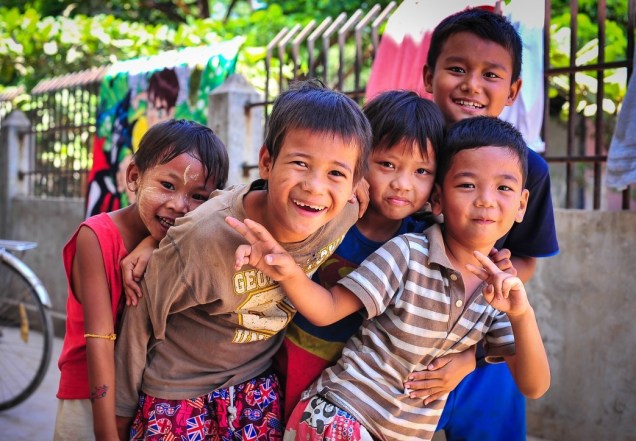
“It’s Good Enough For Orphans.”

asia_children_joy_life_missions_myanmar_orphans_people-1174482-jpgd.jpegOver the years, I like to think I’ve become a patient man, my wife might disagree, but I still like to believe that I’ve mellowed. A few comments can still get me angry to the point that I reach for my blood pressure meds: “It’s good enough for Mexico,” or the more offensive “It’s good enough for an orphanage.” Or the similar thought process that’s the absolute most offensive: “It’s good enough for orphans.” There are times that behind my smiling facade, I want to punch someone.

There are a lot of definitions of “orphan” in the child care field: a child with no living relatives, a child that’s been abandoned, or a child that’s been removed from parents that are so abusive they’ve lost all parental rights. The common tragedy in all of this is a child who is alone in this world. Depending on who you talk to, and how the statistics are put together, there are around 150 million orphaned or abandoned children somewhere in the world. There is an astounding amount of need out there.

I only share these statistics to show the breadth and depth of the problem. It’s a broken world with a lot of messed up people, and there are a LOT of hurting kids out there. One of the problems is when you reduce orphans to a number it stops being a hurt, scared, child in need and becomes a figure on a spreadsheet or just another blog post. You can look at the big picture, but we as a church and individuals need to see the life of each individual child in need as a tragedy that needs to be addressed. Each abandoned child had his or her own story, needs, and horrible situations that have played out, and they are suffering because of it. They are not numbers in a system. They are precious children, created in God’s image, that society has failed to care for.

Most orphanages and foster care situations are fairly sad or outright horrible. There might be some great people involved, but they are frequently undertrained, underfunded, and under-appreciated. When people visit our home for the first time, the reaction is pretty predictable: “This place is great, it looks like Disneyland.” I’m not saying this to show how great we are; I’m saying this to show what low expectations people have of orphanages. So many orphanages are sad and depressing places that society has come to expect them to be bad. Sadly, society has also come to accept that an orphanage and foster care situation has to be less than it should be. We need to do better. We need a higher standard.

At our orphanage, we host a great number of short-term mission groups every year. We’ve seen the best and worst of teams. We can tell very quickly what the attitude of the group is, and how much thought went into their trip. There is one visiting group that has never donated funding, but we love to have them visit because of the way they love our kids. They perform dramas and run activities that draw our kids in, and shows them how important they are. You can tell this group wants to minister at a level that’s incredible, practiced, and worthy of our kids. We also have the groups that buy the ready-made craft from the back of a Sunday school supplies catalog and they just don’t care when they’re here. By their actions and attitudes, they are clearly saying: “It’s good enough for orphans.”

Once, I was speaking at a Rotary Club and during the “question and answer” time, I was asked by someone “How nice should an orphanage be?” You could tell by his tone that he thought our orphanage was a little too nice. I probably answered harsher than should have by replying: “Well, if you got hit and killed by a semi later today, how nice of a home would you like your children placed into?” By mentally placing our own kids into an orphanage, it brings into sharp focus the level of quality our work with orphans should have.

As Christians, whatever we do should be of the highest quality, especially orphan care. It’s not that we’re earning favor with God, it’s that we’re representing and serving our King. Jesus wasn’t kidding when He said, “Whatever you do to the least of these you do unto Me.” What are we offering our King?

Biblically it’s clear that the church, and individuals in the church, have a responsibility to care for orphans: James 1:27. “Religion that God our Father accepts as pure and faultless is this: to look after orphans and widows in their distress…” We have this example and mandate. Some churches do a GREAT job of seeking out and caring for the lost. I’ve encountered churches that are known for their culture of orphan care, foster care, and adoption. I recently spoke at a church gathering where over half the people present had either adopted children or been adopted, by someone in the church. All churches should be known as “The ones who care for orphans.”

Nobody is perfect. No ministry or individual is always going to get it right every time. But whether it’s serving in our community, or during a mission trip, it needs to be done with quality. We need to look at how we care for orphans and widows. We need to ask ourselves if we are saying with our attitudes and actions: “It’s good enough for orphans.”

Please share on Facebook or wherever you hang-out online.

Sometimes Ministry Doesn’t Suck

hospitalThe current trend in nonprofit fundraising is to “tell a story.” All of the articles tell you to put a face on your ministry by sharing one or more solid success stories. This is all well and good in that it helps people to understand the goals of whatever ministry is being promoted. But the reality is, for every glowing success story, there are many times when it just doesn’t work. You cannot save everyone. Sometimes ministry sucks.

Talk to anyone who runs a shelter for abused women. In spite of the best counseling and support, way too many abused women will decide to go back to their abusers. If you run a rehab center the reality is way too many people cycle in and out of programs for years before the grip of addiction is broken, many people never reach that point of healing. For those who work serving homeless individuals and families, it’s a shockingly rare situation that can move people out of the cycle of poverty and into secure housing, work, and a future.

If you pastor a church, you know how heartbreaking the work can be. You do your best for the members of your church, lovingly guiding, teaching, and encouraging them. But so often people choose to go an entirely different direction. Members of your church will fall victim to attacks, whether subtle or direct. People you considered solid Christians will fall away. Couples you thought were a great example will have affairs and/or divorces and lives are destroyed. People in your church will shock you in their ability to turn on each other.

As someone who has helped to run an orphanage for a very long time, I can tell you firsthand it can be incredibly painful and frustrating work. We can raise and care for a child for years, doing our best to pour into them and guide them into healing, but it doesn’t always work. Ultimately as a child moves through teenage years into adulthood, they make their own decisions. It tears us up when we watch young adults we’ve worked so hard with make decisions that will head them in the wrong direction.

So what’s the point of this rambling stream of negativity? Believe it or not, this is meant as an encouragement for those who are currently serving in ministry, and suffering through the pains and frustrations of failure. No, it doesn’t always work, but when it does, it can make all of the suffering and pain worthwhile.

Very recently a great young man who was raised in our home passed away much too young. Marcos was about 40 and passed after an extended illness surrounded by his wife, friends, my wife, and myself. Obviously, this was a painful event, and a great deal of mourning and healing is still taking place. In spite of the painful situation, the evening he passed away, in the midst of the emotional storm we were all going through, I found a moment of profound joy.

We knew Marcos’ time was short, and several people rushed to the hospital to visit and say their farewells. About an hour before the end, three different men showed up who were raised together with Marcos in our home. Although none of them are blood-related, they consider each other brothers and they’re some of my many children. All three have built their own lives, and have their own growing families, but in the midst of that trauma, I saw them in a whole new light. In a few moments, they went from being my children to being responsible men handling a difficult situation with astounding grace. Over the course of the evening, one made a point to comfort the new widow, giving her space and allowing her to grieve, but also making sure she had everything she needed. One went to work with the hospital sorting out the paperwork, the billing, and all the bureaucracy that goes on when a life ends. The third one brought a guiding hand and a calm voice to begin making funeral preparations. All three demonstrated a maturity that I had never noticed before. I’ve never been prouder.

Ministry doesn’t always work, but sometimes it does. Those men who stepped up in a hard situation are examples of how ministry can change lives. Not everyone who walks through your church, rehab, shelter, or orphanage will receive the help you want to give them, but some will. We can’t (and shouldn’t) force our will on anyone brought into our ministry, and many won’t want our help. But when it does work, and lives are changed, hang on to that. It’s why we do what we do. We also never know how the seeds we plant might take root and grow years down the road. Our job is to do the best we can, representing Christ well.

Jesus didn’t reach everyone. Many people rejected His message, His healing, His offer of help. But some accepted Him, that’s why He came and did what He did. He knew most people would reject Him, but His efforts were worth the few who made the right decisions. We are not Christ (far from it) but we are called to share of Him and carry out the work He has called us to do. The work we do is worth the few who can be reached. Keep it up.

Please share on Facebook or wherever you hang out online.

Orphan Care is a Short-Term Gig

pexels-photo-167300When caring for children at risk, children who are abandoned or orphaned, it’s important to realize it’s just for a season. You need to know that, for many reasons, children you’re caring for are going to leave. We need to be ready for it, and we need to help them be ready for it.

Frequently children leave your care to go into questionable situations, and it will rip your heart out. Sometimes we initiate the change; usually it’s outside influences. Sometime they will head into great situations, some not so great. As people who are called to serve children, we need to realize the time we have with the children in our care is frequently shorter than it should be, and that time is precious. “Normal” parents have at least eighteen years to speak into a child’s life; we don’t have that luxury. The short time we have with these children will impact them the rest of their lives.

I have been in orphan care for almost 25 years. I still remember my first year, when the team here decided that we needed to kick a teen boy, Raul, out of the orphanage. Think about that for a minute: a child who’s already been abandoned, we were going to remove from what I thought we were building as the last refuge. This teen boy had become so rebellious, and such a danger to the other children and staff, that we needed to remove him from our home. We tried every form of discipline and professional counseling we could, but nothing broke through. His tearful pleading for “one last chance” as he was being taken away to a smaller, stricter orphanage will be burned into my memory forever. His departure tore me up for weeks.

About five years ago a 15-year-old girl, Maria, who had been in our care for several years was returned to her mother. We didn’t feel great about it, nor did Maria, but we didn’t have a say in the matter. All we could do was watch her leave and hope and pray that the social worker made the right decision.

Recently, two wonderful young girls were returned by our government social worker to their parents. We did not believe for a moment this was a good thing. For a number of reasons we did not feel this was the right decision, but the social workers had completed home visits and felt it was right to return these girls to their family. The girls had shared with us the horrible treatment they had received in their home and when the parents visited we could see it was just an unhealthy situation. It was VERY frustrating, and several of our staff were very upset, but you can only do what you can do.

It can be a long hard battle as we fight for what’s best for a child. Ask anyone who works in foster care about the frustrations experienced as children are moved around and often placed back with unstable or questionable family. Don’t get me wrong, when it’s a healthy situation I am 100% in favor of the family reunification. But frequently these are Solomon like decisions made by well-meaning but fallible people. When the decision is right it’s great; when the decision is wrong, it places children in harm’s way.

All we can do is plant the seeds, pray over our children, and hope for the best. Whether it’s our biological children that get married and move on when they become adults, or a temporary care situation and the child leaves us when they are much younger, their future is not in our control. All we can do is give them tools they will need to make healthy decisions. We need to show them how to handle the incredible challenges that life will place in their paths. They, like us, are in God’s hands.

About ten years after we “kicked Raul out,” he dropped by for a visit. We had lost track of him and assumed we would never see him again. But, the time he spent with us had a deep and positive impact on his life. He came back with his wife and two children to show them where he had spent several years and to introduce us. We had a long talk, and he shared that he now understands why he needed to be moved. He also now felt it was the best decision we could have made for his life. It was hard, but it was a wake-up call for him. It turned his life around, and he was now doing well with a family of his own.

A few weeks ago Maria got in contact with us, and we went out to lunch. We were right about her mom. Maria’s mother ignored her, never put her in school, and spent most of her time drinking and partying. After several months with mom Maria went with dad, who was no better. But, Maria remembered what she had been taught. She is now on her own, doing well, active in a church, and is planning her wedding. The seeds we planted took root.

There is a point to this rambling blog. What we do in child care, while we can, matters more than we know. Not all stories have happy endings. Most of the time we will never know about the lives of the children once they leave us. But when it works, the moments when we emotionally connect with a child, the time we spend listening to them, the examples we set changes lives. Use what little time you have as the precious gift it is.

“Religion that God our Father accepts as pure and faultless is this: to look after orphans and widows in their distress…” James 1:27

(Names were changed to protect the privacy of people mentioned here.)

Please share on Faceook or wherever you hangout on line.

In Orphan Care, One Size Doesn’t Fit All

child-children-girl-happyWe’ve all received gifts that say “One-size-fits-all”; this really means “One size will fit some people and will be a poor fit for others, but that’s all we’re offering.” In orphan care, rarely does one-size-fits-all. Each child and situation is unique, and we need to be in a position to give the type of care that is the perfect fit for that individual child in need.

It seems as though society as a whole is more and more polarized. “It must be my way or nothing; you are wrong.” Try to get a Fox news fan to agree with a CNN fan, and you can see how people can NOT come to a compromise. The reality is, with many of life’s dilemmas, there are no black and white answers, sometimes the answers are found in the fuzzy middle. Many times life requires a much more nuanced approach.

Few things elicit a stronger opinion than what to do with the kids who are orphaned, abandoned, or need placement for other reasons. Everyone has an opinion on child rearing and how best to help a child. The prevailing theories shift back and forth from orphanage to group homes to foster care every few years, not unlike the “expert” opinions on whether eggs, butter, coffee, etc. are bad, then good, then bad, then good again. (I’m very happy eggs, butter, and red wine are currently “good” for us.)

Most reasonable people agree that no system of caring for children at risk is perfect. A child should be raised by two loving parents whenever possible. Unfortunately, we live in a VERY broken world, and way too many children wind up in horrific circumstances, needing care either short-term or long-term. To rule out ANY healthy option to care for a hurting child is a mistake. This is where “one size fits all” doesn’t work.

I once had a leader from a large, respected mega church inform me that their official church policy is to never work with or support orphanages. Their reasoning being that orphanages are terrible, that the ONLY good option for a child is adoption. They are not alone in their beliefs, the current prevailing opinion is that it’s better to move away from the orphanage system. I and many others do not agree. For some children, an orphanage is the best option.

For the right child, adoption should always be the first option if no healthy, loving family is in the picture. But many times, there are situations that make adoption difficult or impossible. If there are multiple siblings, very few couples are willing to take on three, or four, or more children. If the child has extreme special needs, the pool of adoptive parents is pretty small. If a parent or parents are still somewhere, but due to prison, substance abuse, or other reasons are out of the picture “temporarily,” the children are left in limbo. The reality of adoptions is that once a child hits about five years old the odds of adoption drop dramatically. The fact that international adoptions have reached a record low doesn’t help the situation. When you factor all these problems in, very few children in need of care can ever be adopted. The most recent statistics say that worldwide, a child in a care situation has a 2% chance of being adopted. Too many people work for years and spend thousands of dollars trying to adopt only to be denied or to have serious problems handling the child placed in their care. When adoption works, it’s fantastic, but it’s a long road and doesn’t always end well.

So, if there is no healthy family, and adoption is not an option, you are left with foster care or orphanages. There are a lot of great people working in the foster care system that truly have a heart for the children they are serving. Unfortunately, there are also many people involved for the wrong reasons, and everyone is working in a system that has many profound challenges. Too often, children are moved around more than they should be, creating a very difficult, unstable life. How would you react if you had to change homes, friends, schools, churches, etc. every six months or so? With the system the way it is in the US, although it was set up with the best of intentions, the statistics do not play out well. I’ve had many people involved in foster care vent to me about the lack of stability and the crushing bureaucracy involved. Foster care does not work well for most children. Every system is complicated.

Most people agree the orphanage system is broken, but, when done correctly, orphanages and group homes can be the best option. Just like foster care, there are some great people working in the orphanage systems worldwide, and some not so great. There are definitely orphanages that are horrible and should be shut down. There are also orphanages that are healthy, stable, and give the children a loving home with a great future. A well-run orphanage can provide a child or sibling group the stability, professional counseling, and love they need to heal and grow into healthy adults. We need a last resort when adoption or family care is not an option.

Everyone has a strong opinion. Everyone seems to have an agenda. About the only thing everyone agrees on is no system of caring for children at risk is perfect. We, as a society, have the right tools to help these children, but we need to use every tool in the box. We need to find the right size for each child. One size does not fit all.

Please share on Facebook or with your missions pastor.  Thanks