You Are Going To Die

graveYou might have hours left. You might be around for several more decades. But you will die. You will kick the bucket, go toes up, become worm food, start pushing up daisies. You will reach room temperature, give up the ghost, etc.. There are lots of ways to say it, but one way or another we all give up the fight, our heart will cease to beat, and our life on this world will end. When that happens (and you live in the US) the people in your life will arrange to have you put in a box, a week or so later people will put on dark clothes (weird) and will gather. Someone will say a few words by your grave, and people you’ve never met will stick you in the ground. Following this little ritual, people will get together somewhere, eat potato salad, and talk about you. Our life comes down to a plastic bucket of potato salad from Costco. (and maybe a nice sandwich platter.)

In Mexico, funerals are handled differently. When someone dies everything snaps into action in time-honored rituals. The body is placed in a box and positioned in either the home or a public location for the wake to start, all within a few hours of someone passing on. The wake is not a polite, reserved affair. People are up all night hanging out, crying, sharing, talking, eating, maybe sharing a few beers, but it goes on ALL NIGHT. It’s quite the send-off. What goes on in the background is something else. Friends and some family are out digging the hole. Digging a grave is much harder than it looks like on TV or in the movies, it takes many back-breaking hours. Once the wake is winding down, everyone loads the casket into a truck and heads to the grave site. Once again, very different than in the US: in Mexico, to “bury your loved one” actually means that. You, your friends, and the family use some rope and lower the casket into the ground. Then you grab the shovels. It takes a LONG time to bury someone. People are crying, maybe some wailing, and it takes hours. But when it’s done, there is a real sense of closure, everyone has said “goodbye,” and people start to move on. One of the many upsides to this time-honored tradition is it makes death very real to everyone involved. This is a good thing; we should all face death from time to time. We need to be reminded that our time here is a temporary gig. There is something genuine about “burying your loved one.” The sweat and dirt and blood of broken knuckles as you dig through the hard ground to make a hole to place the body is not to be taken lightly. It’s real. It makes the line between life and death very clear – there is an end.

It’s important to be reminded from time to time that there might not be a tomorrow for us. The reason I wrote the 500 or so words on funerals you just read is to remind you that you will be the center of one of these rituals eventually. What are you going to do between now and then? How will you use this precious and limited time you have?

Too many people go through the motions of life, without living life in line with the tremendous calling we each have. We need to be living our lives to the fullest, living in such a way that we will hear upon our arrival in heaven, “Well done my good and faithful servant.” We should slide into heaven out of breath, worn out from seeking to share with others, give to others, and be representing our Father well. I’m not sure who said it, but I love the quote “It’s sad to reach the end of one’s life and realize you’ve never lived.”

I work with a lot of young adults from the US who visit our ministry. Sadly, I know most of them will follow the tedious path that society lays out for them. They will attend college while they figure out what to do, they will leave college with too much debt, they will marry too young, and spend much of their lives paying back student loans. I’m not sure this is what God intended for us.

At whatever stage of life you find yourself, young adult, old fart, or somewhere in between; take a risk. Do something out of your comfort zone. I know one older female retired doctor (80ish) who still drives herself to Mexico every week to volunteer at various clinics. I know a young family that is currently looking for property to open a new orphanage. I have a friend who just got back from Guatemala where he helped with volcano relief. These are people who are actively working to bless others but are also growing in ways that are hard to imagine. They are sucking everything they can out of the time they have on this earth.

I know not everyone is called to serve internationally, but we are all called to serve. Don’t let fear of the unknown, fear of looking foolish, or any other fear keep you from trying something out of your norm. You might find a calling that will change your life, you might learn about the people in your community, it might shape you in ways you could never envision.

Take a chance, do something great with your life. Always remember: In the end, no one gets out alive.

Please share on Facebook or wherever you hang-out online. Thanks.

You’re Only As Big As Your World

pexels-photo-1008155I know an older person (not really old) who lives on their own in Southern California. For many reasons, mainly their own decisions, they’re not as active as they once were. Their only real excursions out of their home are for church, weekly grocery shopping, and an occasional doctor appointment. They’re not a big reader, and they don’t watch the news, they just kind of exist. Their world, over time, has become small. There is one aspect of the way they live their lives that’s interesting: anything that goes on in their world is HUGE. If the mailman is 20 minutes late, it throws off their whole day. If the cat sleeps in a different spot they don’t know what to do. Their world has become so small, the weight of any detail can bring it crashing down. We need to keep our world big.

Any of us can get into a rut, doing the same thing over and over again. Work, home, church, repeat. There is nothing wrong with this, but if we never break up the normal rhythm of our lives it’s hard to grow, its hard to keep a healthy perspective, it’s hard to see the bigger world. We need to get out of our comfortable routines and stretch a little. This is even truer when it comes to our faith and our Christian walk. Routine is the death of passion; suddenly we lose the enthusiasm and wind up going through the motions. Any small test or trial at that point can bring us crashing down.

We’ve all seen the effects of people living in their own small world. How many of us have witnessed truly trivial decisions at a church become massive drama when they’re being discussed by people who don’t see the bigger picture. People with small worlds get very upset when the font is changed in the bulletin; they threaten to leave the church if the service is moved 30 minutes later, they don’t understand why the donuts table doesn’t have maple bars anymore. This sounds silly because it is. These are silly, stupid, trivial trials when you look at the bigger world of faith, our Christian walk, and the challenges of the body of Christ around the world.

I’ve gone through seasons like this in my own life. Several years ago, my world had gotten smaller. I had been helping to run an orphanage in Mexico for a very long time. In spite of the ever-changing challenges, I found myself walking in a routine. My life revolved around working with the kids, raising money, helping to facilitate short-term missions, etc. There’s nothing wrong with that but our orphanage, the kids in our care, and the people who came by had become the bulk of my world. One day a regular visitor approached me and shared how she was helping a small orphanage in Africa. She asked if I’d be interested in going with her to visit that home for ten days and help with some training. I went and it rocked my world.

Our small team spent the bulk of our time at a poor orphanage in one of the poorest countries in the world. It brought into focus what was important, what children in those types of situations need, and how much need there was in the world. We spent one day visiting another orphanage that was incredible: well run, beautiful, great education for the children in their care, etc. Visiting that home was profoundly humbling and showed us how far we still had to go to improve our own orphanage. Even the travel through several airports and countries to get to our destination worked to give me a bigger perspective on the world around us. I hope we made a difference in the orphanage we went to help, I know my life was changed through the experience.

Expanding people’s worlds is why short-term mission trips are so important. There are needs around the world, but short-term missions changes and expands the people who go on these trips. At any age, we need to be constantly looking for ways to see a bigger world, to experience life through the eyes of someone in another culture. We need to hear, smell, and experience life far from what we’re used to. Short-term missions can be kind of a selfish experience. Yes, we’re going to work hard and try to make a difference, but short-term missions change us at a fundamental level for the better. It keeps our eyes open to the bigger world around us, and it lets our own vision grow; it helps us attack life and our Christian walk from a much larger and healthier perspective.

Take a short-term mission trip. If your church doesn’t have a trip scheduled, organize one. It will help to make a difference in the world, it will help your church, and your world will expand. The problems we will encounter in life shrink in direct proportion to how big our world is. Make your world huge.

Please share on Facebook or wherever you hang out online.

It’s a Person, Not a Problem

childHow many people label the recipient of their help, and then the label is all they see: homeless person, orphan, addict, etc. It’s so important in orphan care, and in ministry in general, to see the person and not the problem. We need to move beyond seeing the circumstances and see them as individual people with their own hopes, fears, and histories. God only sees the person; it’s a good model.
One of the best ways to understand someone is to put yourself in their place mentally. To “walk a mile in their shoes.” Most of us (hopefully) have no idea what an orphaned or abandoned child is going through, but it’s so important to try and understand. Before we can reach anyone, they need to know we know them, understand them and have their best interest at heart. In our experience, the most effective staff in our orphanage are the ones with the worst backgrounds. They understand our children. They’ve been there, they know the fear.

If a child is coming into an orphanage or foster care situation, it’s not like anything most people have ever experienced. Think about the times you’ve seen people interviewed after a major fire or tornado. “I’ve lost everything.” is a common response. But have they lost everything? They might have lost their home and belongings but they still have a church, a job, friends, their family is probably still around. And yet, at that moment, “everything is gone.” That is a lot to deal with.

Now, imagine what a child is going through. They actually have lost everything. Their home is gone, it’s likely they won’t see friends or family ever again, they will never go back to their school, odds are all they have in the world is the clothes on their backs. On top of the obvious loss in their lives, they are still very young, so everything is magnified in their minds. When you’re six a week might as well be a year. Any event, good or bad, is seen as huge through a child’s eyes. A child’s reactions haven’t aged to understand that life changes, that peaks and valleys will happen. To a child, something we might brush off becomes the end of the world. Layer that with the fact that children winding up in the system probably never had good role models in their lives to learn how to deal with trials, hardships, and loss in a healthy way. Most of us kind of freak out if we lose our keys or cell phone, imagine what a child is going through who has lost everything.

Recently we took in a group of three siblings. It’s not uncommon for the oldest in a group to be the “parent” if the real parents were either physically or emotionally absent. The ten-year-old was REALLY in charge of his siblings emotionally, and he was in a panic and on the edge of tears. “What if my mom is looking for us?” (We calmly explained that the social worker knows where they are.) “This is an orphanage, what if we get adopted, and our mom wants us back?” (We don’t do that, adoptions are pretty rare with older kids, and sibling groups are almost NEVER adopted.) He didn’t have the name of his community but tried to describe it to us so we could take him home. (His descriptions could have been any one of hundreds of communities around Tijuana.) We slowly and calmly did everything we could to assure him that he and his sibling would be OK.

I’m sharing this to help you put yourself into the mind of a child in the system. Some people respond to the worries and fears of a child by minimizing it. “You’ll be fine.” “Others have gone through this.” “Don’t worry about it.” This type of response does not help. We need to speak to them at their level and give their worries the attention they deserve in their mind.

The problems in our lives are frequently huge in our eyes and seem insurmountable. To God, our problems are tiny. He sees the big picture. He’s seen all this before. But He still hurts for us, listens to us, is there for us. Jesus came to die on the cross but to also walk as man, putting Himself in our place. He knows our trials, our fears, our questions that, in His mind, are simple worries. In His eyes, our problems are passing trivia, but to the children we are, they are crushing stresses in our lives. He hurts for us. He wants to be that loving, encouraging voice telling us we’re going to be OK.

If you work in childcare or any ministry, you need to be that calming voice, that attentive ear to the pains and fears people are going through. In a very real way, we are representing God. We need to be that anchor, that safe place, that understanding ear for the people we are ministering to. See the person, not the problem; walk in Christ’s example.

Please share on Facebook or wherever you hang out online.

Voluntourism Isn’t So Bad.

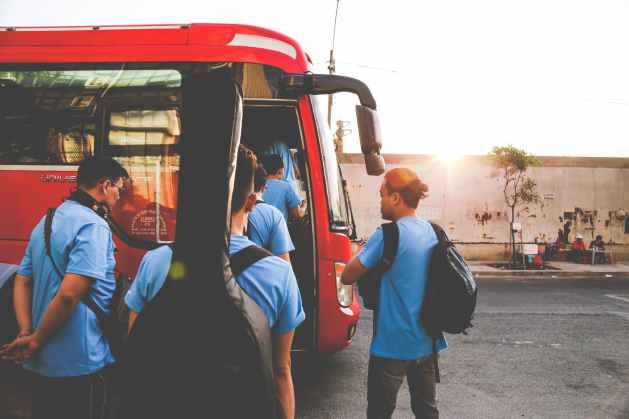
travelOver the last few years, the term “voluntourism” has come into the missions vernacular. It’s generally used as a derogatory term for people combining vacations, with serving, with a dash of poverty tourism thrown in. It’s a simple term, but it’s more complicated than the black and white way most people present it.

I’ve you’ve watched cable news or visited any social media website in the last few years you’ve seen a widening divide. Whether it’s Democrat vs. Republican, opinions on gun control, or any one of dozens of topics, the reasonable middle ground can be hard to find. The problem is, in most cases, that middle ground is where logical solutions are found. The calm voice of reason has been silenced by the shouting from both sides in too many discussions.

I, along with my team, host a LOT of short-term mission groups in Mexico every year. Are some of these trip more about tourism wrapped in projects? Sure, it happens, it’s actually a sliding scale with any group. Some people come for purely educational or recreational purposes, some come who only want to serve, most come with a mixed agenda and we’re OK with that. As long as the groups coming down are respectful of our home, and the people we serve in the community, we want the groups here. We want bigger groups, and we want them to tell their friends to come.

The term voluntourism paints all service trips with a broad negative brush. It claims that service trips are all about the people going on the trips, and those people looking good on social media. We’ve all seen the pictures of American teens surrounded by poor children. The thing is, for this current generation, everything is documented to social media. Whether it’s dining out, giving birth, or the Pinterest wedding, everything is now photographed for online publication. Is it odd that service trips are also so well photographed and shared? As long as the people being photographed have given permission, and the local culture is respected, is this a problem? Or does showing people the need in various areas of the world actually help to promote aid to those areas? Few would argue that’s it’s better to keep needs hidden. When these trips are healthy and respectful, everybody wins.

People attacking voluntourism without knowing the desires and goals of the people receiving the groups are actually showing incredible arrogance. “I know what’s better for them than they do.” This attitude of well-meaning American’s determining the wants and desires of people groups and cultures they know very little about is actually hugely condescending. Passing judgment on people without knowing them, their needs, and their wishes, is exactly the wrong thing to do. By going and visiting people where they are, talking to them, and getting to know them, real progress can be made. Call it voluntourism if you want to, but it’s a good thing.

Across the board, people in our area want more groups to come down. Even though some groups give just a half-hearted nod to a service project, they still bring huge benefits to our community. There is a reason every city in the US promotes tourism: people who visit buy food, supplies, and create jobs in the local community. Between the several ministries in our area, over 500 missions groups are hosted in our town of 4,000 people every year. These short-term mission teams and their projects are the economic engines that have brought our town from poverty to middle class in the last 15 years. Some groups have been less than great, but the overall effect has changed local lives for the better.

So how do you change the shape of voluntourism? Here are a few thoughts:

  1. Respect the people and culture of wherever you are visiting. Always remember that the people you’re visiting aren’t there for your entertainment, they are just like you but from a different culture and background. Get to know them, talk to them, ask before you take a picture (or don’t take a picture at all). Treat them as you would want to be treated.
  2. Work on real, productive projects. The best way to do this is to find on-the-ground organizations who you can partner with. There are people in any area who know the needs that need to be addressed and how best to focus your efforts and resources. If you’re working on a project, by partnering with local organizations, you’re much better prepared to help, and not cause unintentional damage.
  3. Be honest with your funders. If you call your trip “missions” and have raised money under that title, be honest with yourself and your donors. Is this really just about missions or is it about tourism? If it’s just about you taking a trip, get a job and pay for it yourself. If it’s really about serving others and meeting needs, let people know how they can help. Taking an educational and touristy trip is fine, just be honest about it.

It comes down to respect for the people in the countries being visited. Travel is a good thing, it breaks down walls, changes opinions, and works against racism. If we can learn more about our world, our fellow man, and help others while we’re at it, it’s a good thing. Voluntourism suddenly doesn’t sound so bad.

Please share on Facebook or wherever you spend time online.

To receive these articles by e-mail each Monday, please click “follow”.