Life Isn’t Fair

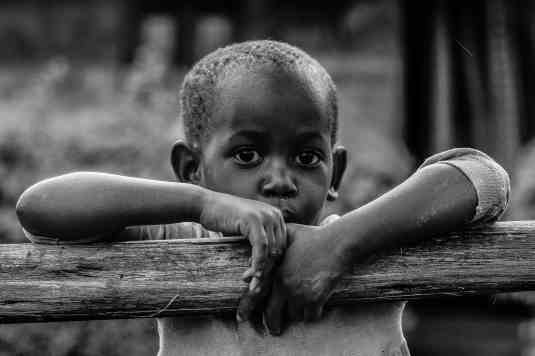
salvery2In running an orphanage, we get asked the same questions by many different people. One concern or question that comes up a lot from child sponsors is, “If I get a gift for the child I sponsor, won’t the other children feel bad?” Maybe I’m a jerk (it’s been brought up before), but my response is, “These kids are growing up in an orphanage, they know more than anyone: life is not fair.” Our kids have been dealt a lousy hand. Through no fault of their own, they have been abused, abandoned, and left alone in the world until they are brought into our care. Are they any less worthy of a family than the children they go to school with? From a very young age, our children understand at a deep level; justice is hard to come by in this broken world.

At some level, we all think the world should be fair. Listen to young children and the idea of fairness come up a lot. “He got more than I did, it’s not fair.” “You won because the sun was in my eyes, it wasn’t fair.” As we get older, we understand the world better, and we experience more and more that “fair” is hard to come by. One person gets laid off, and others don’t. One person comes from a broken home; the next person has both parents. A tornado or fire moves through a town, destroys some homes and jumps entirely over others. We can scream about it not being fair, but fair and just are terms that don’t apply in too many circumstances in this broken world.

Our Heavenly Father is fair and just, but this world is a dark messed-up place. We face injustices all around us. So what are we to do? We need to work to balance the injustices we can. We can’t control natural events or illnesses, but there are some things in our sphere of influence that we need to be aware of, and we need to be working to solve. We need to push the scales in the right direction when we can, to bring the world into a fairer more just place.

Micah 6:8 says: “He has shown you, O mortal, what is good. And what does the LORD require of you? To act justly and to love mercy and to walk humbly with your God.” The reactions to justice and mercy are very different. Love mercy, but ACT justly. To act justly requires us to move, it requires effort, it’s working to change the outcome or circumstances.

We’ve all read the story of the good Samaritan. He came across an injustice and acted accordingly. He couldn’t solve all the world’s problems, but he could address the one injustice before him. He is the perfect example of “acting justly.” He knew what the Lord required of him.

If we open our eyes, there are ways to work against injustices all around us. Some big, most small, but all important.

I’ve had the privilege of visiting and building a relationship with City of Refuge Ministries in Ghana; they give a stable, loving home to children rescued out of slavery (yes, slavery is still a massive issue in much of the world.) Recently, IJM, another great organization rescued two boys from slavery and placed them with the City of Refuge team. You can read about it here: police-rescue-children-from-forced-labor-in-ghana. Some might say, “It was just two boys.” This is how change happens, one or two people at a time. These organizations are doing incredible work. Are you called into rescuing children from slavery? Maybe, probably not, but you can support others who do this frontline work. Even if you don’t address huge injustices or hurts in this world, there are small acts we can all do; everything counts, we need to ACT justly.

The good Samaritan didn’t rescue child slaves, he didn’t change the world as a whole, but he changed the world of the one person in his sphere of influence, he helped the one before him. If you know how to cut hair, offer your services to a homeless shelter. Volunteer to read to children at a community center or mentor a child from a broken home. Find out who is out of work in your church or school and offer to bring them a meal (or surprise them with an anonymous box of groceries on their porch). Through small acts of kindness, we can tip the scales in the right direction.

The Christian faith is not a spectator sport. We need to be that light on a hill this world so desperately needs. Jesus spent His time addressing the injustices he saw around Him; this is the example he gave to us, this is what we are called to do. Acting to move the world towards justice does nothing to ensure or enhance our salvation, Jesus did that, but a big part of our faith is taking on His image and representing Him well.

Act justly, love mercy, and walk humbly with your God. Good advice.

Please share with others on Facebook or wherever you hang out online.
What is an Orphan?

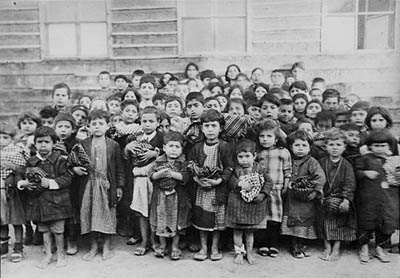
Armenian_orphans_in_Aleppo_collected_from_Arabs_by_Karen_Jeppe

What is the definition of orphan? I know this sounds pretty straightforward but depending on who you talk to the definition of what an orphan is can vary widely. Most people assume that an orphan is a child that has no parents. But orphan can also define many other situations where the child might have a parent or two; they just aren’t around to care for the child. Both UNICEF and World Vision define an orphan as a child who has lost one or both parents.

I, along with an exceptional team, run a large orphanage. We care for about 120 children from newborn up through adulthood in a family like setting. The bulk of our children are not technically orphans in the traditional sense; this sometimes surprises people. “If they’re not an orphan, why are they in your home?” Well, it gets complicated.

If a parent or parents are in prison, rehab, or some other institutional situation where they can’t care for their child, the child needs to go somewhere. Frequently there is no extended family available or willing to care for the thousands of children whose parents are no longer in their lives. These children are technically not “orphans” but still need a home. Of the children in our care, 70% will never see blood relatives again. The parents might be out there somewhere; it’s just that reunification is impossible. We are big fans of adoption, but it’s not a reality for most children. Because there are still parents somewhere, the children are older, or there are siblings in the picture, adoptions are pretty rare.

Some children are brought to us due to severe abuse or neglect. Some have gone through things that would rip your heart out if I were to detail them here. Even though they have been removed from a home situation for their protection, they still technically have parents and are not “orphans.” They need to be cared for, counseled, and brought to a place of healing.

Occasionally a woman will give birth and for any number of reasons decide to abandon that child. The mother might be too young, they might have hidden the pregnancy, or they don’t want to acknowledge it, they might be going through some deep psychological issues. For whatever reason, in any society, a percentage of infants are abandoned by their parents. Once again these children are not technically orphans, they have parents somewhere. These abandoned children need to be cared for and raised in a way to show them how valuable they are. They need to be shown that they are not a mistake or just something to be thrown away. Being abandoned at that level leaves some deep scars.

The work of orphan care is rarely black-and-white, there are a vast amount of gray areas that we work in every day. Many people accuse orphanages of breaking up families just for the sake of filling their dorms. I’m not saying some orphanages haven’t done this, or even continue to do this, but in my experience, it’s less frequent than some people would lead you to believe.

Most of our children are referred to us by social workers just like they would be assigned to foster care families in the US, but occasionally a child will be brought to us by a parent asking us to take their child. We will do everything in our power to keep the family together. Whether it’s counseling, short-term financial help, housing, etc. we fight to keep families together. We’ve even gone so far as hiring qualified single mothers so that they could stay here with their children in a safe place. We feel a healthy family is without a doubt the very best option for a child. Unfortunately, for many children, the family option is not on the table.

So why this rambling explanation of the difficulties of defining an orphan? I just wanted to bring up the idea that orphan care can be very nuanced, complicated, and it can be hard to peg down solid answers. Orphaned and abandoned children don’t fit into our preconceived boxes. In any ministry, there are Solomon like judgment calls made frequently. What is your definition of homeless? What is your definition of a “special needs” child? Words and definitions matter a great deal, but the realities are people are messy, and we need to meet them where they are. We are all on a sliding scale of messed up. Just because a child doesn’t fit our exact definition of orphan, doesn’t mean they don’t have needs. Too many children in this world are desperate for a place to call home, filled with people who genuinely care about them.

In orphan care, we need to see each child as God sees us. God sees each one of us as individuals with needs, desires, and profound pains that are uniquely our own. Psalm 68:5 says, “Father of the fatherless and protector of widows, is God in his holy habitation.” God cares deeply for each one of his children. He cares so deeply for us; we should also care for those lost children all around us, whether it’s a true orphan, an abandoned child, or the lonely child next door or in our church. There are more “orphans” among us than we might realize: act accordingly.

Please share on Facebook or wherever you spend time online.

Reciprocal Missions – The Book

Screen Shot 2018-04-28 at 4.53.28 PMYou’ll notice this blog is a LITTLE different than my normal ramblings so I hope I don’t scare off my normal followers. (thanks for following by the way) This week marks what I hope is a milestone for the work I feel I’ve been called to. After more than a year of partnering with Phil Steiner, a fellow missionary with a heart for short-term missions, our book is available on Amazon. Reciprocal Missions – Short-term Missions that Serve Everyone (paperback or Kindle)

For anyone who’s met me, or read my blog, you know I’m passionate about short-term missions. Like many opinions I hold dear, not everyone agrees with me on this topic. There has been a great deal written in the last few years questioning the value of short-term mission projects. Some circles are condemning them as useless, damaging, or a waste of money. I get that, I’ve seen my share of mission trips that should have never happened. But, I’ve spent the bulk of my adult life hosting short-term mission teams here at our orphanage, and I can tell you without a doubt, short-term missions can change lives.

In Missions the idea of unintended consequences is nothing new. Well-meaning people trying to fix a problem can sometimes create a whole new set of problems. The fight against human trafficking has had a detrimental effect on international adoptions, the worthy effort to protect vulnerable children is causing unintended consequences or preventing adoptions. The consequences of people pointing out the many problems of short-term missions is that, unfortunately, many people have given up on short-term missions altogether. There is a lot to criticize, but that’s true of just about any human endeavor. We need to take a nuanced look at whatever we do and work to improve when we can. If we stopped doing everything that was challenging, we would be sitting on the couch the rest of our lives. God wants us to be challenged; He wants us to stretch and try new things, this is how we grow into the people we’re intended to be.

There is something God does in the hearts and lives of His people when they step out of their comfort zone, travel to a new place, and spend time observing and participating in ministry in cultures different from their own. We are part of a rich, dynamic, wonderful collection of believers around the world. It’s impactful and life-changing to go out and build relationships with fellow believers in central America, Africa, Cuba, or any area you might have a chance to serve.

Just like any effective ministry, in missions, relationships are key. Healthy, reciprocal relationships are critical to successful short-term mission trips. Without them, we will continue to do damage and be ineffective. The book we’ve released is a guide to help people navigate short-term missions in a way that honors everyone: the teams going, the ministries hosting, and the local communities.

Our book, Reciprocal Missions, has a slightly different flow than most. Phil (my co-author) and I each work through a section from our perspective—a topic in our particular area of expertise; then the other will briefly chime in, sharing their short take on the topic. I write from the perspective of the mission host; having received and hosted groups for over 25 years. Phil writes from the perspective of the short-term trip facilitator, bringing 20 years of experience leading groups into effective service and educational experiences. Our goal is that the dialogue provides insights into best practices for healthy short-term missions.

Purchase the paperback here               Purchase the Kindle here

Please share on Facebook or wherever you hang-out online.

Tips On Short-term Missions: Don’t Screw it Up

pexels-photo-672358A while back, a friend from another ministry asked me to give a reference for someone who had been serving long-term at our orphanage. He asked me two questions: Is this person flexible? Is this person teachable? That was all they wanted to know. I thought those questions were brilliant, as long as the person was flexible and teachable, they could work with them. This is good to think about in short-term missions, and in life.

Here are a few fairly random tips for short-term mission teams. It could be longer, but this is a place to start.:

Be Flexible:    Most Americans like to have a plan, they want to know what’s going to happen and when. This is fine when you can control all the variables, but very few situations of life allow us to be in control. When traveling internationally, and in the missions field, flexibility is critical. Flights get delayed, passports get lost, people get sick, standard travel issues occur. Most developing countries have their own unique challenges. Electricity might only work for a few hours a day or go out randomly. Water that we take for granted in the US might be shut off for hours or days at a time due to maintenance or other issues. Stuff happens. Even if the travel, housing, and utilities all line-up, your host might run into unforeseen circumstances. Medical emergencies, staffing problems, broken vehicles, or other surprise issues are the norm with most ministries. Maybe you’re all set to build a house, but a bigger need arises, and you’ll be asked to shift your project. Maybe you were planning on your team sharing at a church service, but the pastor had other plans. As individuals, and as a group, you need to be flexible, or you’re going to experience an incredible amount of frustration. It’s better just to flow with it, be positive, and make the best of whatever circumstances you find yourself in. Unforeseen events are going to happen, roll with it.

Be Low Maintenance:   We have an in-house joke at our orphanage: “All mission groups bring joy, some when they arrive, some when they leave.” Most of the groups we host are fantastic. They come in self-contained, they know what they’re doing, and they have a great, flexible attitude. To be honest, some mission groups we dread. They need to be hosted, cared for, coddled, and they treat our team like their personal servants. We’ve had groups ask if we could have ice delivered to their cabins. I had one group get bothered that we didn’t have Keurig pods for the coffee maker they brought with them. One group that was working offsite at other ministries (which we encourage) wanted one of my staff with them at all times. Some people just don’t get it. Once again, most groups we love. Some take a little more grace.

Be Teachable:   Being teachable comes down to just being humble. Everybody thinks they’re humble, even when they’re showing an astounding amount of pride. American mission teams have a long history of coming in with the attitude that they are here to save the world. Yes, teams bring in resources and manpower, but it’s important to remember that you’re partnering with people who live in the culture, and have probably been in ministry for many years. Take time to listen to whoever is hosting your missions team. No, seriously, slow down and actually listen to the people you encounter. There are so many fascinating, inspiring people serving in the missions field who want to see lives changed. Here is something most people don’t realize: For most missionaries, they see YOU as a missions field. They want you to experience God in new and incredible ways, and for you to grow in your faith. Listen to them; they know what they’re talking about.

Be Culturally Sensitive and Respectful:   Not everyone in the world sees America, and American cultural norms, as the best. Please be aware of this. I know this sounds obvious but how we dress, the language we use, the attitudes we present are the biggest part of our witness. With every action, you’re representing not only the church; you’re representing the ministry you’re serving. It might be a dress that’s a little (or a lot) too short or an inappropriate shirt. It might be acting like the “loud American” in a local restaurant. It might be acting overly picky or turning up your nose at the local cuisine. Unless you have actual allergies, eat whatever is placed in front of you. It comes down to respecting the local people and culture. Sometimes it’s just common sense: The local police chief in our town has my number and will call if the visiting American teams are out of control or doing donuts in rental vans in a field somewhere (yes, it happens). Respect the culture, respect the people, respect the community. You are representing Christ. Walk accordingly. Side note on being culturally sensitive: leave the cameras at home, or at least ask permission before you take someone’s picture. “Do unto others…”

If I come across as snarky or negative, please don’t read it that way. Most groups we host are wonderful to work with and have great attitudes. I’m a deep advocate of short-term missions and their ability to change the lives of all involved. My hope is that people go into the mission’s field well prepared, with their eyes and hearts wide open to experience what God has laid out for them. Go on a trip; it can change your life.

Please share with your missions pastor or on Facebook.