You Are Going To Die

graveYou might have hours left. You might be around for several more decades. But you will die. You will kick the bucket, go toes up, become worm food, start pushing up daisies. You will reach room temperature, give up the ghost, etc.. There are lots of ways to say it, but one way or another we all give up the fight, our heart will cease to beat, and our life on this world will end. When that happens (and you live in the US) the people in your life will arrange to have you put in a box, a week or so later people will put on dark clothes (weird) and will gather. Someone will say a few words by your grave, and people you’ve never met will stick you in the ground. Following this little ritual, people will get together somewhere, eat potato salad, and talk about you. Our life comes down to a plastic bucket of potato salad from Costco. (and maybe a nice sandwich platter.)

In Mexico, funerals are handled differently. When someone dies everything snaps into action in time-honored rituals. The body is placed in a box and positioned in either the home or a public location for the wake to start, all within a few hours of someone passing on. The wake is not a polite, reserved affair. People are up all night hanging out, crying, sharing, talking, eating, maybe sharing a few beers, but it goes on ALL NIGHT. It’s quite the send-off. What goes on in the background is something else. Friends and some family are out digging the hole. Digging a grave is much harder than it looks like on TV or in the movies, it takes many back-breaking hours. Once the wake is winding down, everyone loads the casket into a truck and heads to the grave site. Once again, very different than in the US: in Mexico, to “bury your loved one” actually means that. You, your friends, and the family use some rope and lower the casket into the ground. Then you grab the shovels. It takes a LONG time to bury someone. People are crying, maybe some wailing, and it takes hours. But when it’s done, there is a real sense of closure, everyone has said “goodbye,” and people start to move on. One of the many upsides to this time-honored tradition is it makes death very real to everyone involved. This is a good thing; we should all face death from time to time. We need to be reminded that our time here is a temporary gig. There is something genuine about “burying your loved one.” The sweat and dirt and blood of broken knuckles as you dig through the hard ground to make a hole to place the body is not to be taken lightly. It’s real. It makes the line between life and death very clear – there is an end.

It’s important to be reminded from time to time that there might not be a tomorrow for us. The reason I wrote the 500 or so words on funerals you just read is to remind you that you will be the center of one of these rituals eventually. What are you going to do between now and then? How will you use this precious and limited time you have?

Too many people go through the motions of life, without living life in line with the tremendous calling we each have. We need to be living our lives to the fullest, living in such a way that we will hear upon our arrival in heaven, “Well done my good and faithful servant.” We should slide into heaven out of breath, worn out from seeking to share with others, give to others, and be representing our Father well. I’m not sure who said it, but I love the quote “It’s sad to reach the end of one’s life and realize you’ve never lived.”

I work with a lot of young adults from the US who visit our ministry. Sadly, I know most of them will follow the tedious path that society lays out for them. They will attend college while they figure out what to do, they will leave college with too much debt, they will marry too young, and spend much of their lives paying back student loans. I’m not sure this is what God intended for us.

At whatever stage of life you find yourself, young adult, old fart, or somewhere in between; take a risk. Do something out of your comfort zone. I know one older female retired doctor (80ish) who still drives herself to Mexico every week to volunteer at various clinics. I know a young family that is currently looking for property to open a new orphanage. I have a friend who just got back from Guatemala where he helped with volcano relief. These are people who are actively working to bless others but are also growing in ways that are hard to imagine. They are sucking everything they can out of the time they have on this earth.

I know not everyone is called to serve internationally, but we are all called to serve. Don’t let fear of the unknown, fear of looking foolish, or any other fear keep you from trying something out of your norm. You might find a calling that will change your life, you might learn about the people in your community, it might shape you in ways you could never envision.

Take a chance, do something great with your life. Always remember: In the end, no one gets out alive.

Please share on Facebook or wherever you hang-out online. Thanks.
Embrace the Storms

treeThis last week at our ministry we had to have some incredibly difficult meetings. One of our larger donors is having their own financial issues, and it’s trickled down to us, cutting our ministry income dramatically. The cuts we’ve had to make are difficult and painful, but they are cuts that need to be made for the ministry to survive and move forward. I know the pain we’re going through is ultimately a good thing. The idea that this is a positive season took some convincing for the other people in the meetings, but we know God will use this.

It’s easy to spout the platitudes that God can use all things, that all things work together for good, etc. It’s very different when you’re going through trials, attacks, and challenges many people never anticipate. It helps to look through the lens of history to see trials and tribulations that are not only survived, but cause a ministry or individual to strengthen and to flourish. We do need the storms in our lives to toughen us, to grow us, and to cause us to depend on God once again.

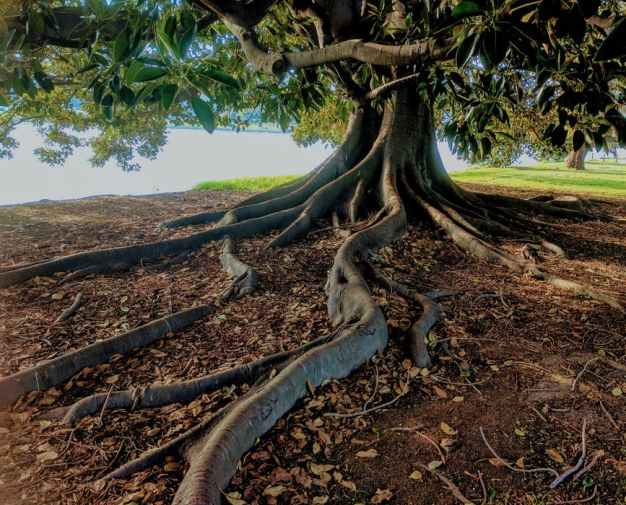
Several years ago there was an experiment in Arizona where scientists created a biosphere (not Bio-Dome, the horrible 90s movie with Pauly Shore, but the same idea). A biosphere is a complete ecosystem within an enclosed space. It’s helpful in research due to the ability of the people running it to control all the variables. Scientists built a HUGE biosphere with everything needed for the plants, animals, etc. to survive. After a while something started to happen, the trees were growing well but had very little bark. Soon all the trees began to topple over, one by one, under their own weight. No one could figure out why. They had good soil, the right amount of water, the temperature was right, there was no disease or pests, but the trees were dying anyway. It took a while, but they finally figured it out. There was no wind. A typical tree from a young age is buffeted by breezes, winds, and storms. A tree bends back and forth, sometimes dramatically, sometimes subtly, but a tree is almost always in motion. The action of the wind makes the tree stronger; it causes bark to grow to protect the tree, it causes roots to dig down deep to build a solid foundation. The daily struggles against and with the wind prepare the tree for the storms that inevitably come. Without wind, a tree withers and dies.

Many years ago, our home cared for several young men with spinal cord injuries. One young man in his late teens was paraplegic, but it never got him down. Carlos was very bright, friendly, and had become fully bilingual while in our home. Over time the other children in our care, the staff, and many of the visitors came to love Carlos and the way he carried himself. He was a powerful example and an encouragement to everyone he encountered. One day, while he was preparing to leave for two weeks of treatments at a medical center in California, he made a point to say a real “goodbye” to a lot of the kids and staff – I think he somehow knew he would not be back. In route to the hospital, he had an adverse reaction to some prescription meds and passed away. Carlos’s death was obviously a very difficult time for our large family. We spent a great deal of time with the kids in our care to help them through the grieving process, while we were also grieving.

A few months after Carlos passed we were talking about the experience and what came of it. Carlos was now waking in heaven, he died too soon in our eyes, but there is nothing we can do. It sounds odd, but children in an orphanage never deal with actual death. They aren’t around grandparents who die. Most of the children in our care, if they remember parents at all, they remember them as alive and younger – most of our kids are with us do to abandonment or abuse, very few from the death of parents. Death just doesn’t come up too often in an orphanage. Carlos was the first death in our big family in over ten years. Along with many other lessons learned from the passing of Carlos, it opened the doors to some great conversations with our many children about how fragile life is, about the need to use the time we do have here well, about appreciating those around us while we can. It also opened up the conversation about preparing for eternity into sharp focus. Don’t get me wrong, Carlos’s death was tragic, but it caused huge growth in our children, our staff, and the ministry as a whole. Would I want to go through that again? Of course not, but it did bring many hidden blessing only seen in hindsight.

No one goes looking for trials and hardship. No one enjoys suffering loss or being hurt by others. We don’t need to look for difficult times because life tends to bring them to our door. Difficult times are part of the fallen world we live in. It’s so important to realize that as believers, our Heavenly Father is more powerful than any trials or hardships that come into our lives. He can take the pain and cause growth; He can use the winds of this world to make us stronger, to build us up to be mighty oaks against the powerful storms that, with time, come into everyone’s life.

Embrace the storms in your life, dare to spread your arms and catch the brunt of the winds that blow against you. God will not only keep you upright; He’ll use it to make you stronger if you allow Him.

Please share on Facebook or wherever you hang out online.

You’re Only As Big As Your World

pexels-photo-1008155I know an older person (not really old) who lives on their own in Southern California. For many reasons, mainly their own decisions, they’re not as active as they once were. Their only real excursions out of their home are for church, weekly grocery shopping, and an occasional doctor appointment. They’re not a big reader, and they don’t watch the news, they just kind of exist. Their world, over time, has become small. There is one aspect of the way they live their lives that’s interesting: anything that goes on in their world is HUGE. If the mailman is 20 minutes late, it throws off their whole day. If the cat sleeps in a different spot they don’t know what to do. Their world has become so small, the weight of any detail can bring it crashing down. We need to keep our world big.
Any of us can get into a rut, doing the same thing over and over again. Work, home, church, repeat. There is nothing wrong with this, but if we never break up the normal rhythm of our lives it’s hard to grow, its hard to keep a healthy perspective, it’s hard to see the bigger world. We need to get out of our comfortable routines and stretch a little. This is even truer when it comes to our faith and our Christian walk. Routine is the death of passion; suddenly we lose the enthusiasm and wind up going through the motions. Any small test or trial at that point can bring us crashing down.

We’ve all seen the effects of people living in their own small world. How many of us have witnessed truly trivial decisions at a church become massive drama when they’re being discussed by people who don’t see the bigger picture. People with small worlds get very upset when the font is changed in the bulletin; they threaten to leave the church if the service is moved 30 minutes later, they don’t understand why the donuts table doesn’t have maple bars anymore. This sounds silly because it is. These are silly, stupid, trivial trials when you look at the bigger world of faith, our Christian walk, and the challenges of the body of Christ around the world.

I’ve gone through seasons like this in my own life. Several years ago, my world had gotten smaller. I had been helping to run an orphanage in Mexico for a very long time. In spite of the ever-changing challenges, I found myself walking in a routine. My life revolved around working with the kids, raising money, helping to facilitate short-term missions, etc. There’s nothing wrong with that but our orphanage, the kids in our care, and the people who came by had become the bulk of my world. One day a regular visitor approached me and shared how she was helping a small orphanage in Africa. She asked if I’d be interested in going with her to visit that home for ten days and help with some training. I went and it rocked my world.

Our small team spent the bulk of our time at a poor orphanage in one of the poorest countries in the world. It brought into focus what was important, what children in those types of situations need, and how much need there was in the world. We spent one day visiting another orphanage that was incredible: well run, beautiful, great education for the children in their care, etc. Visiting that home was profoundly humbling and showed us how far we still had to go to improve our own orphanage. Even the travel through several airports and countries to get to our destination worked to give me a bigger perspective on the world around us. I hope we made a difference in the orphanage we went to help, I know my life was changed through the experience.

Expanding people’s worlds is why short-term mission trips are so important. There are needs around the world, but short-term missions changes and expands the people who go on these trips. At any age, we need to be constantly looking for ways to see a bigger world, to experience life through the eyes of someone in another culture. We need to hear, smell, and experience life far from what we’re used to. Short-term missions can be kind of a selfish experience. Yes, we’re going to work hard and try to make a difference, but short-term missions change us at a fundamental level for the better. It keeps our eyes open to the bigger world around us, and it lets our own vision grow; it helps us attack life and our Christian walk from a much larger and healthier perspective.

Take a short-term mission trip. If your church doesn’t have a trip scheduled, organize one. It will help to make a difference in the world, it will help your church, and your world will expand. The problems we will encounter in life shrink in direct proportion to how big our world is. Make your world huge.

Please share on Facebook or wherever you hang out online.

Stop Hitting Kids With a Hammer

hamerI recently went out to lunch with a friend from Thailand. He’s an American who moved there several years ago with his family to open an orphanage. Within a couple of years, he had a revelation and shifted his entire ministry from orphanage work to doing everything in his power to keep healthy families together, he is passionately anti-orphanage. We had a great time.

Now you might be asking why I would take the time to meet with someone who is working against what I’ve spent most of my life building. He’s never going to be a donor, he’s never going to “come around” and open an orphanage again. He knows we’re not closing down our home and we’re not a donor (he mainly travels for fundraising). So why do we make it a point to get together whenever we can? It’s an “iron sharpens iron” thing. We make each other better, we both understand that we are an important part of the eclectic mix of ways to care for at-risk children.

Most of the time if there is a serious issue people feel passionately about, there is very little room for them to look at it from a different angle. Once someone is set on their ideal, everyone else must be wrong. A short glance at most Facebook feeds is a good example. So many people are feverishly posting about their pet topic, while “un-friending” anyone who might disagree with them or have the nerve to question an opinion.

The problem is, in most of the larger issues plaguing society, there might be several answers to the same question. How do we help with the homeless situation? How do we address the opioid problem in the US? How do we improve education? Ask 20 different people these questions and you’ll get 20 different, frequently very strong, opinions. Maybe, just maybe, the answer is; we need several different answers and many of them might be right.

Every society has a percentage of children that wind up in the “system,” whatever that system might be. There have been orphaned and abandoned children for thousands of years and we still haven’t figured out what to do about it. Most countries shift over decades from orphanages to foster care, neither are great. Some policies push for keeping families together at all cost, this is frequently a nightmare for the child due to abuse or severe neglect. So what is the answer? We need it all. We need every tool in the box. We need to understand each child and situation is different and should be handled in its own way. This is NOT easy.

Keep families together: This is ideal, whenever a family is broken up it’s a horrible thing. Some families need a little push of coaching to keep it together. Maybe it’s marriage or financial counseling. Maybe a free or cheap daycare so both parents can work. Perhaps a short-term loan or a one time gift to keep a family from becoming homeless or having their children wind up in the system. Sometimes, when abuse or severe neglect is going on, it is best to break up the family.

Foster Care: When a family can’t, won’t, or shouldn’t care for their child, and extended family is not an option, foster care can work. It’s not great, and it always depends on the quality of the foster family. Foster care is the direction many countries go to over time. It works, but it’s not an ideal situation. Lack of stability is a real problem as children are moved around for many reasons. Put yourself in a child’s place; if we had to change housing, churches, schools, relationships, etc. every few months, we’d probably have some issues also.

Orphanages: Orphanages have been used for a very long time. Unfortunately, many orphanages around the world are underfunded or run by the wrong people with the wrong motivations. Some outstanding homes do a great job with the children, raising them up to be healthy physically, emotionally, and ready for life. The problem is the great homes are the exception. Many homes are run by people that love children and want to help, but they are in over their heads when it comes to fundraising, staff training, etc. Without solid management, orphanages can be a disaster.

Adoption: Adoption, when it works, can be fantastic. We love to see our children adopted into loving, stable homes. Unfortunately, many children are not adoptable. Once a child is over five years old, the odds of adoption drop to almost nothing. Many children have multiple siblings, or there could be a family member still in the picture that might eventually be able to take them back. For the vast majority of children in any system, adoption doesn’t happen.

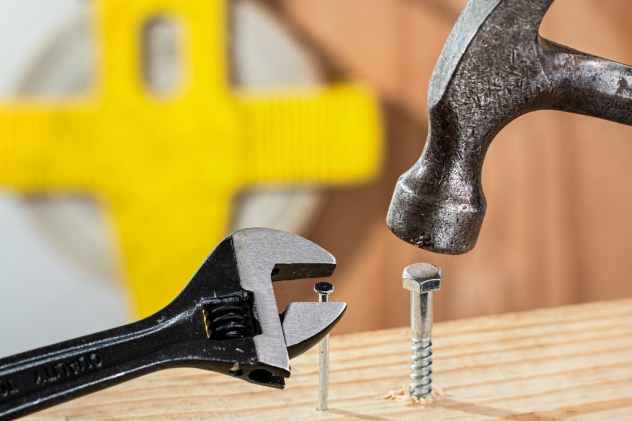
Listed above are just four options for children at risk. We need to use them all and stop trying to fit every child into the one system we are personally in favor of. Sometimes a child isn’t a good fit for one particular system of care. You might have heard the saying: “When all you have is a hammer, everything looks like a nail.” If we stay focused on the one solution we have at our disposal, we miss out on the many other tools that might be available. We need to use the correct tool for the job of helping at-risk children. We need to stop hitting kids with a hammer and reach for the right tool.