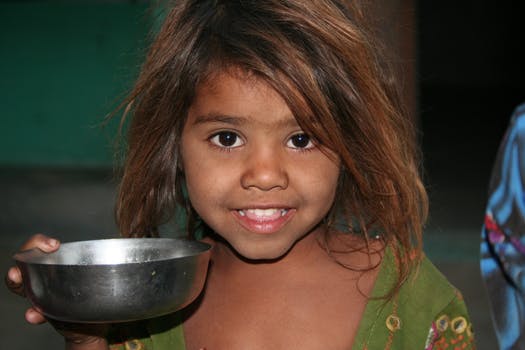
So You Want to Open an Orphanage…

child-face-rajasthan-smile-46259

Do you feel called to open an orphanage? Trust me on this, lay down until the feeling goes away. If you still want to open an orphanage, continue reading.

I wish orphanages didn’t exist. The first choice for caring for abandoned children should be extended family. If extended family is not an option, then children at risk should be placed in healthy families. Unfortunately, placement with a family is just not an option for many children. Most orphanages are filled with children who, for one reason or another, are not adoptable or are very difficult to place. Orphanages care for children with multiple siblings, children with physical or mental challenges, children with an extended family that cannot care for them but still hold parental rights, etc. So if orphanages have to exist (and they do), they should be great, and run by people with vision and the skill sets to make them a fantastic place for children to heal and grow into healthy adults.

On a regular basis, people contact me who feel lead to open orphanages. My first question is always: “Who is going to run it?” Putting up buildings is easy(ish), on-going funding is harder, but living at, and running an orphanage can be hugely challenging and is not for the faint of heart.

Like pastoring, it’s very different once you’re in charge as opposed to watching from a comfortable distance. Running an orphanage is 24 hours a day, just like pastoring. Like pastoring a church, everyone who walks into your ministry will be second guessing all of your decisions and how you’re running things (and they know they can do it better). You not only get to care for kids and staff, you also need to keep government officials AND donors happy, all at the same time. Good luck with that.

On the long list of things that surprise most people is the amount of administration that has to go on. From the outside, people tend to think that the day-to-day parts of running an orphanage are about holding babies, craft projects, and building healing relationships with the children. All of these things go on, but they make up a remarkably small part of the day-to-day hours of running an orphanage. Actually, “child care” is an almost insignificant part of the job. Days are occupied with the mundane: grocery shopping, hosting guests, managing staff, answering emails, etc. Your days and weeks are filled with what it takes to keep the ministry open and moving forward.

Fundraising will take up much of your waking hours for the rest of your life. Just because you’re passionate about orphan care doesn’t mean anyone else cares. Everyone has different passions, callings, and challenges in their lives. Other people are called to serve and help in other ministries, that’s a good thing. That people have passions and interests that don’t connect with orphan care makes fundraising that much more of a challenge. Sharing the needs of your home, sharing the needs for orphan care in general, and sharing your passion is all part of the work. Share with the right people, get the word out, and God will connect the right people to support it.

Here is what they don’t teach you in “orphan school”: the struggles are real. Caring for orphans is very close to the heart of God. If you’re doing it right, the enemy doesn’t like it. You will never have a normal week again. Sick kids, staff issues, government issues, will be the norm. We figure about two significant attacks a year. Hepatitis outbreaks, wells going dry, we went through one season where EVERY couple on our staff went through a rough patch in their marriage. We’ve had children diagnosed with cancer, we’ve had children die. The spiritual attacks will be part of your life, get used to it. The good news is we’ve never gone through an attack God could not use to make the home stronger and cause us to grow. I can honestly look back and give thanks for all we’ve experienced. Don’t get me wrong, we dread the attacks and storms when we’re going through them, but we also know God is so much bigger.

Please know that this work will rip your heart out. And dance on it. And then bounce it around the room. We deal with the worst side of humanity. I could shock you with the profoundly horrific things that have been done to our children. You do not want this in your life. Then, once a child has been in your care for a long time, and they’ve begun to heal, you never know when a social worker will sweep in and say they are going back with family. Sometimes this is good; many times it’s not. Your emotional scars and callouses will build over time.

If this rambling article sounds like I am complaining, please do not interpret it that way. I just want people going into this work to do so with their eyes wide open. I’ve dedicated the bulk of my adult life to orphan care, and I wouldn’t have it any other way. The work is challenging, the battles are real, and it can be emotionally and physically exhausting. That being said, I have zero regrets about walking away from my “normal” life running a business in Southern California. Although the challenges can be extreme, the rewards far outweigh any of the battles we’ve gone through.

The graduations where you see groups of your children graduate from high school or college makes it worth the sacrifice. When you’re able to walk so many of the young women you’ve raised down the aisle at their weddings, it’s worth it. When you see children you’ve raised, caring for their own families in a healthy loving fashion, it’s all worth it. If you’re indeed called to orphan care, surround yourself with people of similar vision, give it everything you have, and press forward. It’s a worthy calling and will be the most rewarding experience of your life.

If you liked this blog post, please share with others. thanks.
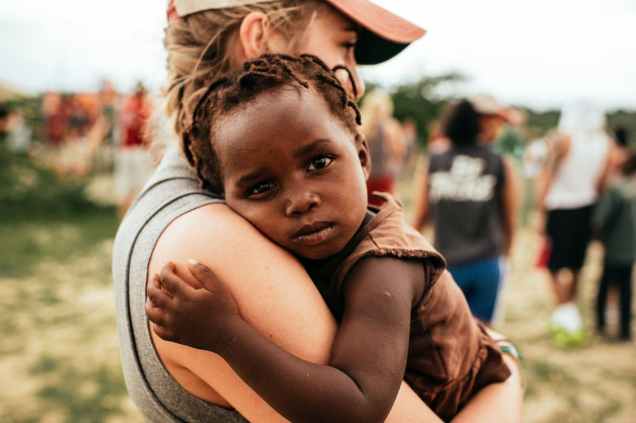
Random Affection in Orphanages

orphanchildOne of the realities of orphan care is that everybody considers themselves an authority. Just like parenting styles in a traditional family, opinions on orphanage styles tend to shift frequently on how to “do it better.” These opinions change depending on what’s trending in any given year. In the last few years, there’s been a lot written on the potentially harmful effects of too many visitors on the children in an orphanage. After working full-time in orphan care for over 25 years, I could not disagree more.

The current theory states that having visitors in orphanages on a regular basis leads to attachment disorder problems later in life because the children are bonding with random, different strangers every week. In my experience, children raised in dysfunctional orphanages will have a wide range of emotional problems later in life, just as anyone raised in a dysfunctional family. If the children are bonding with random strangers every week, this means there are many underlying problems in the orphanage already. The bonding issue is just a symptom.

Let’s look at two scenarios:

Scenario 1) In our orphanage we have more visitors than almost any orphanage in the world. In a typical year, we host around 280 groups and have other “drop by” visitors on a regular basis. We enjoy hosting the groups, we enjoy leading them into service and short-term missions, and we believe when well-managed, these visits are healthy for everyone. So how do we avoid the random attachment? First, we have solid, consistent staff and plenty of them. Our children do bond with adults, but it’s with consistent adults in their lives. We have excellent child to staff ratios (about 4 to 1) and minimal staff turnover. Second, although we have a tremendous amount of visitors we intentionally limit the time they have with our children. We limit the visiting hours with our infants and toddlers, but more importantly, we encourage all of our groups to stay with us but travel out daily to serve in the community or with other ministries in the area. Our children see the “visitors” as just that, visitors dropping by to see our family. The majority of children who grow up in our home go on to have healthy marriages and families. In spite of all the visitors, most of our children turn out okay.

Scenario 2) In an orphanage that is understaffed and overcrowded, the children will seek random affection from any visitor that comes through. You can see this when you first arrive in a home. If children above the age of five are running over to hang on you and ask to be held, they’re starved for affection. A normal, well-adjusted 10-year-old doesn’t just walk up to a random stranger seeking physical contact; this is a symptom of much deeper issues in an orphanage. The children are not bonding with the staff and are severely lacking affection. They WILL have problems bonding later in life without a tremendous amount of healing. Most children raised in poorly run orphanages eventually produce children that wind up back in the system and have a tough time with healthy relationships. (Just like too many children from foster care.)

So how does someone, or a mission team, respond to these two examples? If you’re dealing with a healthy orphanage, one that has well-adjusted kids and is well run, continue to back their work. Find out what their needs are and keep supporting a healthy situation. Help them to continue to provide what their children need.

If you’re working with a home that’s not so great, it gets complicated quickly. A few years ago we were helping an orphanage near us that was a pit. The orphanage was overcrowded, filthy, and the children were deeply starved for affection. We were praying for a change in that home but did not have a lot of hope with the current management. With eyes wide open to the situation, we continued to send teams to that orphanage on day trips. The teams would clean, prepare meals, and spend time with the children in need of attention. I would encourage the teams by telling them “This home will probably never change, but for one memorable day, those children can know someone cares about them.” With these “hit and run” trips it was far from perfect, but it was giving these children something.

Everyone knows that eating junk food all the time makes for a lousy diet. In a perfect world, we would all have access to regular, healthy, balanced meals. If someone is starving, the standards drop, and junk food is better than no food. If a child was starving, and all we had to give them was a candy bar, that candy bar would mean the world to them. Long term, you would hope that the situation would change, but I don’t think anyone would withhold the candy bar because it’s not the ideal, healthy option. “Junk food” affection, when it’s the only real option, is better than no affection at all. People not visiting an orphanage to avoid this attachment and bonding problem does not suddenly make healthy bonding occur if the orphanage is understaffed and poorly run.

Caring for orphaned and abandoned children is obviously a complicated issue. It’s an issue that has been around for thousands of years and will not be going away soon. To believe that not visiting orphanages will help the situation is like saying not providing services and meals to homeless will end the homeless situation across America. I wish orphanages didn’t exist, but if they have to exist, they should be great, and they need our help.

Please, continue to follow the fundamental teaching of our Christian faith in regards to orphan care:

Religion that God our Father accepts as pure and faultless is this: to look after orphans and widows in their distress and to keep oneself from being polluted by the world. James 1:27

 If you found this article helpful or interesting, please share with others.

“Do No Harm” in Short-Term Missions

pexels-photo-209235With the flooding in Texas right now many people are jumping up to do what they can. They’re reacting to the horrible images we’ve all seen by heading out to help, this is a great thing. I truly respect anyone willing to step out of their own lives to help others in need, we all need to grow in this, but we need to do it in a mature and wise manner. None of us wants to add to an already difficult, complicated situation.

As an important step in becoming a doctor, medical students must take the Hippocratic Oath. One of the basics of that oath is “first, do no harm” or “primum non nocere,” They need to treat their patient in a way that does not harm them. They can’t experiment, or rush in to “heal” them, if they don’t know that what they’re doing will be beneficial. It might be a good idea for anyone going into short term missions, or serving in an extreme situation, to take this same oath. So often, we rush in with well-meaning intentions but wind up making the situation worse than it already is.

There is an endless list of examples of well-meaning plans that went sidewise once they were put into action. Unintended consequences can have effects way beyond what most people would even consider. There’s a story of how cities across the north east US changed the traffic lights to LED technology. LED lights are cheaper to operate, they last a VERY long time, what could go wrong? Well, LED lights don’t heat up. Once the snows hit, the traffic lights would fill with snow and without the heat from the old-school lights it would just sit there blocking the signals. People had to go around with brooms on long sticks to knock the snow out of the traffic lights. No one saw this coming; no one realized the unintended consequence of this well-intended action.

Often, at first glance, a missions idea to “help” might sound like an excellent idea and an act of generosity. The results of our actions might ripple out in ways we might have never considered.

I know of one local church in our town that hosts a lot of groups. Out of an abundance of hospitality, the pastor feels he needs to offer the visiting leaders the pulpit on Sunday. What winds up happening is the church might go several weeks without hearing their own pastor teach. They hear from a line of well meaning people who they don’t know, in a language that needs to be translated. The visiting pastors don’t know the needs of the congregation or where they are spiritually. These visiting pastors mean well but hold the church back. Unintended consequences.

Here at our orphanage, we’ve had well-meaning people visit and pass out loose change to our kids. They think they’re blessing the kids when they see them light up at receiving this money. Well, if you were visiting a family in the US would you just randomly pass out cash to their kids? It’s just weird. Also, by groups doing this, it teaches our kids to beg or manipulate guests in our home. Before they came to us, many of our children were begging to survive. We try VERY hard to teach our kids how to work for extras in life and not to beg. By people kindly passing out quarters, they’re working directly against some of our goals here with the children in our care.

I’ve seen very well-meaning groups come into a community, find a local pastor, and offer to build a church building from the ground up. On the surface, it might sound great. In a bigger picture, fully funding a church build usually sets up an unhealthy dynamic. Does that Church congregation have emotional ownership of their church if they have no skin in the game? Are they learning to share and give to the church if they think their “widows mite” isn’t needed? It’s incredibly healthy when a congregation comes together to work towards a common goal. I’m not saying we shouldn’t support and help churches in the missions field, but by doing everything for them, we’re not allowing them to grow in a normal healthy fashion.

So how do you go on a missions trip and not do more harm than good? The best way to move forward with any missions trip is to prayerfully consider our impact, both positive and negative, in any community we’re going to serve. Along with prayer, one of the most important things we can do is partner with, and listen to, an on the ground ministry already serving long-term in that area. These are the people who’s ministries are either blessed by your visit, or are left to clean up the rubble. Organizations hosting groups in Mexico, Haiti, or any country in Africa have seen and worked with a lot of groups. They know what works, what doesn’t work, and how to leverage the skills and resources you want to provide. Let them guide you into a productive, helpful trip for all involved.

Here is one example of how subtly shifting a project will bring it from harmful to beneficial. We have teams that want to do food distribution for families in poorer areas. They might hit Walmart in a nearby city, buy lots of groceries in bulk, and bag them up for distribution. Yes, they are providing food and a blessing for families in the community. But what are they doing to the local mini-marts and farmers markets who are losing sales? Most small stores are barely staying open with what little sales they have in poorer areas. The result of this short-term blessing might be people in the community losing jobs. If that same group buys locally, they might pay a little more for the groceries, but along with blessing the families in need they would be pouring money into the local community and help to keep businesses and jobs moving forward.

With subtle, wise shifting, our efforts can have the desired positive impact that we want to bring. Maybe instead of preaching at a local church, ask to participate and listen to what the local pastor is teaching that week. Maybe instead of passing out loose change to kids in an orphanage, we can find ways to bless the over-worked staff who most people ignore. Whether it’s food or construction materials, maybe we should buy locally whenever possible. Maybe for every person on our team pouring that concrete slab, we commit to hiring a local construction worker to help for the day.

We’re called to serve, and I believe short term missions can and does change lives for all those involved. Go, serve, give, but please: do no harm.


“Thank you for the Y2K shot glasses?”


You’d be amazed what gets donated to an orphanage. There’s an endless stream of shot glasses, water bed heaters, ice skates and an ongoing list of items that seem to beg the question: exactly what was the thought process that went into this? I keep a bowling ball resting on a shelf in my office, when asked about it I tell people it’s “a tribute to the bizarre donation.”

Sometimes it’s easy to categorize donations when they come in: “Dead people things,” an elderly person passes away and rather than sort through everything, all their belongings are boxed and shipped to us (Soooo much old Tupperware and rusty canned goods). “Garage sale leftovers,” bags of clothing and knickknacks that still have the .15 cent price tags attached but wouldn’t sell even at that price. “Schools cleaning out their lost and found closet” (this actually brings in some cool stuff). We love the “little kid donations” a young child presenting a box of “their” toys for the kids in need, you can tell they struggled over every item.

We honestly appreciate any donations coming in. In our home, we care for over a hundred children entirely through donations of goods and funds. Our many children are fed, clothed, and educated thanks to the generosity of many great people. We do have some really great stuff donated along with the not so great.

In running an organization that both receives and distributes donations, we spend a lot of time looking at this topic, and we realize it’s a big deal. Sometimes, receiving donations can be heart-wrenching. A while back we had a couple dropping off a few bags of clothing, nothing unusual. Watching the couple from a distance it just didn’t feel right. I walked over to talk to them and found out they were donating the belongings of their nine-year-old son who had recently passed away. We sat for a very long time over a cup of coffee as they told me about their son, this donation was part of the mourning of their child. They came back every few weeks for a long time. It was good for them.

Our attitude about “stuff” matters profoundly. Jesus spent a great deal of time talking about our reaction to money and belongings. How we handle what we have should be a part of our everyday thought process. Are we good stewards of the things we’ve earned or been entrusted with? Are we sharing with others as we should? This is a thorny topic that draws a strong response from almost everybody, just ask any pastor who has taught on tithing. Everyone from the rich young ruler in the gospel of Luke to this present day struggles with this issue. I know I haven’t figured it out.

Mathew 25:35-36 & 40  For I was hungry and you gave me something to eat, I was thirsty and you gave me something to drink, I was a stranger and you invited me in, I needed clothes and you clothed me,…..The King will reply, “Truly I tell you, whatever you did for one of the least of these brothers and sisters of mine, you did for me.”

If we knew we were feeding our Lord, what kind of meal would we serve? If we knew we were giving a drink of water to Jesus, would we send it in a dirty glass? We can’t help everyone, and I don’t believe most people are called to give EVERYTHING away, but when we do give and serve it should be our best. Few things get me more frustrated that the phrases “it’s good enough for an orphanage,” or worse “it’s good enough for orphans.” Sometimes I want to punch a wall. These children are precious in His sight and deserve the same quality of life that any child deserves, maybe better.

Please think long and hard about the quality of items you or your organization sends to the missions field. Are you sending clothing or items you would want your child to receive? Please take a hard look at any project you’re working on during a missions trip. Would you want to live in the building you’re putting up? Would you want your home painted the way you’ve painted someone else’s? The quality of our work, and how we treat others, is a greater testimony to the Gospel than any words, dramas, or programs we might bring to the missions field.

Obviously, I have a huge conflict of interest in writing this. But I’m also writing this on behalf of the many, many organizations around the world doing really great work on a shoestring that receive supplies and groups every day. I know more than a few missionaries who want to write this but are understandably afraid of offending donors. (My wife is more than a little nervous after proof-reading this blog)

There is no greater indication of our spiritual maturity than how we give to others. We know everyone is different. We know for some people giving that half bag of used clothing is a BIG deal, that’s OK if that’s all they’re ready to do. We hope people like that grow in the joy of helping others. Whoever you choose to give to and support, please give to them as you would want to be given to.