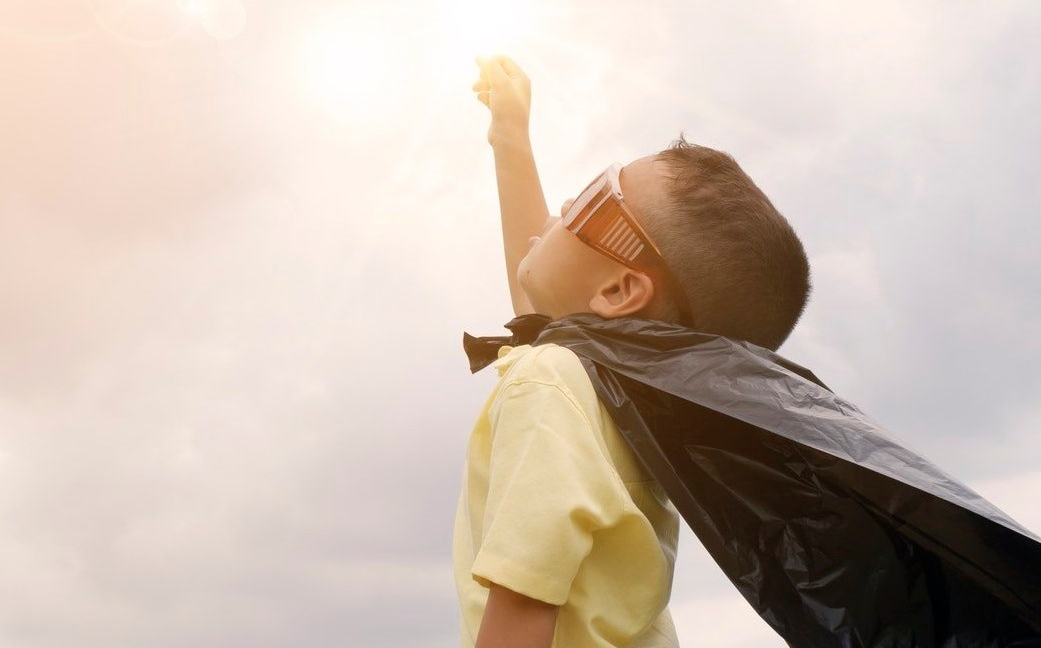
Orphan Identity: Victim or Victor?

pexels-photo-346796-e1535913334664.jpegWe all have an identity. We are more than just going through life; we are someone. It’s part of our human experience that we identify as more than just a person; we label ourselves as a way of distinguishing ourselves from the many people around us. We might be an athlete, a vegan, or a foodie. We might be a cancer survivor or recovering alcoholic. We’re German American, ginger, or a Buckeyes fan. Even within our faith, we define ourselves: Southern Baptist, Catholic, Methodist, etc. Sometimes we’re born into an identity, sometimes we choose the identity, sometimes society lays an identity on us, but it’s part of who we are. It helps define us. There is a reason the many DNA testing businesses out there are doing so well, people want to know their history, they want to define who they are in some way. “I’m 59% German, 33% Irish, but I have 8% Indian in me.”

For an orphan, identity can be complicated. By definition, a child in an orphanage usually has no history. They frequently don’t know where they came from; they are often brought in with no birthday, no birth certificate, nothing to mark their existence other than they’re alive and breathing. Starting from zero is hard.

A big part of orphan care is helping children shape their identity from scratch. Caregivers tend to focus on the basics: food, shelter, medical care, maybe education. The basics are essential (that’s why they’re called the basics) but there is a deeper level that needs to be addressed once the basics are met. We need to build, or in some cases re-build a child’s identity. To help them see themselves, and identify as, someone of value.

The very word “orphan” brings up all kinds of reactions from people, usually not good. Pity is usually the first reaction, in some cultures contempt: “no one wanted you.” The reaction to being labeled orphan is almost never a positive force. It’s our job to change that.

In many orphan or foster care situations the child embraces the pity reaction, and their identity becomes “victim.” They define themselves by what’s been done to them by their families, and by society. Living in victimhood is a tough road, it means you’re always a little less than others, and it also means you feel entitled to the pity that comes your way. Less is expected of you. When less is expected, that usually results in, something less. If great things are expected, great things can happen.

In some ways, we’re all orphans. We’ve all been hurt, we’ve all been abandoned, and we’ve all been victims of the world. How do we redefine ourselves and build a healthy identity that was intended for us? The first step is to realize we are not orphans, our Heavenly Father has adopted us into the greatest family of all. This is no small thing; it marks us, it sets us apart, it gives us an inheritance beyond words or understanding.

John 14: 18-20 “I will not leave you as orphans; I will come to you. Before long, the world will not see me anymore, but you will see me. Because I live, you also will live. On that day you will realize that I am in my Father, and you are in me, and I am in you.”

To get this across to a young child is a challenge, but if we treat them as the royal children they are, and not as victims, they will begin to see themselves as worthy of love, worthy of belonging. They will take on the identity we place on them, they will see themselves as we see them: as special, precious children in God’s sight and ours.

Shifting identity starts with small details: attentively listening to a child, giving them the attention they desire, having a special cake on their birthday (even if it’s a made-up date). Letting them know they are special goes a long way in moving them from victim to victor.

Another profoundly powerful way to move someone from victimhood is to show them the joy of serving others. Along with the obvious blessing of being part of a family, comes the responsibilities of being part of a family. Jesus came to serve others, and we are asked to do the same. As a child might “help” their parent to fix the car or prepare dinner, being allowed to help in our own feeble way builds a healthy pride, pride of being part of the family, part of something bigger than us. There is something profoundly healing for us as we reach out to help others. By showing someone, even a young child, that they have the power to influence positive change in someone else’s life is profound. It gives them power, and it brings joy, it’s deeply healing. Service moves people from someone to be pitied, to someone representing God. This is a big deal. This creates an identity that is larger than anything the world might place on us.

Our identity defines us. Who are you? And who do you encourage those around you to be? Expect and encourage people to live in the identity of our Heavenly Father. There is no greater label, identity, or way of looking at life.
Embrace the Storms

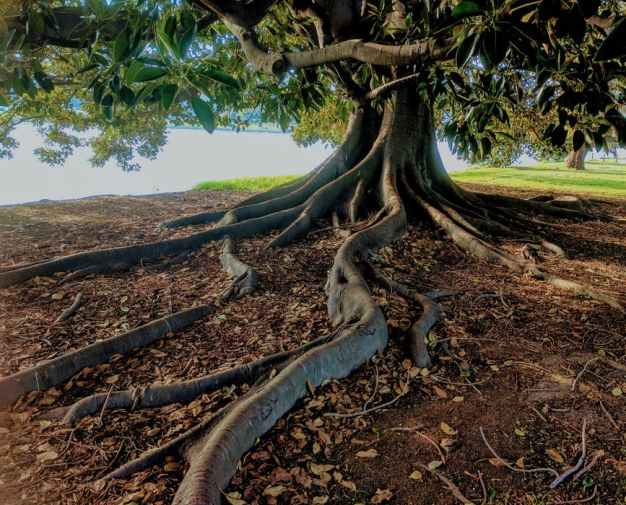
treeThis last week at our ministry we had to have some incredibly difficult meetings. One of our larger donors is having their own financial issues, and it’s trickled down to us, cutting our ministry income dramatically. The cuts we’ve had to make are difficult and painful, but they are cuts that need to be made for the ministry to survive and move forward. I know the pain we’re going through is ultimately a good thing. The idea that this is a positive season took some convincing for the other people in the meetings, but we know God will use this.
It’s easy to spout the platitudes that God can use all things, that all things work together for good, etc. It’s very different when you’re going through trials, attacks, and challenges many people never anticipate. It helps to look through the lens of history to see trials and tribulations that are not only survived, but cause a ministry or individual to strengthen and to flourish. We do need the storms in our lives to toughen us, to grow us, and to cause us to depend on God once again.

Several years ago there was an experiment in Arizona where scientists created a biosphere (not Bio-Dome, the horrible 90s movie with Pauly Shore, but the same idea). A biosphere is a complete ecosystem within an enclosed space. It’s helpful in research due to the ability of the people running it to control all the variables. Scientists built a HUGE biosphere with everything needed for the plants, animals, etc. to survive. After a while something started to happen, the trees were growing well but had very little bark. Soon all the trees began to topple over, one by one, under their own weight. No one could figure out why. They had good soil, the right amount of water, the temperature was right, there was no disease or pests, but the trees were dying anyway. It took a while, but they finally figured it out. There was no wind. A typical tree from a young age is buffeted by breezes, winds, and storms. A tree bends back and forth, sometimes dramatically, sometimes subtly, but a tree is almost always in motion. The action of the wind makes the tree stronger; it causes bark to grow to protect the tree, it causes roots to dig down deep to build a solid foundation. The daily struggles against and with the wind prepare the tree for the storms that inevitably come. Without wind, a tree withers and dies.

Many years ago, our home cared for several young men with spinal cord injuries. One young man in his late teens was paraplegic, but it never got him down. Carlos was very bright, friendly, and had become fully bilingual while in our home. Over time the other children in our care, the staff, and many of the visitors came to love Carlos and the way he carried himself. He was a powerful example and an encouragement to everyone he encountered. One day, while he was preparing to leave for two weeks of treatments at a medical center in California, he made a point to say a real “goodbye” to a lot of the kids and staff – I think he somehow knew he would not be back. In route to the hospital, he had an adverse reaction to some prescription meds and passed away. Carlos’s death was obviously a very difficult time for our large family. We spent a great deal of time with the kids in our care to help them through the grieving process, while we were also grieving.

A few months after Carlos passed we were talking about the experience and what came of it. Carlos was now waking in heaven, he died too soon in our eyes, but there is nothing we can do. It sounds odd, but children in an orphanage never deal with actual death. They aren’t around grandparents who die. Most of the children in our care, if they remember parents at all, they remember them as alive and younger – most of our kids are with us do to abandonment or abuse, very few from the death of parents. Death just doesn’t come up too often in an orphanage. Carlos was the first death in our big family in over ten years. Along with many other lessons learned from the passing of Carlos, it opened the doors to some great conversations with our many children about how fragile life is, about the need to use the time we do have here well, about appreciating those around us while we can. It also opened up the conversation about preparing for eternity into sharp focus. Don’t get me wrong, Carlos’s death was tragic, but it caused huge growth in our children, our staff, and the ministry as a whole. Would I want to go through that again? Of course not, but it did bring many hidden blessing only seen in hindsight.

No one goes looking for trials and hardship. No one enjoys suffering loss or being hurt by others. We don’t need to look for difficult times because life tends to bring them to our door. Difficult times are part of the fallen world we live in. It’s so important to realize that as believers, our Heavenly Father is more powerful than any trials or hardships that come into our lives. He can take the pain and cause growth; He can use the winds of this world to make us stronger, to build us up to be mighty oaks against the powerful storms that, with time, come into everyone’s life.

Embrace the storms in your life, dare to spread your arms and catch the brunt of the winds that blow against you. God will not only keep you upright; He’ll use it to make you stronger if you allow Him.

Please share on Facebook or wherever you hang out online.

It’s a Person, Not a Problem

childHow many people label the recipient of their help, and then the label is all they see: homeless person, orphan, addict, etc. It’s so important in orphan care, and in ministry in general, to see the person and not the problem. We need to move beyond seeing the circumstances and see them as individual people with their own hopes, fears, and histories. God only sees the person; it’s a good model.
One of the best ways to understand someone is to put yourself in their place mentally. To “walk a mile in their shoes.” Most of us (hopefully) have no idea what an orphaned or abandoned child is going through, but it’s so important to try and understand. Before we can reach anyone, they need to know we know them, understand them and have their best interest at heart. In our experience, the most effective staff in our orphanage are the ones with the worst backgrounds. They understand our children. They’ve been there, they know the fear.

If a child is coming into an orphanage or foster care situation, it’s not like anything most people have ever experienced. Think about the times you’ve seen people interviewed after a major fire or tornado. “I’ve lost everything.” is a common response. But have they lost everything? They might have lost their home and belongings but they still have a church, a job, friends, their family is probably still around. And yet, at that moment, “everything is gone.” That is a lot to deal with.

Now, imagine what a child is going through. They actually have lost everything. Their home is gone, it’s likely they won’t see friends or family ever again, they will never go back to their school, odds are all they have in the world is the clothes on their backs. On top of the obvious loss in their lives, they are still very young, so everything is magnified in their minds. When you’re six a week might as well be a year. Any event, good or bad, is seen as huge through a child’s eyes. A child’s reactions haven’t aged to understand that life changes, that peaks and valleys will happen. To a child, something we might brush off becomes the end of the world. Layer that with the fact that children winding up in the system probably never had good role models in their lives to learn how to deal with trials, hardships, and loss in a healthy way. Most of us kind of freak out if we lose our keys or cell phone, imagine what a child is going through who has lost everything.

Recently we took in a group of three siblings. It’s not uncommon for the oldest in a group to be the “parent” if the real parents were either physically or emotionally absent. The ten-year-old was REALLY in charge of his siblings emotionally, and he was in a panic and on the edge of tears. “What if my mom is looking for us?” (We calmly explained that the social worker knows where they are.) “This is an orphanage, what if we get adopted, and our mom wants us back?” (We don’t do that, adoptions are pretty rare with older kids, and sibling groups are almost NEVER adopted.) He didn’t have the name of his community but tried to describe it to us so we could take him home. (His descriptions could have been any one of hundreds of communities around Tijuana.) We slowly and calmly did everything we could to assure him that he and his sibling would be OK.

I’m sharing this to help you put yourself into the mind of a child in the system. Some people respond to the worries and fears of a child by minimizing it. “You’ll be fine.” “Others have gone through this.” “Don’t worry about it.” This type of response does not help. We need to speak to them at their level and give their worries the attention they deserve in their mind.

The problems in our lives are frequently huge in our eyes and seem insurmountable. To God, our problems are tiny. He sees the big picture. He’s seen all this before. But He still hurts for us, listens to us, is there for us. Jesus came to die on the cross but to also walk as man, putting Himself in our place. He knows our trials, our fears, our questions that, in His mind, are simple worries. In His eyes, our problems are passing trivia, but to the children we are, they are crushing stresses in our lives. He hurts for us. He wants to be that loving, encouraging voice telling us we’re going to be OK.

If you work in childcare or any ministry, you need to be that calming voice, that attentive ear to the pains and fears people are going through. In a very real way, we are representing God. We need to be that anchor, that safe place, that understanding ear for the people we are ministering to. See the person, not the problem; walk in Christ’s example.

Please share on Facebook or wherever you hang out online.

What is an Orphan?

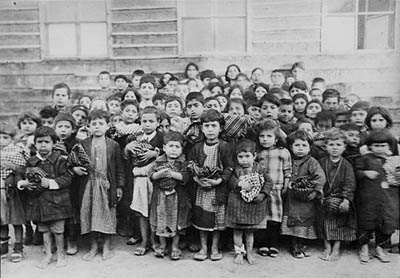
Armenian_orphans_in_Aleppo_collected_from_Arabs_by_Karen_Jeppe

What is the definition of orphan? I know this sounds pretty straightforward but depending on who you talk to the definition of what an orphan is can vary widely. Most people assume that an orphan is a child that has no parents. But orphan can also define many other situations where the child might have a parent or two; they just aren’t around to care for the child. Both UNICEF and World Vision define an orphan as a child who has lost one or both parents.

I, along with an exceptional team, run a large orphanage. We care for about 120 children from newborn up through adulthood in a family like setting. The bulk of our children are not technically orphans in the traditional sense; this sometimes surprises people. “If they’re not an orphan, why are they in your home?” Well, it gets complicated.

If a parent or parents are in prison, rehab, or some other institutional situation where they can’t care for their child, the child needs to go somewhere. Frequently there is no extended family available or willing to care for the thousands of children whose parents are no longer in their lives. These children are technically not “orphans” but still need a home. Of the children in our care, 70% will never see blood relatives again. The parents might be out there somewhere; it’s just that reunification is impossible. We are big fans of adoption, but it’s not a reality for most children. Because there are still parents somewhere, the children are older, or there are siblings in the picture, adoptions are pretty rare.

Some children are brought to us due to severe abuse or neglect. Some have gone through things that would rip your heart out if I were to detail them here. Even though they have been removed from a home situation for their protection, they still technically have parents and are not “orphans.” They need to be cared for, counseled, and brought to a place of healing.

Occasionally a woman will give birth and for any number of reasons decide to abandon that child. The mother might be too young, they might have hidden the pregnancy, or they don’t want to acknowledge it, they might be going through some deep psychological issues. For whatever reason, in any society, a percentage of infants are abandoned by their parents. Once again these children are not technically orphans, they have parents somewhere. These abandoned children need to be cared for and raised in a way to show them how valuable they are. They need to be shown that they are not a mistake or just something to be thrown away. Being abandoned at that level leaves some deep scars.

The work of orphan care is rarely black-and-white, there are a vast amount of gray areas that we work in every day. Many people accuse orphanages of breaking up families just for the sake of filling their dorms. I’m not saying some orphanages haven’t done this, or even continue to do this, but in my experience, it’s less frequent than some people would lead you to believe.

Most of our children are referred to us by social workers just like they would be assigned to foster care families in the US, but occasionally a child will be brought to us by a parent asking us to take their child. We will do everything in our power to keep the family together. Whether it’s counseling, short-term financial help, housing, etc. we fight to keep families together. We’ve even gone so far as hiring qualified single mothers so that they could stay here with their children in a safe place. We feel a healthy family is without a doubt the very best option for a child. Unfortunately, for many children, the family option is not on the table.

So why this rambling explanation of the difficulties of defining an orphan? I just wanted to bring up the idea that orphan care can be very nuanced, complicated, and it can be hard to peg down solid answers. Orphaned and abandoned children don’t fit into our preconceived boxes. In any ministry, there are Solomon like judgment calls made frequently. What is your definition of homeless? What is your definition of a “special needs” child? Words and definitions matter a great deal, but the realities are people are messy, and we need to meet them where they are. We are all on a sliding scale of messed up. Just because a child doesn’t fit our exact definition of orphan, doesn’t mean they don’t have needs. Too many children in this world are desperate for a place to call home, filled with people who genuinely care about them.

In orphan care, we need to see each child as God sees us. God sees each one of us as individuals with needs, desires, and profound pains that are uniquely our own. Psalm 68:5 says, “Father of the fatherless and protector of widows, is God in his holy habitation.” God cares deeply for each one of his children. He cares so deeply for us; we should also care for those lost children all around us, whether it’s a true orphan, an abandoned child, or the lonely child next door or in our church. There are more “orphans” among us than we might realize: act accordingly.

Please share on Facebook or wherever you spend time online.