It’s a Person, Not a Problem

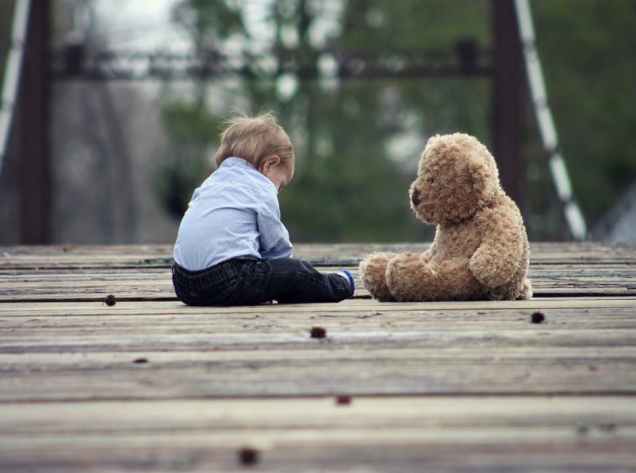
childHow many people label the recipient of their help, and then the label is all they see: homeless person, orphan, addict, etc. It’s so important in orphan care, and in ministry in general, to see the person and not the problem. We need to move beyond seeing the circumstances and see them as individual people with their own hopes, fears, and histories. God only sees the person; it’s a good model.

One of the best ways to understand someone is to put yourself in their place mentally. To “walk a mile in their shoes.” Most of us (hopefully) have no idea what an orphaned or abandoned child is going through, but it’s so important to try and understand. Before we can reach anyone, they need to know we know them, understand them and have their best interest at heart. In our experience, the most effective staff in our orphanage are the ones with the worst backgrounds. They understand our children. They’ve been there, they know the fear.

If a child is coming into an orphanage or foster care situation, it’s not like anything most people have ever experienced. Think about the times you’ve seen people interviewed after a major fire or tornado. “I’ve lost everything.” is a common response. But have they lost everything? They might have lost their home and belongings but they still have a church, a job, friends, their family is probably still around. And yet, at that moment, “everything is gone.” That is a lot to deal with.

Now, imagine what a child is going through. They actually have lost everything. Their home is gone, it’s likely they won’t see friends or family ever again, they will never go back to their school, odds are all they have in the world is the clothes on their backs. On top of the obvious loss in their lives, they are still very young, so everything is magnified in their minds. When you’re six a week might as well be a year. Any event, good or bad, is seen as huge through a child’s eyes. A child’s reactions haven’t aged to understand that life changes, that peaks and valleys will happen. To a child, something we might brush off becomes the end of the world. Layer that with the fact that children winding up in the system probably never had good role models in their lives to learn how to deal with trials, hardships, and loss in a healthy way. Most of us kind of freak out if we lose our keys or cell phone, imagine what a child is going through who has lost everything.

Recently we took in a group of three siblings. It’s not uncommon for the oldest in a group to be the “parent” if the real parents were either physically or emotionally absent. The ten-year-old was REALLY in charge of his siblings emotionally, and he was in a panic and on the edge of tears. “What if my mom is looking for us?” (We calmly explained that the social worker knows where they are.) “This is an orphanage, what if we get adopted, and our mom wants us back?” (We don’t do that, adoptions are pretty rare with older kids, and sibling groups are almost NEVER adopted.) He didn’t have the name of his community but tried to describe it to us so we could take him home. (His descriptions could have been any one of hundreds of communities around Tijuana.) We slowly and calmly did everything we could to assure him that he and his sibling would be OK.

I’m sharing this to help you put yourself into the mind of a child in the system. Some people respond to the worries and fears of a child by minimizing it. “You’ll be fine.” “Others have gone through this.” “Don’t worry about it.” This type of response does not help. We need to speak to them at their level and give their worries the attention they deserve in their mind.

The problems in our lives are frequently huge in our eyes and seem insurmountable. To God, our problems are tiny. He sees the big picture. He’s seen all this before. But He still hurts for us, listens to us, is there for us. Jesus came to die on the cross but to also walk as man, putting Himself in our place. He knows our trials, our fears, our questions that, in His mind, are simple worries. In His eyes, our problems are passing trivia, but to the children we are, they are crushing stresses in our lives. He hurts for us. He wants to be that loving, encouraging voice telling us we’re going to be OK.

If you work in childcare or any ministry, you need to be that calming voice, that attentive ear to the pains and fears people are going through. In a very real way, we are representing God. We need to be that anchor, that safe place, that understanding ear for the people we are ministering to. See the person, not the problem; walk in Christ’s example.

Please share on Facebook or wherever you hang out online.
Voluntourism Isn’t So Bad.

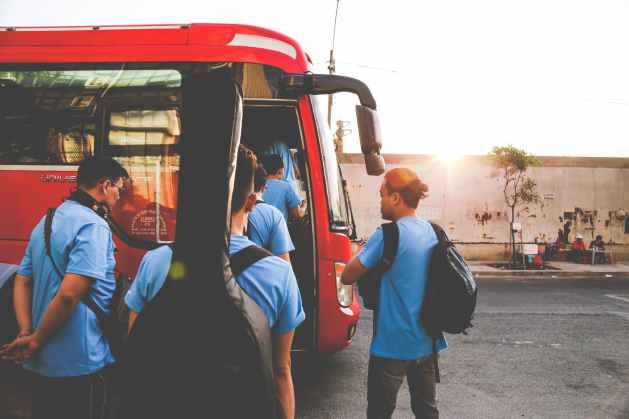
travelOver the last few years, the term “voluntourism” has come into the missions vernacular. It’s generally used as a derogatory term for people combining vacations, with serving, with a dash of poverty tourism thrown in. It’s a simple term, but it’s more complicated than the black and white way most people present it.
I’ve you’ve watched cable news or visited any social media website in the last few years you’ve seen a widening divide. Whether it’s Democrat vs. Republican, opinions on gun control, or any one of dozens of topics, the reasonable middle ground can be hard to find. The problem is, in most cases, that middle ground is where logical solutions are found. The calm voice of reason has been silenced by the shouting from both sides in too many discussions.

I, along with my team, host a LOT of short-term mission groups in Mexico every year. Are some of these trip more about tourism wrapped in projects? Sure, it happens, it’s actually a sliding scale with any group. Some people come for purely educational or recreational purposes, some come who only want to serve, most come with a mixed agenda and we’re OK with that. As long as the groups coming down are respectful of our home, and the people we serve in the community, we want the groups here. We want bigger groups, and we want them to tell their friends to come.

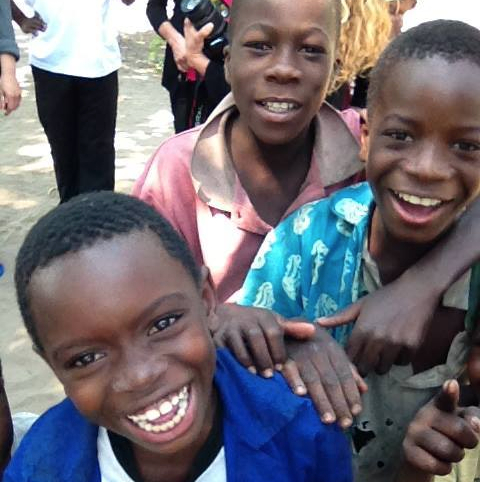
The term voluntourism paints all service trips with a broad negative brush. It claims that service trips are all about the people going on the trips, and those people looking good on social media. We’ve all seen the pictures of American teens surrounded by poor children. The thing is, for this current generation, everything is documented to social media. Whether it’s dining out, giving birth, or the Pinterest wedding, everything is now photographed for online publication. Is it odd that service trips are also so well photographed and shared? As long as the people being photographed have given permission, and the local culture is respected, is this a problem? Or does showing people the need in various areas of the world actually help to promote aid to those areas? Few would argue that’s it’s better to keep needs hidden. When these trips are healthy and respectful, everybody wins.

People attacking voluntourism without knowing the desires and goals of the people receiving the groups are actually showing incredible arrogance. “I know what’s better for them than they do.” This attitude of well-meaning American’s determining the wants and desires of people groups and cultures they know very little about is actually hugely condescending. Passing judgment on people without knowing them, their needs, and their wishes, is exactly the wrong thing to do. By going and visiting people where they are, talking to them, and getting to know them, real progress can be made. Call it voluntourism if you want to, but it’s a good thing.

Across the board, people in our area want more groups to come down. Even though some groups give just a half-hearted nod to a service project, they still bring huge benefits to our community. There is a reason every city in the US promotes tourism: people who visit buy food, supplies, and create jobs in the local community. Between the several ministries in our area, over 500 missions groups are hosted in our town of 4,000 people every year. These short-term mission teams and their projects are the economic engines that have brought our town from poverty to middle class in the last 15 years. Some groups have been less than great, but the overall effect has changed local lives for the better.

So how do you change the shape of voluntourism? Here are a few thoughts:

  1. Respect the people and culture of wherever you are visiting. Always remember that the people you’re visiting aren’t there for your entertainment, they are just like you but from a different culture and background. Get to know them, talk to them, ask before you take a picture (or don’t take a picture at all). Treat them as you would want to be treated.
  2. Work on real, productive projects. The best way to do this is to find on-the-ground organizations who you can partner with. There are people in any area who know the needs that need to be addressed and how best to focus your efforts and resources. If you’re working on a project, by partnering with local organizations, you’re much better prepared to help, and not cause unintentional damage.
  3. Be honest with your funders. If you call your trip “missions” and have raised money under that title, be honest with yourself and your donors. Is this really just about missions or is it about tourism? If it’s just about you taking a trip, get a job and pay for it yourself. If it’s really about serving others and meeting needs, let people know how they can help. Taking an educational and touristy trip is fine, just be honest about it.

It comes down to respect for the people in the countries being visited. Travel is a good thing, it breaks down walls, changes opinions, and works against racism. If we can learn more about our world, our fellow man, and help others while we’re at it, it’s a good thing. Voluntourism suddenly doesn’t sound so bad.

Please share on Facebook or wherever you spend time online.

To receive these articles by e-mail each Monday, please click “follow”.


What is an Orphan?

Armenian_orphans_in_Aleppo_collected_from_Arabs_by_Karen_Jeppe

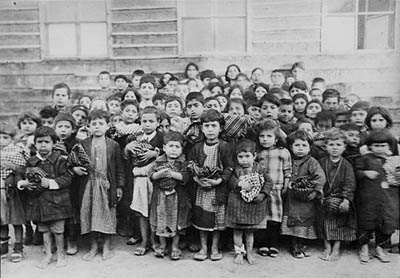
What is the definition of orphan? I know this sounds pretty straightforward but depending on who you talk to the definition of what an orphan is can vary widely. Most people assume that an orphan is a child that has no parents. But orphan can also define many other situations where the child might have a parent or two; they just aren’t around to care for the child. Both UNICEF and World Vision define an orphan as a child who has lost one or both parents.

I, along with an exceptional team, run a large orphanage. We care for about 120 children from newborn up through adulthood in a family like setting. The bulk of our children are not technically orphans in the traditional sense; this sometimes surprises people. “If they’re not an orphan, why are they in your home?” Well, it gets complicated.

If a parent or parents are in prison, rehab, or some other institutional situation where they can’t care for their child, the child needs to go somewhere. Frequently there is no extended family available or willing to care for the thousands of children whose parents are no longer in their lives. These children are technically not “orphans” but still need a home. Of the children in our care, 70% will never see blood relatives again. The parents might be out there somewhere; it’s just that reunification is impossible. We are big fans of adoption, but it’s not a reality for most children. Because there are still parents somewhere, the children are older, or there are siblings in the picture, adoptions are pretty rare.

Some children are brought to us due to severe abuse or neglect. Some have gone through things that would rip your heart out if I were to detail them here. Even though they have been removed from a home situation for their protection, they still technically have parents and are not “orphans.” They need to be cared for, counseled, and brought to a place of healing.

Occasionally a woman will give birth and for any number of reasons decide to abandon that child. The mother might be too young, they might have hidden the pregnancy, or they don’t want to acknowledge it, they might be going through some deep psychological issues. For whatever reason, in any society, a percentage of infants are abandoned by their parents. Once again these children are not technically orphans, they have parents somewhere. These abandoned children need to be cared for and raised in a way to show them how valuable they are. They need to be shown that they are not a mistake or just something to be thrown away. Being abandoned at that level leaves some deep scars.

The work of orphan care is rarely black-and-white, there are a vast amount of gray areas that we work in every day. Many people accuse orphanages of breaking up families just for the sake of filling their dorms. I’m not saying some orphanages haven’t done this, or even continue to do this, but in my experience, it’s less frequent than some people would lead you to believe.

Most of our children are referred to us by social workers just like they would be assigned to foster care families in the US, but occasionally a child will be brought to us by a parent asking us to take their child. We will do everything in our power to keep the family together. Whether it’s counseling, short-term financial help, housing, etc. we fight to keep families together. We’ve even gone so far as hiring qualified single mothers so that they could stay here with their children in a safe place. We feel a healthy family is without a doubt the very best option for a child. Unfortunately, for many children, the family option is not on the table.

So why this rambling explanation of the difficulties of defining an orphan? I just wanted to bring up the idea that orphan care can be very nuanced, complicated, and it can be hard to peg down solid answers. Orphaned and abandoned children don’t fit into our preconceived boxes. In any ministry, there are Solomon like judgment calls made frequently. What is your definition of homeless? What is your definition of a “special needs” child? Words and definitions matter a great deal, but the realities are people are messy, and we need to meet them where they are. We are all on a sliding scale of messed up. Just because a child doesn’t fit our exact definition of orphan, doesn’t mean they don’t have needs. Too many children in this world are desperate for a place to call home, filled with people who genuinely care about them.

In orphan care, we need to see each child as God sees us. God sees each one of us as individuals with needs, desires, and profound pains that are uniquely our own. Psalm 68:5 says, “Father of the fatherless and protector of widows, is God in his holy habitation.” God cares deeply for each one of his children. He cares so deeply for us; we should also care for those lost children all around us, whether it’s a true orphan, an abandoned child, or the lonely child next door or in our church. There are more “orphans” among us than we might realize: act accordingly.

Please share on Facebook or wherever you spend time online.

You Have a Greater Impact Than You Think

Africa3When you’re traveling on a short-term mission trip, how you’re perceived might be very different than you might imagine. Being accurately self-aware is difficult and very few people get it right. You have an image of yourself and who you are, other people have an entirely different image of you, and what you can do. Until we come to a closer understanding of how people actually see us, it’s hard to build relationships and move past the polite niceties of life.

Years ago, I was visiting West Africa with my wife and a small team helping with staff training at an orphanage in Ghana. About an hour from the orphanage was a small grade school that had been, in large part, funded by a friend of ours from the United States. Our friend had asked us to stop by the school to say “Hi”, and to see how they were doing. It didn’t seem like that big of a deal. As is often the case in short-term missions, what we envisioned or intended turned out to be vastly different than what happened.

We had scheduled our “down day” from the work at the orphanage and had called the school to ask permission to come by in the morning to visit. Not a big deal, we thought we would meet with a teacher or two, maybe shake hands with the director, and hit the road. Yikes, were we wrong. When we pulled up, it looked like they had some traditional festival going on. We quickly found out that the “festival” was because some FRIENDS of the guy who funded the place were dropping by. They had suspended classes and put together a program with a few speeches honoring our visit; then each class performed a traditional dance for the benefit of our small team. After the dances they brought out some cookies and a few cokes for us as refreshments. It was a heart-warming, special time. It was also wildly awkward. We were nobody, we hadn’t done anything, but they shut the school down for us for the day. Afterward, it led to some great discussions and a lot of soul-searching among our team.

Money, or the perception of money, changes everything. In hindsight, we realized us showing up to that school was like Bill Gates and Warren Buffet (two of the richest people in the world) stopping by for dinner. Our team collectively was fairly broke, but in the eyes of the people at the school, we were wealthy beyond their imagination. Just the idea that we could pay to travel halfway around the world was a mind-boggling amount of money for them. We wanted to have a real conversation with the school director, but we could tell right away that it was just too weird all around. She was too intimidated by our perceived wealth and connections; she was too afraid to offend, the relationship was just out of balance. We did everything we could to tell them we were nobodies but it just wasn’t going to work.

We need to think about what our impact is in missions by just being present, for good or bad. We assume just showing up and watching might have no impact, but as we saw happen at the school, our visit might have wildly unintended consequences.

Here at our orphanage, we hold Sunday service on site in our small chapel. The service is kid-focused and a special, set-aside time for our family here in our home. We have a lot of visiting groups, and they’re sometimes surprised when they find out they’re not allowed in our service. “But we just want to watch and experience it.” OK, but if we add 10, 20, 30 Americans to our service, it just becomes a show for the American teams. It shifts the focus from our kids, and God, to a cultural presentation for our visitors. Not our goal.

We love our groups; we love when they visit, but for the good of the children in our home we need to maintain boundaries. If a group wants to experience a local service that’s great, we just send them to one of the many local churches in our area. We know their presence will change the dynamic of the local church service, but we’ve talked to the local pastors, and they’re fine with the groups joining in. The groups are welcome there. But the reality is they will change the “feel” of the service just by being present as foreigners. Foreigners that are perceived as being financially wealthy and well connected.

Short-term missions are important. Organizations around the world need help and want teams to come. I’m a huge advocate for short-term missions, and the powerful changes trips can bring into the lives of all those involved, both the teams going and the teams hosting. But it’s so important to do it in as healthy a way as possible.

We need to serve with humility, to serve with sensitivity, and to serve in a way that has as positive an impact as possible. Place yourself into the minds of the people you will be visiting, imagine the impact. Seek to be self-aware, to understand how people view you and be aware of how you are perceived. To be empathetic to others, to understand what they are experiencing, is one of the first steps to effective ministry.

Please share on Facebook or where you hang-out online.

You can receive these articles in your e-mail each Monday by signing up to “follow”