
Your Actions Are Your Testimony

group2The team at our ministry in Baja Mexico hosts a lot of short-term mission groups, around 300 groups last year alone. We’ve seen some inspiring groups, we’ve also seen the worst side of people. One of the things we pick up on is if the group is living out the Gospel, or just talking about it. We experience a lot of talk.

I saw the contrast of talk versus action once on a trip to Ghana. The team I was on had spent about ten days serving at a great orphanage on the outskirts of the capital. Generally, everyone on the team did a great job while on site at the orphanage. On our last night, we were scheduled to stay at a pretty nice hotel before our flight home. As we were unloading and waiting to check in, one lady in our group went all “I’d like to see the manager” on us. There weren’t enough hotel staff to unload her bags fast enough for her. It was embarrassing. One of the leaders and I looked at each other, and we just rolled our eyes. Her attitude had pretty much killed any chance of representing the Gospel well in that situation.

How we behave, whether on a mission trip or in life, is the most significant part of how we share the gospel. Are we showing a self-centered attitude? Or are we showing Christ’s example of gracious, humble service? The actions and attitudes people see in our lives are our only real testimony.

I’ve had pastors leading groups say to me, “How can we help? We’re just here to serve.” and then walk into our gift shop and try to grind us for a better price on the t-shirts we sell to raise money for the orphanage. We’ve had the local police chief call us to complain about youth groups taking rental vans four-wheeling in our town. (He now has me on speed dial) Sometimes it’s a little more subtle; maybe it’s a group being frustrated that we wouldn’t rearrange our children’s regular schedule to accommodate their vacation bible school plans. Each decision, comment, and action reflects a group’s grasp of the Gospel, and the servant’s heart that should be present in every aspect of our lives.

Our testimony on a mission trip cannot end when we walk away from our planned activities. How you treat the ministry hosting you says so much. How we treat the people when we are “offsite” is even more critical. Do we treat local vendors with respect? Are we kind to people on the street? Even the things we’re purchasing represent our grasp of the Gospel. You might be okay with ordering a beer or wine at home, but in many countries, Christians don’t do that, it’s considered grave sin. We’re representing the ministry hosting us, and Christ, at ALL times, not just during events or service projects.

If you’re a missions leader, the weeks before a trip are the perfect opportunity to instill in your team the importance of walking as Christ at all times. You need to encourage your team to watch for the opportunities all around us that God makes available to serve each day. The privilege of helping an elderly man with his luggage at the airport, the servant’s heart that helps entertain the irritating child on your flight rather than complaining, the Christlike example of sharing an encouraging word with a stranger who needs to know someone cares. If service has not been put into practice at all times of a mission trip, the skit, construction project, or VBS will come across as the hollow attempt it is.

This obviously applies to mission trips, but it also applies to our entire Christian walk and testimony. There is an old joke about people fighting in the parking lot right after worshiping together, but let’s take that a step further. How many people intentionally park on the outer edges of the parking lot to allow others the better spaces? Once we get out of the lot and make it to the local restaurant for lunch, are we patient understanding customers (who over-tip)? Or are we the ones the waiter is dreading? Does your behavior at the restaurant represent your church, and Christ well?

Don’t be a jerk 90% of the time and think you’re doing great on your mission trip, or in life. If you are a follower of Christ or a member of a church, people know. No one is perfect but try to walk, talk, and live in a way worthy of Christ. Don’t embarrass the Gospel.

“Preach the Gospel at all times. When necessary, use words.” St. Francis of Assisi

Please share on Facebook or wherever you hang-out online.

If you would like to receive this blog in your e-mail each Monday, please click “follow” above.

Peter Was a Jerk

Silhouette legs reflectionWhen we look at “our” ministry or walk with God, we frequently fall into the trap of comparing ourselves to the “great men of God” that we’ve seen or read about. Today, many people reflexively bow their heads when they speak of Frances Chan or Rick Warren and ask “Why can’t I be like that?” In orphan care, Jorge Muller is the legend that everyone refers back to. He was a Christian evangelist and the director of an orphanage in Bristol, England in the late 1800s. He cared for over 10,000 orphans during his lifetime. Everything written about him shows that he was impressive, Godly, and upright. I can’t relate. I identify with the apostle Peter; he was a slow learner and a profound jerk. My kind of guy.

You might be thinking, “Wait a minute, Peter was one of the big guns, he was one of the foundations of the church.” Don’t be so impressed. When you read about his actions and responses you have to ask yourself, “What was God thinking?”

Let’s take a real look at Peter:

Jesus called Peter as an uneducated man. He didn’t have a degree, no training, he never set foot in a seminary. He was a fisherman, a worker, not overly respected in the culture of the times, but God called him anyway. Matt: 4:18

He was the one who was told to walk on water and proceeds to screw it up by taking his eyes off Jesus and sinking in a panic. Matt 14:25-31

In Mattew 16:21-23 he reprimands Jesus and starts to argue with Him. (not a bright move, ever)

At one point speaking on behalf of the apostles, Peter shows an astounding lack of humility or servant’s heart by basically asking Jesus, “Hey, what’s in it for me?” Matt 19:27

You would think Peter would start to catch on but at the foot washing after the last supper, he was the one who fought with Jesus when Jesus tried to wash his feet. “Not my feet, no way.” Jn 13:6-9

We read that Peter was one of the ones Jesus asked to go and pray with Him in the garden before He was to be betrayed. And…Peter falls asleep…twice. Matt 26:36 & 40

When the High Priests’ slaves come for Jesus, Peter is the one who pulls out a sword and cuts the ear of the slave. At which point Jesus AGAIN has to clean up after Peter’s temper and poor judgment. Matt 26: 51 (named in John 18:10)

The high point (low point?) of Peter’s story might be when he denied Jesus three times after swearing he would never deny Him. Matt 26: 33-35 / 69-75

Peter was a temperamental, argumentative, prideful person. He would never be asked to work in an established ministry today. He would never pass a background check. He was immature, emotional, divisive, and a little slow. When you look at the breadth of what we know about Peter at this point, he was the WORST apostle ever. So what was Jesus’s reaction to Peter? Peter was one of Jesus’s favorites. Like a puppy that poops all over the house but is still loved, Jesus knew that Peter would learn eventually, and the Peter could be shaped and trained. Jesus was very fond of Peter.

Jesus asked only three apostles to go with Him up the mountain were Jesus appeared with Moses and Elijah. He wanted Peter to see and experience this interaction. Mt 17 1-3

Although he screwed it up, Peter was the one Jesus asked to walk on water. This was a huge privilege. Jesus wanted him to experience stepping out onto the waves, to learn to trust Him in all circumstances.

In Luke 22:7 Jesus asked him to go and prepare the last supper. Although Jesus could have had anyone do this, He knew it was essential and that Peter learned how to serve in this way. Peter was trusted in spite of his history of screwing up.

Jesus didn’t ask everyone to go and pray with Him in the garden; He called the ones closest to Him. Praying at that level is no casual event, Jesus wanted Peter with Him in His darkest hour. Matt 26: 36 “Pray with me.”

Jesus says about Peter in Matt 16:15-19 “On this rock, I will build My church.” I’m sure more than a few people questioned Jesus’ selection, but He knew what He was doing. Jesus needed a flawed, broken individual to lead flawed and broken people. Anyone else would have seen the broken part, Jesus saw a rock in the making.

When you think you don’t have what it takes to make an impact for God, you’re right. That is the perfect place to start. Realize we’re ALL broken, but this is what God uses. A farmer will talk about needing to break the soil for it to be used. Seeds need to crack and be broken before they will grow. When a new building is going up, it can be a messy endeavor and can be very hard to see what the architect has planned. But the architect does have a plan; he can see the building in his mind. If we allow Him, God wants to be the architect of our lives.

Walk humbly, trust in God. As Moses reacted to God’s calling in Exodus 3: “Who am I that I would speak to Pharaoh and bring the Israelites out of Egypt?” Rejoice in the fact that God uses the Peters of this world. We’re all a little, or a lot, like Peter. Rejoice in your brokenness.

If you would like to receive this blog in your e-mail each Monday, please click “follow” above.

Please share on Facebook or wherever you hang-out online.


The Long View in Ministry

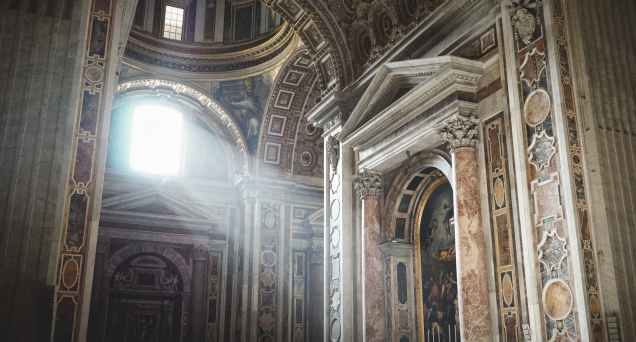
pexels-photo-260607In orphan care, and in life, anything of quality takes a very long time. In Spain, architect Antoni Gaudi began work on a cathedral in 1882, and it’s not finished yet. At the time of Gaudi’s death in 1926, the church was approximately a quarter finished. It’s expected to be completed in 2026. The architect, and everyone working on the cathedral, knew going in that they would not live to see the completion of this project. They also knew they were building something that would last for many generations. Historic buildings and almost everything of significant value take time.
In society today, everyone wants things NOW. Fast food, movies on demand, faster computers, faster delivery. We love Amazon Prime for its next day delivery but that’s not fast enough for some people, Amazon has started same-day delivery in some areas. Somewhere, someone is screaming, “I can’t wait 24 hours for my Hello Kitty pot holders and my camouflage yoga pants!” Immediate gratification is a powerful thing.

The problem with immediate gratification is that it’s not possible, or healthy, in most areas of our lives. God sees a long picture, an eternal perspective. People need a long time to change, to heal, and to grow. Just because we want something NOW, doesn’t mean that it’s the healthy or realistic option.

A healthy weight loss plan should take a long time, a pound or two a week max. It takes a long time to put the pounds on; it will take a long period of correct diet and exercise decisions to take it off. Most people don’t go into debt overnight, getting out of debt usually takes many years of correct spending decisions. In another example of too much too soon, almost everyone who wins the lottery regrets it years later. It came too fast, and they couldn’t handle it, too much too soon destroyed their lives. There are rhythms and timing to everything; it never works well to force anything into our preferred schedule.

In orphan care, in many cases, care and healing can go on for many years, it’s not a quick fix situation. Most of the children in the system will be there for years, 70% of our children grow into adults under our care. In most cases, it takes years for a child to work through the issues of abuse and abandonment that they’ve experienced. It’s a slow, tedious process to bring a child to healing, to help them trust again, to show them that they have incredible value. If you’ve literally been thrown away, it takes a while to believe you’re not trash to be discarded.

Although we value everyone who partners with us, it’s the longterm people that make the difference. The groups that come down every year for decades, the staff and volunteers that live here for many years while the children grow and heal, these are the people who understand the long view in ministry. These people know they are building something profound, they are working to break the cycle of kids in the system for generations.

Most people who have adopted older children will tell you; it isn’t always coloring books, reading together, and hugs. The healing, bonding, and relationship issues can take many painful years to work through, but it’s worth it in the end. A child is not a quick project or a quick fix; a wounded child usually takes years of loving, patient guidance to reach a healthy place.

We see the quick-fix attitude in many short-term mission groups. They sometimes think they will come in and transform a ministry or community in a few days, where full-time pastors and missionaries have been serving for years. Don’t get me wrong; they can make a real difference. But that difference only comes through building long-term relationships, long-term partnerships, and realizing they’re playing a small (but important) part in a long string of mission groups working to transform lives and communities.

When you’re looking at what God is doing in you, please consider the long view. God knew you before you were born, He has a plan. It might not be as fast as you like but He will get you to where you need to be. It might be forty years in the desert, but there is a reason for that, even if we can’t see it. Trust that the potter will shape the clay of your life into a masterpiece.

When you’re looking at a ministry where you’re serving, understand that change happens over a long time. You and your team can’t end the homeless problem overnight; you can’t end poverty in a week, your church can’t heal all the families in your area in a few months. But over time, serving and working with the right attitude and in a healthy fashion, the collective body of Christ can change the world.

Take the long view in ministry, slow and steady can move mountains, and change lives.

Please share on Facebook or wherever you hang-out online.

If you would like to receive this blog in your e-mail each Monday, please click “follow” above.

No Unimportant Jobs

cathedralSeveral years ago, three workers building a cathedral in Europe were interviewed about their jobs. A skilled mason shared that he was responsible for adding bricks to a large wall. A painter was asked about his part, and he explained that by adding paint to the project he was protecting the masonry work from wear. The third gentleman was responsible for sweeping up and hauling away the construction rubble. This man became very excited when asked about his job and responded with great pride, “I’m building a cathedral to the glory of God that will be a beacon in the community and last for generations.” “This glorious, solid, timeless church will someday give a tiny sample of the astounding beauty and eternal strength that is our Lord.” There are no unimportant jobs, just small perspectives.

At our ministry, we frequently have groups come down to help on projects. This is how we do what we do; this is how buildings go up and are maintained, this is how our many children are fed. We always make it a point to share, with great detail, why the project the group is working on is vital to the bigger picture. If we tell them they need to dig a trench, they will dig, and the job will get done. If we share with them that the ditch is to be a footing for a new infant care building, that this building will mean the difference between life and death for tiny newborns, the trench gets dug faster, better, and with joy. Same people, same hard dirt and rock, same shovels, but when the bigger picture is exposed it changes everything.

Not everyone is called to preach from the front, not everyone is called to lead worship, but we are all called to do something. That “something” matters more in the eternal picture than we can understand from our perspective. God sees the bigger picture; God sees the efforts we put forth in the eternal perspective. Whether you’re the sound guy at your church, the lady who sets up the coffee, or part of the team handling infant care, it’s import to realize: you are building something eternal.

Most orphan care (our ministry) is either profoundly boring, frustrating, or mundane, but we know it matters significantly in the bigger picture. Each meal served is not a big deal unto itself, the extra trip to the store to buy poster-board for homework is not a grand sacrifice, but each act of service accumulates to create a safe, loving home for our many children. A safe, loving home, with all of the details and minutia that a home requires, creates healthy young adults as the years pass by.

One of our older boys, now ready to graduate from college, has been with us for most of his life. He recently became the poster boy (quite literally) for the college he attends where he is finishing his degree in forensic science. He is featured in the school’s promotional videos, and his face is on a 15-foot tall billboard advertising the school on a major intersection. He has worked very hard over the years, but he’s also had countless people help in his care for more than a decade. Sponsors who helped cover the bills, groups that came down to provide meals, the many volunteers on our staff who are there for him, have all had a part in his success. He did the work, but it was a group effort going on behind him.

We all have something to do for the Kingdom. You might be doing it already and doing a great job with it; you might still be finding your place in the grand plan that God has laid out. But please know, you matter, you are essential, you play a critical part of God’s expansive, timeless plan.

We frequently have donors apologize to us for not being able to give more. We explain to them that we appreciate any effort to bless our kids. That there is no such thing as a “small donation”, each dime that comes in is appreciated, and the cumulative effort of everyone doing their part is changing the world. The same thing applies to our acts of service, they might not seem important to us, but we have no idea the rippling impact each sacrificial act has on others. God loves us, and He rejoices when He sees us stepping out to play a seemingly small part in the body of believers, and the work going on all around us.

Bless someone today, serve a stranger today, give deeply today. Over time, these small, simple acts can change the world, and us, into something better. Go and build a cathedral, one brick at a time.