What is an Orphan?

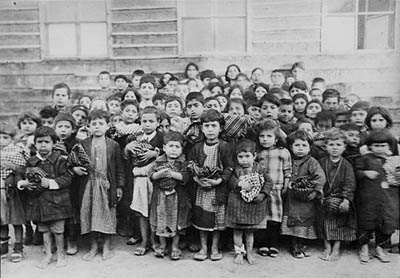
Armenian_orphans_in_Aleppo_collected_from_Arabs_by_Karen_Jeppe

What is the definition of orphan? I know this sounds pretty straightforward but depending on who you talk to the definition of what an orphan is can vary widely. Most people assume that an orphan is a child that has no parents. But orphan can also define many other situations where the child might have a parent or two; they just aren’t around to care for the child. Both UNICEF and World Vision define an orphan as a child who has lost one or both parents.

I, along with an exceptional team, run a large orphanage. We care for about 120 children from newborn up through adulthood in a family like setting. The bulk of our children are not technically orphans in the traditional sense; this sometimes surprises people. “If they’re not an orphan, why are they in your home?” Well, it gets complicated.

If a parent or parents are in prison, rehab, or some other institutional situation where they can’t care for their child, the child needs to go somewhere. Frequently there is no extended family available or willing to care for the thousands of children whose parents are no longer in their lives. These children are technically not “orphans” but still need a home. Of the children in our care, 70% will never see blood relatives again. The parents might be out there somewhere; it’s just that reunification is impossible. We are big fans of adoption, but it’s not a reality for most children. Because there are still parents somewhere, the children are older, or there are siblings in the picture, adoptions are pretty rare.

Some children are brought to us due to severe abuse or neglect. Some have gone through things that would rip your heart out if I were to detail them here. Even though they have been removed from a home situation for their protection, they still technically have parents and are not “orphans.” They need to be cared for, counseled, and brought to a place of healing.

Occasionally a woman will give birth and for any number of reasons decide to abandon that child. The mother might be too young, they might have hidden the pregnancy, or they don’t want to acknowledge it, they might be going through some deep psychological issues. For whatever reason, in any society, a percentage of infants are abandoned by their parents. Once again these children are not technically orphans, they have parents somewhere. These abandoned children need to be cared for and raised in a way to show them how valuable they are. They need to be shown that they are not a mistake or just something to be thrown away. Being abandoned at that level leaves some deep scars.

The work of orphan care is rarely black-and-white, there are a vast amount of gray areas that we work in every day. Many people accuse orphanages of breaking up families just for the sake of filling their dorms. I’m not saying some orphanages haven’t done this, or even continue to do this, but in my experience, it’s less frequent than some people would lead you to believe.

Most of our children are referred to us by social workers just like they would be assigned to foster care families in the US, but occasionally a child will be brought to us by a parent asking us to take their child. We will do everything in our power to keep the family together. Whether it’s counseling, short-term financial help, housing, etc. we fight to keep families together. We’ve even gone so far as hiring qualified single mothers so that they could stay here with their children in a safe place. We feel a healthy family is without a doubt the very best option for a child. Unfortunately, for many children, the family option is not on the table.

So why this rambling explanation of the difficulties of defining an orphan? I just wanted to bring up the idea that orphan care can be very nuanced, complicated, and it can be hard to peg down solid answers. Orphaned and abandoned children don’t fit into our preconceived boxes. In any ministry, there are Solomon like judgment calls made frequently. What is your definition of homeless? What is your definition of a “special needs” child? Words and definitions matter a great deal, but the realities are people are messy, and we need to meet them where they are. We are all on a sliding scale of messed up. Just because a child doesn’t fit our exact definition of orphan, doesn’t mean they don’t have needs. Too many children in this world are desperate for a place to call home, filled with people who genuinely care about them.

In orphan care, we need to see each child as God sees us. God sees each one of us as individuals with needs, desires, and profound pains that are uniquely our own. Psalm 68:5 says, “Father of the fatherless and protector of widows, is God in his holy habitation.” God cares deeply for each one of his children. He cares so deeply for us; we should also care for those lost children all around us, whether it’s a true orphan, an abandoned child, or the lonely child next door or in our church. There are more “orphans” among us than we might realize: act accordingly.

Please share on Facebook or wherever you spend time online.

Avoid Turkeys In Your Life

TurkeysSeveral years ago there was a popular bumper sticker that said: “It’s hard to soar with eagles when you’re surrounded by turkeys.” Although it was meant as a joke, there is actually a great deal of truth in those few words. Who you surround yourself with has a significant impact on everything you do. Choose carefully who you spend your time with, and who is on your team. In missions, in orphan care, and in life, quality people make the difference.

I run a large orphanage in Baja Mexico together with an exceptional team. Everyone on our team gets one day off a week to get out and do whatever they want. Shopping, beach, whatever they feel they need to recharge their batteries for the non-stop work around here. Recently, a young man on our team, who typically never took his day off, started to disappear every Monday. Him going away isn’t a problem, but it became VERY regular for the exact same hours. I got kind of curious and asked him about it. It turns out, on his one day off from the work at our orphanage, he found a second orphanage caring for children rescued out of sex trafficking in Tijuana. So, on his one day off, he chose to help even more kids, in even rougher situations. I LOVE the quality and character of the members of our team. Every single one of them are humble servants.

Over the years we’ve had a considerable number of people join our staff for an extended time of six months or longer (usually much longer). We always make a focused effort to carefully get to know the person and have them spend some time here so we can watch them. We also perform several background checks before anyone gets the privilege of being part of what we do. This surprises a lot of people since these are volunteer positions. Think about that. We ask people to find their own support, and give up their plans for a chunk of their lives, to serve the children in our care. Most people assume we’ll take whoever we can get, but we turn away a lot of people.

“Wait a minute, you depend on volunteers, but you turn volunteers away?” Absolutely, some people bring more headaches than blessings. There is nothing more costly and stress-inducing than a bad volunteer. I have what I refer to as my “caller ID scale”: When a name pops up on my caller ID, and my first response is “cool,” that’s someone I want in my life. If caller ID pops up of someone I work with, and my first thought is “oh cr-p, what now,” is that person bringing blessing or stress? The minute you read the last sentence I’m sure a few people in your life came to mind. Our lives are better if most of the people we work and serve with are quality people who bring joy.

So who should you surround yourself with? Who should be on your team? Here are a few things to consider:

Do they accept when they’ve been wrong, or do they shift the blame to someone else? If someone owns their mistakes and learns from them, they bring peace to a situation and not drama. Adam in the garden was the first human to shift the blame: “She made me do it.” Man has been shifting blame (and blaming women) for all their problems ever since that day.

Do they have a servants heart? Jesus was the perfect servant, always looking to bless and encourage those around Him. We need more people in our lives that are ready to serve just because it’s the right thing to do, it honors God, and it brings joy.

Do they have a positive attitude? God is in control. God can use all things. If a person is always negative, always pointing out flaws, always expecting the worst, they do not have an accurate idea of who God is. They are also hard to be around.

The bottom line is are they humble. Humble is not putting yourself down, it’s not thinking of yourself at all. Humility focuses on building others up, serving others, and seeking to give God all the glory. Humility is not expecting anything in return for service and finding joy in other people receiving the blessing. Humility is a big deal, none of us get it right, but we need people in our lives who try.

Jesus spent time selecting the twelve that he would work with. He spent a great deal of time in prayer and knew who He was looking for. He worked with and taught everyone who came along but His inner circle was different, select, just the right ones. The twelve He selected weren’t perfect (some far from perfect) but He knew who He wanted on His team. Not a single apostle was an accident or just the first who showed up.

In missions, ministry, or almost any area of life, your team is a big deal. Yes, God can use anyone, but if you have the privilege of selecting your team, please do so with care. Nothing will impact your success or failure more in missions, and in life, than who you’re working with. You are only as good as the people you are partnering with, in any endeavor. Choose wisely, fly with eagles, avoid the turkeys.

Please share on Facebook or wherever you hang-out online.

Mother’s Day Sucks

pain2Anna Jarvis is credited with “inventing” mothers day back in 1908, and it became an official US holiday in 1914. Shortly thereafter, Anna, realizing what the day had become, spent the rest of her life fighting against what she considered her enormous mistake. (footnote) She fought to abolish the holiday not just because of the pain it brings out in so many people, she realized that it had become just another reason to sell flowers and expensive greeting cards. Mother’s day had turned into another pointless commercial endeavor. I’m all for making a buck; the thorny issue is the agonizing emotional pain this day can bring.
Few holidays elicit such an immediate and emotional response as Mother’s Day. Father’s Day? Yawn. Presidents Day? Big deal. Fourth of July? A BBQ, big whoop. Thanksgiving is bigger than most holidays but not exactly an emotional event. Mother’s Day brings along a tangled string of emotional responses in almost anyone. When one hears the word “mother” it’s part of our shared human experience to have memories ripple through our minds, some loving, some not so loving, but the memories are almost never without deep sentiments.

The mother-child relationship is one of the strongest and most important in our lives, for that reason, it is so celebrated. Because it can be so remarkable, it makes sense that is can also be one of the most painful and damaging of relationships when it goes wrong. For a large percentage of the population, the emotions that this day brings forth are a long way from joy. For anyone involved in ministry, it’s important to be acutely aware of the land-mines this holiday places all around us.

Writing here as one who runs a large orphanage, you can imagine the pain Mother’s Day can bring out in the children in our care. We stopped attending church in our town on Mother’s Day years ago because it was just too agonizing. For our children to attend a service dedicated to honoring mothers, it brought up way too much baggage. They would sit there and listen to how wonderful all the mothers in the church were, they would watch as flowers were passed out to the mothers present, and they would sit quietly holding back the tears. Besides church, every year our kids have to participate in the public school’s Mother’s Day program knowing their biological mothers will never see it. They watch other children being hugged by their mothers and wonder what they did wrong to make their own mothers abandon them. Our staff here does a phenomenal job of loving and caring for the children in our home, but it can still be a very complicated and painful few days around here.

It’s not just the orphaned who suffer through this day. For women who have lost children through illness or accidents, Mother’s Day is a vivid, annual reminder of their tragedy and the dull pain that radiates through their lives. While others are celebrating motherhood, they are mourning the graduations, weddings, and all life’s events they will never see their children experience. Along with the many mothers who’ve lost children, are the 20% of women who, for medical and various other reason, will never have children. Society still tells women they are not complete unless they have offspring, for many, this is not within their control.

For many people, Mother’s Day is a painful reminder that the women who gave birth to them failed at motherhood. Not every mother is Mrs. Brady; not every mother is the ideal that we celebrate. Too many mothers abandon their children, too many are mentally or physically abusive. Too many mothers have drug or alcohol problems or just don’t care. For anyone raised by a women who should never have had children, this day is a painful reminder that they never had a normal childhood. They were never held when they were scared; they were never read to at night, the tooth fairy never came. Not a lot to celebrate here, just an aching void where their childhood should be.

So, what are we supposed to do if we have a church, school, or some other organization that needs to acknowledge this upcoming day? Honor all those mothers who get it right, who have sacrificed so much to raise their children in a loving, healthy way. Encourage them, recognize them, shower them with the admiration they deserve. The mother-child relationship can be a profound, wonderful, literally life-changing experience. The mother-child bond is incredible, and it should be celebrated when it’s done right. BUT, please do so in a way that is sensitive to those in the room that dread this Sunday in May every year.

Please share on Facebook or wherever you hang-out online.

footnote: http://mentalfloss.com/article/30659/founder-mothers-day-later-fought-have-it-abolished

Orphans Are A Big Deal To God

pexels-photo-798096Anyone who works with orphaned or abandoned children can quote James 1:27 by heart: “Religion that God our Father accepts as pure and faultless is this: to look after orphans and widows in their distress and to keep oneself from being polluted by the world.” It’s the go-to verse whenever one is teaching or sharing about orphan care. But references to orphans, and God’s heart for the orphan, are sprinkled throughout the Bible. If we want to care about the things that are important to God, orphans and orphan care need to be in that mix.

Below are a few biblical themes that come up often regarding orphans:

God has deep compassion for orphans: Hosea 14:3 “For in You the fatherless find compassion.” Psalm 68:5 “Father of the fatherless and protector of widows, is God in his holy habitation.” There are verses throughout the Bible that teach us that God has great compassion for the fatherless. He has profound and endless love for His children. He hurts for those who are hurting and seeks to comfort them. Biblically, it is clear that caring for orphans is close to the heart of God. His heart is with the outcast, those that society looks down on. Our God is one of profound compassion.

God seeks justice for orphans: Isaiah 1:17 “Learn to do right! Seek justice, encourage the oppressed. Defend the cause of the fatherless, plead the case of the widow.” We live in a broken world. There are great injustices in this world and there will be until we die. Different forms of abuse, corruption, and abandoned children are just a few of the many unjust issues that are so common. We are surrounded by so much pain that it’s easy to become blind to it. God is not. As painful as it might be, we cannot live in denial to the vile things that go on all around us. If we are walking with our Lord, we need to be defending those in need, the fatherless, those who can not defend themselves. Justice is a fundamental part of God’s character. He seeks to correct injustices and we are called to do the same. Psalm 82:3-4 “Defend the weak and the fatherless; uphold the cause of the poor and the oppressed. Rescue the weak and the needy; deliver them from the hand of the wicked.”

God’s people Share Their Resources with Orphans: Deuteronomy 10:18 “He defends the cause of the fatherless and the widow, and loves the alien, giving him food and clothing.” Deuteronomy 14:29 “And the Levite, because he has no portion or inheritance with you, and the sojourner, the fatherless, and the widow, who are within your towns, shall come and eat and be filled, that the Lord your God may bless you in all the work of your hands that you do.” We are called to give to others. We can not get around this one. Most people reading this have been richly blessed financially, and we need to be acutely aware that all this blessing isn’t ours. The riches we have are God’s, and we have a responsibility to use them for His glory and His work. I’m a big believer in having a “diversified portfolio” of giving. Yes, give to the church, but then spread the funds around to causes that matter to God. There are well-run organizations around the world who know how to use what little they have to create great impact for the Kingdom, and orphan care. Seek out responsible, well run organizations and back them. Money is like cow manure, spread it around and it can do some good, just stack it up and it really stinks.

God has adopted us into His Family, He wants us to do the same for others. John 14:18 “I will not leave you as orphans; I will come to you.” We have the incredible privilege to call God our Father. Through nothing we have done, other than accept this gift, we have been adopted into His family, and the family of believers. We have been given a Heavenly Father and countless brothers and sister in this world. By being adopted into this grand family, we are part of something richer and more profound than anything we can imagine. For an orphan or abandoned child, they know they are alone in this world, and they hurt to belong to a family. We might not think we could ever actually adopt a child, but it is something to consider. There is no greater gift we can give to another person than adopting them into our family. God has done this for us. If we can, we need to pay it forward. If we can’t adopt, we can help those who have or are adopting.

Orphan care is near to the heart of God. As we grow in our relationship with Him, we begin to take on His image. As we grow in our faith, our compassion for those hurting around us needs to grow. Our compassion for the abandoned, and caring for the orphaned and abandoned around us is a natural progression of our faith. Find your way to care for orphans. It’s important to God, it needs to be important to us.

Please share on Facebook or wherever you hang-out online.