Voluntourism Isn’t So Bad.

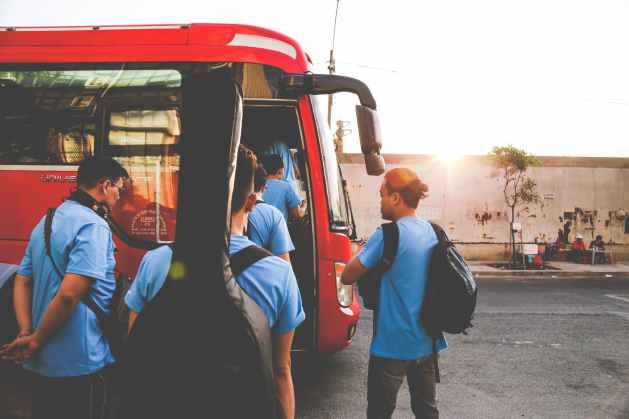
travelOver the last few years, the term “voluntourism” has come into the missions vernacular. It’s generally used as a derogatory term for people combining vacations, with serving, with a dash of poverty tourism thrown in. It’s a simple term, but it’s more complicated than the black and white way most people present it.

I’ve you’ve watched cable news or visited any social media website in the last few years you’ve seen a widening divide. Whether it’s Democrat vs. Republican, opinions on gun control, or any one of dozens of topics, the reasonable middle ground can be hard to find. The problem is, in most cases, that middle ground is where logical solutions are found. The calm voice of reason has been silenced by the shouting from both sides in too many discussions.

I, along with my team, host a LOT of short-term mission groups in Mexico every year. Are some of these trip more about tourism wrapped in projects? Sure, it happens, it’s actually a sliding scale with any group. Some people come for purely educational or recreational purposes, some come who only want to serve, most come with a mixed agenda and we’re OK with that. As long as the groups coming down are respectful of our home, and the people we serve in the community, we want the groups here. We want bigger groups, and we want them to tell their friends to come.

The term voluntourism paints all service trips with a broad negative brush. It claims that service trips are all about the people going on the trips, and those people looking good on social media. We’ve all seen the pictures of American teens surrounded by poor children. The thing is, for this current generation, everything is documented to social media. Whether it’s dining out, giving birth, or the Pinterest wedding, everything is now photographed for online publication. Is it odd that service trips are also so well photographed and shared? As long as the people being photographed have given permission, and the local culture is respected, is this a problem? Or does showing people the need in various areas of the world actually help to promote aid to those areas? Few would argue that’s it’s better to keep needs hidden. When these trips are healthy and respectful, everybody wins.

People attacking voluntourism without knowing the desires and goals of the people receiving the groups are actually showing incredible arrogance. “I know what’s better for them than they do.” This attitude of well-meaning American’s determining the wants and desires of people groups and cultures they know very little about is actually hugely condescending. Passing judgment on people without knowing them, their needs, and their wishes, is exactly the wrong thing to do. By going and visiting people where they are, talking to them, and getting to know them, real progress can be made. Call it voluntourism if you want to, but it’s a good thing.

Across the board, people in our area want more groups to come down. Even though some groups give just a half-hearted nod to a service project, they still bring huge benefits to our community. There is a reason every city in the US promotes tourism: people who visit buy food, supplies, and create jobs in the local community. Between the several ministries in our area, over 500 missions groups are hosted in our town of 4,000 people every year. These short-term mission teams and their projects are the economic engines that have brought our town from poverty to middle class in the last 15 years. Some groups have been less than great, but the overall effect has changed local lives for the better.

So how do you change the shape of voluntourism? Here are a few thoughts:

  1. Respect the people and culture of wherever you are visiting. Always remember that the people you’re visiting aren’t there for your entertainment, they are just like you but from a different culture and background. Get to know them, talk to them, ask before you take a picture (or don’t take a picture at all). Treat them as you would want to be treated.
  2. Work on real, productive projects. The best way to do this is to find on-the-ground organizations who you can partner with. There are people in any area who know the needs that need to be addressed and how best to focus your efforts and resources. If you’re working on a project, by partnering with local organizations, you’re much better prepared to help, and not cause unintentional damage.
  3. Be honest with your funders. If you call your trip “missions” and have raised money under that title, be honest with yourself and your donors. Is this really just about missions or is it about tourism? If it’s just about you taking a trip, get a job and pay for it yourself. If it’s really about serving others and meeting needs, let people know how they can help. Taking an educational and touristy trip is fine, just be honest about it.

It comes down to respect for the people in the countries being visited. Travel is a good thing, it breaks down walls, changes opinions, and works against racism. If we can learn more about our world, our fellow man, and help others while we’re at it, it’s a good thing. Voluntourism suddenly doesn’t sound so bad.

Please share on Facebook or wherever you spend time online.

To receive these articles by e-mail each Monday, please click “follow”.

 

Avoid Turkeys In Your Life

TurkeysSeveral years ago there was a popular bumper sticker that said: “It’s hard to soar with eagles when you’re surrounded by turkeys.” Although it was meant as a joke, there is actually a great deal of truth in those few words. Who you surround yourself with has a significant impact on everything you do. Choose carefully who you spend your time with, and who is on your team. In missions, in orphan care, and in life, quality people make the difference.

I run a large orphanage in Baja Mexico together with an exceptional team. Everyone on our team gets one day off a week to get out and do whatever they want. Shopping, beach, whatever they feel they need to recharge their batteries for the non-stop work around here. Recently, a young man on our team, who typically never took his day off, started to disappear every Monday. Him going away isn’t a problem, but it became VERY regular for the exact same hours. I got kind of curious and asked him about it. It turns out, on his one day off from the work at our orphanage, he found a second orphanage caring for children rescued out of sex trafficking in Tijuana. So, on his one day off, he chose to help even more kids, in even rougher situations. I LOVE the quality and character of the members of our team. Every single one of them are humble servants.

Over the years we’ve had a considerable number of people join our staff for an extended time of six months or longer (usually much longer). We always make a focused effort to carefully get to know the person and have them spend some time here so we can watch them. We also perform several background checks before anyone gets the privilege of being part of what we do. This surprises a lot of people since these are volunteer positions. Think about that. We ask people to find their own support, and give up their plans for a chunk of their lives, to serve the children in our care. Most people assume we’ll take whoever we can get, but we turn away a lot of people.

“Wait a minute, you depend on volunteers, but you turn volunteers away?” Absolutely, some people bring more headaches than blessings. There is nothing more costly and stress-inducing than a bad volunteer. I have what I refer to as my “caller ID scale”: When a name pops up on my caller ID, and my first response is “cool,” that’s someone I want in my life. If caller ID pops up of someone I work with, and my first thought is “oh cr-p, what now,” is that person bringing blessing or stress? The minute you read the last sentence I’m sure a few people in your life came to mind. Our lives are better if most of the people we work and serve with are quality people who bring joy.

So who should you surround yourself with? Who should be on your team? Here are a few things to consider:

Do they accept when they’ve been wrong, or do they shift the blame to someone else? If someone owns their mistakes and learns from them, they bring peace to a situation and not drama. Adam in the garden was the first human to shift the blame: “She made me do it.” Man has been shifting blame (and blaming women) for all their problems ever since that day.

Do they have a servants heart? Jesus was the perfect servant, always looking to bless and encourage those around Him. We need more people in our lives that are ready to serve just because it’s the right thing to do, it honors God, and it brings joy.

Do they have a positive attitude? God is in control. God can use all things. If a person is always negative, always pointing out flaws, always expecting the worst, they do not have an accurate idea of who God is. They are also hard to be around.

The bottom line is are they humble. Humble is not putting yourself down, it’s not thinking of yourself at all. Humility focuses on building others up, serving others, and seeking to give God all the glory. Humility is not expecting anything in return for service and finding joy in other people receiving the blessing. Humility is a big deal, none of us get it right, but we need people in our lives who try.

Jesus spent time selecting the twelve that he would work with. He spent a great deal of time in prayer and knew who He was looking for. He worked with and taught everyone who came along but His inner circle was different, select, just the right ones. The twelve He selected weren’t perfect (some far from perfect) but He knew who He wanted on His team. Not a single apostle was an accident or just the first who showed up.

In missions, ministry, or almost any area of life, your team is a big deal. Yes, God can use anyone, but if you have the privilege of selecting your team, please do so with care. Nothing will impact your success or failure more in missions, and in life, than who you’re working with. You are only as good as the people you are partnering with, in any endeavor. Choose wisely, fly with eagles, avoid the turkeys.

Please share on Facebook or wherever you hang-out online.

Reciprocal Missions – The Book

Screen Shot 2018-04-28 at 4.53.28 PMYou’ll notice this blog is a LITTLE different than my normal ramblings so I hope I don’t scare off my normal followers. (thanks for following by the way) This week marks what I hope is a milestone for the work I feel I’ve been called to. After more than a year of partnering with Phil Steiner, a fellow missionary with a heart for short-term missions, our book is available on Amazon. Reciprocal Missions – Short-term Missions that Serve Everyone (paperback or Kindle)
For anyone who’s met me, or read my blog, you know I’m passionate about short-term missions. Like many opinions I hold dear, not everyone agrees with me on this topic. There has been a great deal written in the last few years questioning the value of short-term mission projects. Some circles are condemning them as useless, damaging, or a waste of money. I get that, I’ve seen my share of mission trips that should have never happened. But, I’ve spent the bulk of my adult life hosting short-term mission teams here at our orphanage, and I can tell you without a doubt, short-term missions can change lives.

In Missions the idea of unintended consequences is nothing new. Well-meaning people trying to fix a problem can sometimes create a whole new set of problems. The fight against human trafficking has had a detrimental effect on international adoptions, the worthy effort to protect vulnerable children is causing unintended consequences or preventing adoptions. The consequences of people pointing out the many problems of short-term missions is that, unfortunately, many people have given up on short-term missions altogether. There is a lot to criticize, but that’s true of just about any human endeavor. We need to take a nuanced look at whatever we do and work to improve when we can. If we stopped doing everything that was challenging, we would be sitting on the couch the rest of our lives. God wants us to be challenged; He wants us to stretch and try new things, this is how we grow into the people we’re intended to be.

There is something God does in the hearts and lives of His people when they step out of their comfort zone, travel to a new place, and spend time observing and participating in ministry in cultures different from their own. We are part of a rich, dynamic, wonderful collection of believers around the world. It’s impactful and life-changing to go out and build relationships with fellow believers in central America, Africa, Cuba, or any area you might have a chance to serve.

Just like any effective ministry, in missions, relationships are key. Healthy, reciprocal relationships are critical to successful short-term mission trips. Without them, we will continue to do damage and be ineffective. The book we’ve released is a guide to help people navigate short-term missions in a way that honors everyone: the teams going, the ministries hosting, and the local communities.

Our book, Reciprocal Missions, has a slightly different flow than most. Phil (my co-author) and I each work through a section from our perspective—a topic in our particular area of expertise; then the other will briefly chime in, sharing their short take on the topic. I write from the perspective of the mission host; having received and hosted groups for over 25 years. Phil writes from the perspective of the short-term trip facilitator, bringing 20 years of experience leading groups into effective service and educational experiences. Our goal is that the dialogue provides insights into best practices for healthy short-term missions.

Purchase the paperback here               Purchase the Kindle here

Please share on Facebook or wherever you hang-out online.

Orphans Are A Big Deal To God

pexels-photo-798096Anyone who works with orphaned or abandoned children can quote James 1:27 by heart: “Religion that God our Father accepts as pure and faultless is this: to look after orphans and widows in their distress and to keep oneself from being polluted by the world.” It’s the go-to verse whenever one is teaching or sharing about orphan care. But references to orphans, and God’s heart for the orphan, are sprinkled throughout the Bible. If we want to care about the things that are important to God, orphans and orphan care need to be in that mix.

Below are a few biblical themes that come up often regarding orphans:

God has deep compassion for orphans: Hosea 14:3 “For in You the fatherless find compassion.” Psalm 68:5 “Father of the fatherless and protector of widows, is God in his holy habitation.” There are verses throughout the Bible that teach us that God has great compassion for the fatherless. He has profound and endless love for His children. He hurts for those who are hurting and seeks to comfort them. Biblically, it is clear that caring for orphans is close to the heart of God. His heart is with the outcast, those that society looks down on. Our God is one of profound compassion.

God seeks justice for orphans: Isaiah 1:17 “Learn to do right! Seek justice, encourage the oppressed. Defend the cause of the fatherless, plead the case of the widow.” We live in a broken world. There are great injustices in this world and there will be until we die. Different forms of abuse, corruption, and abandoned children are just a few of the many unjust issues that are so common. We are surrounded by so much pain that it’s easy to become blind to it. God is not. As painful as it might be, we cannot live in denial to the vile things that go on all around us. If we are walking with our Lord, we need to be defending those in need, the fatherless, those who can not defend themselves. Justice is a fundamental part of God’s character. He seeks to correct injustices and we are called to do the same. Psalm 82:3-4 “Defend the weak and the fatherless; uphold the cause of the poor and the oppressed. Rescue the weak and the needy; deliver them from the hand of the wicked.”

God’s people Share Their Resources with Orphans: Deuteronomy 10:18 “He defends the cause of the fatherless and the widow, and loves the alien, giving him food and clothing.” Deuteronomy 14:29 “And the Levite, because he has no portion or inheritance with you, and the sojourner, the fatherless, and the widow, who are within your towns, shall come and eat and be filled, that the Lord your God may bless you in all the work of your hands that you do.” We are called to give to others. We can not get around this one. Most people reading this have been richly blessed financially, and we need to be acutely aware that all this blessing isn’t ours. The riches we have are God’s, and we have a responsibility to use them for His glory and His work. I’m a big believer in having a “diversified portfolio” of giving. Yes, give to the church, but then spread the funds around to causes that matter to God. There are well-run organizations around the world who know how to use what little they have to create great impact for the Kingdom, and orphan care. Seek out responsible, well run organizations and back them. Money is like cow manure, spread it around and it can do some good, just stack it up and it really stinks.

God has adopted us into His Family, He wants us to do the same for others. John 14:18 “I will not leave you as orphans; I will come to you.” We have the incredible privilege to call God our Father. Through nothing we have done, other than accept this gift, we have been adopted into His family, and the family of believers. We have been given a Heavenly Father and countless brothers and sister in this world. By being adopted into this grand family, we are part of something richer and more profound than anything we can imagine. For an orphan or abandoned child, they know they are alone in this world, and they hurt to belong to a family. We might not think we could ever actually adopt a child, but it is something to consider. There is no greater gift we can give to another person than adopting them into our family. God has done this for us. If we can, we need to pay it forward. If we can’t adopt, we can help those who have or are adopting.

Orphan care is near to the heart of God. As we grow in our relationship with Him, we begin to take on His image. As we grow in our faith, our compassion for those hurting around us needs to grow. Our compassion for the abandoned, and caring for the orphaned and abandoned around us is a natural progression of our faith. Find your way to care for orphans. It’s important to God, it needs to be important to us.

Please share on Facebook or wherever you hang-out online.