
Crazy Cat Lady Orphanages

cat2People often don’t think about it, but orphanages tend to have distinct personalities. Some great, many not so great, but every orphanage has its quirks, weirdness, and oddities. Not unlike many churches: the legalistic one, the liberal one, those crazy charismatics, the one with the GREAT coffee, etc. Just like people tend to land in gray or shifting categories: the jock, the musician, the quiet guy, the goth girl. I’m sure you get the idea.

I’ve had the privilege to visit and/or help in a wide range of orphanages. The financially needy but well-run homes I love, the well funded but questionable homes are a big problem, the “family business” orphanages are hard to deal with, but the ones that are most frustrating are the “crazy cat lady orphanages.” The people with a big heart who can not say no to a child in need, they become overwhelmed, and everyone suffers. (In the future I might write more about the different styles of homes.)

I was talking with the leader of a national orphanage training organization, and I mentioned my observations. They smiled when I used the term “crazy cat lady,” they knew exactly what I was talking about. They responded, “Yup, and why is it always single females trying to save a hundred kids?” I had never noticed the single female part, but it was interesting that it wasn’t just me noticing this real problem in orphanage circles.

At first, most people would say, “Ahhh, sweet, what big hearts, they’ll help anyone.” But in reality, we all have limits; there is only so much any of us can do if we’re going to do it well. These homes are marked by the sheer number of kids they are trying to help, with little or no resources. One home in Tijuana had an odd reputation, the director had a huge heart, nice old lady, but she could not say “no” to anyone. She would take in any child brought to her. This sounds nice until you realize she didn’t have space, food, or staffing to care for the children she already had. She had resources for about 35 kids and usually housed 90. It was a nightmare. To make matters worse, if a women came to her from an abusive situation, she would “hire” the women to help care for the kids. Coming right out of abuse themselves, these women were not emotionally ready to care for 10,15, or 20 kids. These women could barely care for themselves. You see the problem.

Another time I was asked by a volunteer to consult with an orphanage about an hour away. She drove two other people and me into the hills of Tijuana, and we came up to a very sketchy area. We stopped and walked up to a three-story brick building that did not look too solid, with bars on the few windows it had. The building had one exit, one working toilet, the make-shift kitchen was on the first floor with the propane tank right next to the ancient stove (fire/death trap waiting to happen). I was given a tour and found about 50 children, filthy, lice-infested, no chance of an education. My first thought was, “These kids would be better off on the streets.” In speaking with the director, she said everything I feared: “I just can’t say no to a child in need.” “If only I had “X” I could do so much more.” She wasn’t asking for help with what she had; she wanted to build a huge building to care for 200 kids. The home had actually been shut down a few times by the government, but she kept moving to the next location and taking in new kids. Like a lady living with hundreds of cats, when the government removes the cats, a whole new crop shows up in the next few months. Crazy cat lady, but they hoard children instead of cats.

So what’s the point of discussing these challenging orphanages? Three points to consider:

1) Leadership matters. If someone has a big heart but does not have the skills to use it in the right way, it can lead to some complicated situations. Crazy cat lady orphanages are not run by bad people; they’re usually really great people, they just have some issues that get in the way of them being as effective as possible. Being truly self-aware is very rare, these people do not see the problems that are evident to all those around them. How we lead, and who we choose to follow, matters a great deal.

2) If you’re helping in an orphanage, or another ministry, like the ones described here, please be open to discussing the issue with the director in a loving, biblical way. First on your own, then with someone else. They may not listen, but you have an obligation to approach the issue in a healthy way.

3) If you are the “Crazy cat lady” in your area of ministry, learn that it’s OK to say no sometimes – give yourself a break. We need to know our limits. Most people probably don’t do enough to help those around them which isn’t good but trying to help everyone can be just as big a problem. No one can help everyone; we’re not called to. No one person can help every homeless person in their city. No one person can care for every foster child, this is OK, do what you can. Jesus did not help everyone; He helped those He could. He spent time alone, and He did the will of His Father, that is all we are asked to do.

Help, serve, give all you can. But it’s crucial to understand there is a balance and it’s so important to know your limits. A few less cats is not a bad thing.

Please share on Facebook or wherever you hang-out online.

If you would like to receive this blog in your e-mail each Monday, please click “follow” above.

Your Actions Are Your Testimony

group2The team at our ministry in Baja Mexico hosts a lot of short-term mission groups, around 300 groups last year alone. We’ve seen some inspiring groups, we’ve also seen the worst side of people. One of the things we pick up on is if the group is living out the Gospel, or just talking about it. We experience a lot of talk.

I saw the contrast of talk versus action once on a trip to Ghana. The team I was on had spent about ten days serving at a great orphanage on the outskirts of the capital. Generally, everyone on the team did a great job while on site at the orphanage. On our last night, we were scheduled to stay at a pretty nice hotel before our flight home. As we were unloading and waiting to check in, one lady in our group went all “I’d like to see the manager” on us. There weren’t enough hotel staff to unload her bags fast enough for her. It was embarrassing. One of the leaders and I looked at each other, and we just rolled our eyes. Her attitude had pretty much killed any chance of representing the Gospel well in that situation.

How we behave, whether on a mission trip or in life, is the most significant part of how we share the gospel. Are we showing a self-centered attitude? Or are we showing Christ’s example of gracious, humble service? The actions and attitudes people see in our lives are our only real testimony.

I’ve had pastors leading groups say to me, “How can we help? We’re just here to serve.” and then walk into our gift shop and try to grind us for a better price on the t-shirts we sell to raise money for the orphanage. We’ve had the local police chief call us to complain about youth groups taking rental vans four-wheeling in our town. (He now has me on speed dial) Sometimes it’s a little more subtle; maybe it’s a group being frustrated that we wouldn’t rearrange our children’s regular schedule to accommodate their vacation bible school plans. Each decision, comment, and action reflects a group’s grasp of the Gospel, and the servant’s heart that should be present in every aspect of our lives.

Our testimony on a mission trip cannot end when we walk away from our planned activities. How you treat the ministry hosting you says so much. How we treat the people when we are “offsite” is even more critical. Do we treat local vendors with respect? Are we kind to people on the street? Even the things we’re purchasing represent our grasp of the Gospel. You might be okay with ordering a beer or wine at home, but in many countries, Christians don’t do that, it’s considered grave sin. We’re representing the ministry hosting us, and Christ, at ALL times, not just during events or service projects.

If you’re a missions leader, the weeks before a trip are the perfect opportunity to instill in your team the importance of walking as Christ at all times. You need to encourage your team to watch for the opportunities all around us that God makes available to serve each day. The privilege of helping an elderly man with his luggage at the airport, the servant’s heart that helps entertain the irritating child on your flight rather than complaining, the Christlike example of sharing an encouraging word with a stranger who needs to know someone cares. If service has not been put into practice at all times of a mission trip, the skit, construction project, or VBS will come across as the hollow attempt it is.

This obviously applies to mission trips, but it also applies to our entire Christian walk and testimony. There is an old joke about people fighting in the parking lot right after worshiping together, but let’s take that a step further. How many people intentionally park on the outer edges of the parking lot to allow others the better spaces? Once we get out of the lot and make it to the local restaurant for lunch, are we patient understanding customers (who over-tip)? Or are we the ones the waiter is dreading? Does your behavior at the restaurant represent your church, and Christ well?

Don’t be a jerk 90% of the time and think you’re doing great on your mission trip, or in life. If you are a follower of Christ or a member of a church, people know. No one is perfect but try to walk, talk, and live in a way worthy of Christ. Don’t embarrass the Gospel.

“Preach the Gospel at all times. When necessary, use words.” St. Francis of Assisi

Please share on Facebook or wherever you hang-out online.

If you would like to receive this blog in your e-mail each Monday, please click “follow” above.

Peter Was a Jerk

Silhouette legs reflectionWhen we look at “our” ministry or walk with God, we frequently fall into the trap of comparing ourselves to the “great men of God” that we’ve seen or read about. Today, many people reflexively bow their heads when they speak of Frances Chan or Rick Warren and ask “Why can’t I be like that?” In orphan care, Jorge Muller is the legend that everyone refers back to. He was a Christian evangelist and the director of an orphanage in Bristol, England in the late 1800s. He cared for over 10,000 orphans during his lifetime. Everything written about him shows that he was impressive, Godly, and upright. I can’t relate. I identify with the apostle Peter; he was a slow learner and a profound jerk. My kind of guy.
You might be thinking, “Wait a minute, Peter was one of the big guns, he was one of the foundations of the church.” Don’t be so impressed. When you read about his actions and responses you have to ask yourself, “What was God thinking?”

Let’s take a real look at Peter:

Jesus called Peter as an uneducated man. He didn’t have a degree, no training, he never set foot in a seminary. He was a fisherman, a worker, not overly respected in the culture of the times, but God called him anyway. Matt: 4:18

He was the one who was told to walk on water and proceeds to screw it up by taking his eyes off Jesus and sinking in a panic. Matt 14:25-31

In Mattew 16:21-23 he reprimands Jesus and starts to argue with Him. (not a bright move, ever)

At one point speaking on behalf of the apostles, Peter shows an astounding lack of humility or servant’s heart by basically asking Jesus, “Hey, what’s in it for me?” Matt 19:27

You would think Peter would start to catch on but at the foot washing after the last supper, he was the one who fought with Jesus when Jesus tried to wash his feet. “Not my feet, no way.” Jn 13:6-9

We read that Peter was one of the ones Jesus asked to go and pray with Him in the garden before He was to be betrayed. And…Peter falls asleep…twice. Matt 26:36 & 40

When the High Priests’ slaves come for Jesus, Peter is the one who pulls out a sword and cuts the ear of the slave. At which point Jesus AGAIN has to clean up after Peter’s temper and poor judgment. Matt 26: 51 (named in John 18:10)

The high point (low point?) of Peter’s story might be when he denied Jesus three times after swearing he would never deny Him. Matt 26: 33-35 / 69-75

Peter was a temperamental, argumentative, prideful person. He would never be asked to work in an established ministry today. He would never pass a background check. He was immature, emotional, divisive, and a little slow. When you look at the breadth of what we know about Peter at this point, he was the WORST apostle ever. So what was Jesus’s reaction to Peter? Peter was one of Jesus’s favorites. Like a puppy that poops all over the house but is still loved, Jesus knew that Peter would learn eventually, and the Peter could be shaped and trained. Jesus was very fond of Peter.

Jesus asked only three apostles to go with Him up the mountain were Jesus appeared with Moses and Elijah. He wanted Peter to see and experience this interaction. Mt 17 1-3

Although he screwed it up, Peter was the one Jesus asked to walk on water. This was a huge privilege. Jesus wanted him to experience stepping out onto the waves, to learn to trust Him in all circumstances.

In Luke 22:7 Jesus asked him to go and prepare the last supper. Although Jesus could have had anyone do this, He knew it was essential and that Peter learned how to serve in this way. Peter was trusted in spite of his history of screwing up.

Jesus didn’t ask everyone to go and pray with Him in the garden; He called the ones closest to Him. Praying at that level is no casual event, Jesus wanted Peter with Him in His darkest hour. Matt 26: 36 “Pray with me.”

Jesus says about Peter in Matt 16:15-19 “On this rock, I will build My church.” I’m sure more than a few people questioned Jesus’ selection, but He knew what He was doing. Jesus needed a flawed, broken individual to lead flawed and broken people. Anyone else would have seen the broken part, Jesus saw a rock in the making.

When you think you don’t have what it takes to make an impact for God, you’re right. That is the perfect place to start. Realize we’re ALL broken, but this is what God uses. A farmer will talk about needing to break the soil for it to be used. Seeds need to crack and be broken before they will grow. When a new building is going up, it can be a messy endeavor and can be very hard to see what the architect has planned. But the architect does have a plan; he can see the building in his mind. If we allow Him, God wants to be the architect of our lives.

Walk humbly, trust in God. As Moses reacted to God’s calling in Exodus 3: “Who am I that I would speak to Pharaoh and bring the Israelites out of Egypt?” Rejoice in the fact that God uses the Peters of this world. We’re all a little, or a lot, like Peter. Rejoice in your brokenness.

If you would like to receive this blog in your e-mail each Monday, please click “follow” above.

Please share on Facebook or wherever you hang-out online.


Disaster Response in Missions: Do No Harm

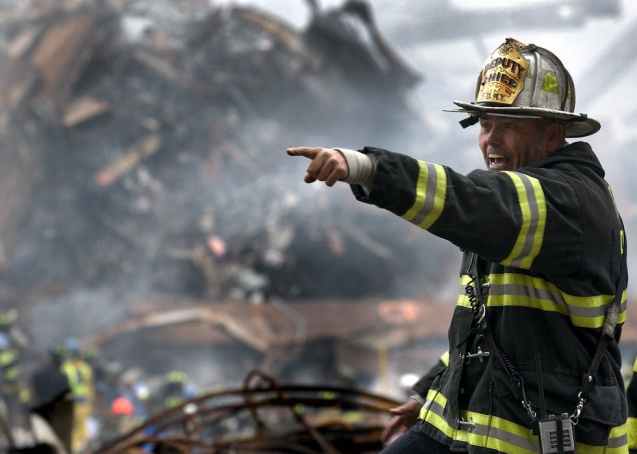
firemanThe last few months have been rough around the world, maybe it’s always like this, but it seems as though there are different natural disasters every week. Hurricanes, earthquakes, volcanos, tsunamis, etc. It can be overwhelming. What are we called to do? How can we be as effective as possible? How can we avoid unintentionally adding to the disaster?

We all have (or should have) a natural response to help when we see people in need. Today, more than at any time in history, we can see people in need in real time. We can watch the water rising during a flood on CNN, can watch trees and houses being blown apart during a hurricane on network news, before the dust settles after an earthquake we can watch people huddled in the streets waiting for aftershocks. It’s natural to want to help; it’s part of our collective humanity to reach out in times of crisis. Please do it in the best way possible.

The people and items showing up about two weeks after any major disaster are referred to by the RedCross as the “second wave” of the disaster. People underprepared or undertrained adding to the confusion and not helping anyone. The truckloads of well-intentioned items that are sent that are not really needed, and actually take a tremendous amount of staff-hours and resources to manage. I remember hearing how, after seeing the dogs searching the rubble on 9/11, people sent semi-loads of dog food: a) dogs don’t need that much food. b) the dogs have a special diet. All of that dog food needed to be sorted, stored, managed, and redistributed. After Katrina, there were several large warehouses and thousands of staff-hours required to sort the truckloads of items sent to New Orleans. The sheer volume of used wedding dresses, old TVs, and other items of questionable urgency was overwhelming.

Right after the earthquake in Haiti several years ago, there were hundreds of people landing at the airport to “help” without the infrastructure to manage them. Many people jumped on a plane thinking they could get a hotel and then travel out to help during the day. The hotels were rubble. The transportation they were expecting didn’t exist, many of these well-meaning people just added to the crowds, confusion, and lack of food and drinking water. What was needed was first response teams with their own support, supplies, and the know-how to make a difference. I have two close friends that each hit the road to help with disasters in the last year, one to help with the volcano relief in Guatemala, one to help with the flooding in Texas and then the hurricane in Puerta Rico. They were both only effective because they went with a plan, with the needed supplies, and most importantly they partnered with on-the-ground leaders who knew how to direct them. They were a help, not a burden; they were not people that got in the way, or stretched supplies even thinner.

So what should we do in the face of natural disaster?

1) Almost all relief organizations will tell you, the best thing you can do is send funds. People often feel better offering items but if the items are not exactly what is needed it can add to the problem. Also, I know at our orphanage, we get offered items we can use all the time – if we can pick them up. Often the needed items can cost more to pick up than it would cost to purchase them locally. We appreciate the help, but funding for transportation is a huge need also. I met with one major food relief organization who told me that getting enough food donated is never a problem, the cost of the transportation and distribution is always the biggest challenge.

When you do send funds, send wisely. Do your due diligence and give to established organizations who have a solid track record of good management and effective programs. One thing that isn’t talked about with funding in disasters is: give beyond what you normally give, don’t just shift funding. It surprises most people when I tell them 9/11 almost put our orphanage out of business. We still had children to feed, medicines to purchase, etc. but almost ALL donations for about 90 days went to NewYork.

Along with the crippling drop in donations, most mission groups who make our work possible canceled their trips. We were cut off. Give generously, but continue to donate to your church, your cause, or wherever you give on a regular basis: they need you more than you might realize.

2) If you want to physically go and serve right away, go with a plan. Partnerships matter, in short-term missions, and in disaster relief. Without an on-the-ground host or hosting organization, your effort will not help, you will add to the problems. Find a church, a food bank, or some other established organization who knows the area, knows the people, and most importantly knows what the real needs are. Communicate your willingness to help, what resources you can bring to the area, and any special skills you or your team might have.

3) Plan a trip to serve a few months after the disaster. All the same rules apply about finding an on-the-ground host, but you can now address re-building needs long after the national attention has faded.

We are called to serve, we are called to be the good Samaritan in world affairs, but please do so wisely, with a plan, and partnering with people who know how to lead you to be as effective as possible.

Please share on Facebook or wherever you hang-out online.

Phil Steiner, my co-author, has a great blog also. This week, Phil also writes on the correct response to disasters and short-term missions. Check it out: philsteiner.net