No Unimportant Jobs

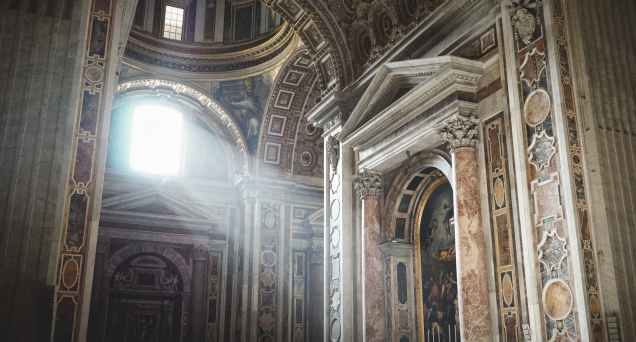
cathedralSeveral years ago, three workers building a cathedral in Europe were interviewed about their jobs. A skilled mason shared that he was responsible for adding bricks to a large wall. A painter was asked about his part, and he explained that by adding paint to the project he was protecting the masonry work from wear. The third gentleman was responsible for sweeping up and hauling away the construction rubble. This man became very excited when asked about his job and responded with great pride, “I’m building a cathedral to the glory of God that will be a beacon in the community and last for generations.” “This glorious, solid, timeless church will someday give a tiny sample of the astounding beauty and eternal strength that is our Lord.” There are no unimportant jobs, just small perspectives.

At our ministry, we frequently have groups come down to help on projects. This is how we do what we do; this is how buildings go up and are maintained, this is how our many children are fed. We always make it a point to share, with great detail, why the project the group is working on is vital to the bigger picture. If we tell them they need to dig a trench, they will dig, and the job will get done. If we share with them that the ditch is to be a footing for a new infant care building, that this building will mean the difference between life and death for tiny newborns, the trench gets dug faster, better, and with joy. Same people, same hard dirt and rock, same shovels, but when the bigger picture is exposed it changes everything.

Not everyone is called to preach from the front, not everyone is called to lead worship, but we are all called to do something. That “something” matters more in the eternal picture than we can understand from our perspective. God sees the bigger picture; God sees the efforts we put forth in the eternal perspective. Whether you’re the sound guy at your church, the lady who sets up the coffee, or part of the team handling infant care, it’s import to realize: you are building something eternal.

Most orphan care (our ministry) is either profoundly boring, frustrating, or mundane, but we know it matters significantly in the bigger picture. Each meal served is not a big deal unto itself, the extra trip to the store to buy poster-board for homework is not a grand sacrifice, but each act of service accumulates to create a safe, loving home for our many children. A safe, loving home, with all of the details and minutia that a home requires, creates healthy young adults as the years pass by.

One of our older boys, now ready to graduate from college, has been with us for most of his life. He recently became the poster boy (quite literally) for the college he attends where he is finishing his degree in forensic science. He is featured in the school’s promotional videos, and his face is on a 15-foot tall billboard advertising the school on a major intersection. He has worked very hard over the years, but he’s also had countless people help in his care for more than a decade. Sponsors who helped cover the bills, groups that came down to provide meals, the many volunteers on our staff who are there for him, have all had a part in his success. He did the work, but it was a group effort going on behind him.

We all have something to do for the Kingdom. You might be doing it already and doing a great job with it; you might still be finding your place in the grand plan that God has laid out. But please know, you matter, you are essential, you play a critical part of God’s expansive, timeless plan.

We frequently have donors apologize to us for not being able to give more. We explain to them that we appreciate any effort to bless our kids. That there is no such thing as a “small donation”, each dime that comes in is appreciated, and the cumulative effort of everyone doing their part is changing the world. The same thing applies to our acts of service, they might not seem important to us, but we have no idea the rippling impact each sacrificial act has on others. God loves us, and He rejoices when He sees us stepping out to play a seemingly small part in the body of believers, and the work going on all around us.

Bless someone today, serve a stranger today, give deeply today. Over time, these small, simple acts can change the world, and us, into something better. Go and build a cathedral, one brick at a time.

In Missions, Eat Where the Locals Eat

54255644_sIn our area of Baja Mexico, every tourist thinks they need to visit Puerto Nuevo, a local cluster of touristy, mediocre restaurants and kitschy knickknack stores all designed to suck the money out of people on vacation. A local would NEVER eat or hang out there unless they worked in one of these tacky restaurants. I think most areas have these: San Francisco has Pier 39, New York has Times Square, Chicago has Navy Pier. It’s part of the travel experience to go, take the selfie, and say you’ve been there. 

If you want to experience a city, country, or culture, find a local. Most people who live in Baja know the wonderful hidden restaurants, the amazing unexpected views, the great weekly farmer’s markets, etc. This is true of anywhere; until you’ve lived in an area for an extended time, you just don’t know the best places to go and how to get there. You don’t know the cultural ins and outs. Find a guide, find a friend of a friend who is willing to show you where to go and what to avoid.

In short-term missions, finding the correct guide can make or break your trip. You don’t know what to do, where to go, and most importantly: you don’t know what you don’t know.

Many (many) years ago, I was on a short-term mission trip to help at a sizeable evangelistic outreach/conference in Sydney Australia. There was a host church, and we were each given a contact in case we needed anything. I was paired up with a youth pastor who asked me during the conference lunch break what I wanted to do. Without really thinking it through I told him, “What would you do if I wasn’t here?” BEST-MOVE-EVER. He yelled across the hall for a bunch of teens from his youth group, we all jumped in a van, and went straight to a local pub. They proceed to order a round of beers for everyone while we decided what to have for lunch. I was able to blend into the local crowd, listen to what was going on, and experience the non-touristy local culture. I had also never gone out drinking with a youth group before.

The best part of hanging out in a pub with the youth group was being a fly on the wall to observe how their faith played out in action, not at a conference, not at an outreach; it was just life. We had some great discussions, and I learned a lot about the culture and their views on a wide range of faith issues. It was the best part of my trip. If I had flinched at going to a pub and hoisting a pint, (something I wouldn’t normally do at home), I would have missed out on something very profound.

Too often, in missions, we think we’re the ones bringing everything to the table, we know how things should be, that we are there to save the world. If we go into missions with this attitude we will fail miserably; I see it happen all the time. Humility is a big deal in missions, and in life. It’s so much better to go into missions knowing that you don’t know everything, knowing you need to partner with people who know what to do and how to do it.

By finding a local church, ministry, or hosting team, you can learn more, do more, and have more of an impact than you would in ten short-term missions trips on your own. You need a guide, a local, someone to show you the ropes. You might be from a country where culturally it’s okay for a Christian to have a beer in public (like Australia) but if you went to a bar in Ghana your ministry trip would be over quickly, and you’d never be invited back. You need to know how to “be all things to all people.” I’m not saying you should compromise your standards, but finding someone to guide you into a cultural balance goes a long way towards learning about others, being accepted by others, and opening doors for you to be able to share with others.

My team here in Mexico hosts a lot of short-term mission groups. We spend a great deal of our time educating the groups about the local culture, what to say, how to act, and what to expect. “Yes, your yoga pants might be fine at home, but here, they’re fairly offensive.” “I know your evangelistic drama has worked before, but our town has seen it twelve times this year, and our local church performs it better than you do.” In spite of the few entitled or know-it-all groups, we genuinely do love our groups, and most of them are great. We love helping them be as effective as possible, we love guiding them in the right direction, and we love seeing their lives changed through their experiences while they’re with us.

If you’re thinking of organizing a short-term missions trip, find a host or guide that knows what they’re doing. If you have a host or guide in a destination country listen to them, ask them questions, allow them to help you be as effective as possible. Your trip will be better, your team will get more out of it, and everyone will leave enriched from the experience. (and you might get invited to a local pub.)

Please share on Facebook or wherever you hang-out online. Thanks.

If you would like to receive this blog in your e-mail each Monday, please click “follow” above.

“I’d Rather Help Kids in America.”

colorchildIt doesn’t happen often, but now and then, people have an odd reaction when they hear that I work at an orphanage in Mexico. They say, “I’d rather help kids in America.” This statement brings up so many uncomfortable and unhealthy issues. The snarky side of me really wants to say, “Great, what are you doing for kids in America?” I can almost guarantee they aren’t doing anything for anybody.
The idea that we should only help people in our own country goes against everything Jesus taught. We are called to help wherever there is a need. The fact that mankind has set up arbitrary lines and fences across land masses doesn’t change the fact that there are needs everywhere. When I get asked, “Why Mexico?” my response is, “This is where my feeble efforts can have more of an impact.” In much of the US, children in need have a variety of safety nets, both private and government run. In most of the world, kids fall through the cracks. The other reason I like serving here is “return on investment,” a small donation in the US can help, the same amount used in poorer countries can dramatically change lives. We need to be helping wherever we feel called, and where we can have the most significant impact.

The bigger question about where and who to serve is, in-spite of our first reaction, what’s the difference? More and more, it’s becoming a little “gray” as to what nationality is. I don’t want to go down the road of the current immigration debate, but it’s not always clear where a child should be. Questions of nationality are not always easily figured out.

Although our children’s home operates in Mexico, we sometimes find that a child in our care is, in reality, a legal American citizen who wound up in Mexico. It’s always interesting to see the reaction to that, both from the child and from others who find out. It shifts identity, expectations, and entitlement. We are in large part defined by our history; it’s who we are. Our heritage also identifies us, it’s where we come from. But sometimes it’s hard to pin down. A child born in the US to someone undocumented is legally a US citizen; it’s in our constitution. If the parent winds up back in Mexico for whatever reason, what should that child’s nationality be considered? They are legal US citizens with all of the rights and privileges that brings; they are also Mexican by blood. But why should that matter if the child is in need?

Years ago, we received a cute little blond-haired, blue-eyed, little boy. Wow, the drama that caused. He was an American, born outside of Chicago, abandoned by a parent on drugs with a neighbor here in Baja. It was interesting to see and listen to the reactions people had. We had a few American children in our home at the time but because this one child was “white” people went crazy. Someone called Child Protective Serves in the US, a network news crew showed up, it was a big deal. We kept asking ourselves, “Why is this child more deserving of attention just because of his skin tone?” “Why is everyone stepping over other needy children to get to this one with blue eyes?” We know the answers, but it’s still frustrating. Because of the attention this one child received, within 30 days he was placed with a family in Southern California. A child going back to the US almost never happens, and never quickly. This little boy just happened to win the genetic lottery. Why are the other children not deserving of a healthy loving home?

Ultimately, we are all the same family. The plot of dirt we happen to be born on should not impact whether or not we’re deserving of help, opportunities, and people who care for us. I’m not blind to the differences between countries, but if we share one Heavenly Father, aren’t we all by definition one family? If we have the right perspective, if we see the bigger picture, we need to be working to balance the scales. We need to raise children up, wherever they’re from, with opportunities to grow, learn, and become all that God has laid out for them to be.

Should we be helping kids in America? Sure. We should also be helping wherever there is a child in need, wherever there is an injustice, wherever God is looking down and asking, “Who will help this child of mine?”

Matthew 25:40 “Truly I tell you, whatever you did for one of the least of these brothers and sisters of mine, you did for me.”

Please share on Facebook or wherever you hang-out online. Thanks.

If you would like to receive this blog in your e-mail each Monday, please click “follow” above.

Baptism in Mud

Screen Shot 2018-09-010.jpgI really love baptisms. Every Easter our local church, along with a few other ministries, hold a community baptism. BEST DAY OF THE YEAR. Some people live for Christmas; some people count the days to Thanksgiving. But Easter is the reason our faith exists; it celebrates the day Jesus broke death and rose from the tomb. Combine the profound depth of Easter, with the power of people making the commitment of Baptism, and it doesn’t get better. I look forward to Easter all year.

Although I’m involved in a lot of ministry, the high point of my year is helping the local pastor baptize people. Standing in the water and leaning people back as the water washes over them, marking them as clean before GOD, ushering in that new beginning is monumental. My feeble scribblings do not give justice to this act that has been going on since John the Baptist stood in the River Jordan.

One year, the baptisms didn’t go the way I thought they would. The crowd had gathered at our local lagoon, a wide spot in the local river that even looked biblical that day. The reeds were tall and softly waving in the wind, the sun was bouncing off the grass around the edges of the water. The brown hills framed all this in the background, it felt and looked like John the Baptist himself might wander out to join in the proceedings. The perfect day.

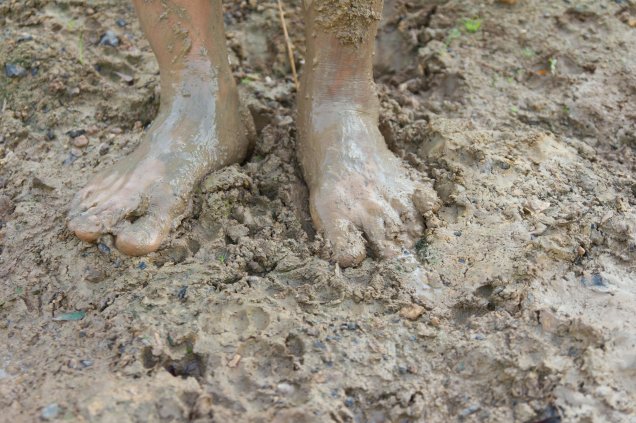
As we got started, our pastor helped one of the other missionaries in the area baptize about six people from another ministry. I stood by the edge assisting people into the soft mud as they walked into the water, afterword I was handing them towels as they came out. I was expectantly waiting for my cue to join our pastor to baptize the people from our church and the children from our orphanage who were taking this step of faith. As the transition was supposed to happen something went wrong, the other missionary stayed out there, and the people from our church started to wander out to be baptized. The transition wasn’t happening for me to go out to help in the water. I soon came to the realization that it was not going to happen.

First I was frustrated, then I was angry. For a few minutes I thought about just wandering out into the water, but I knew it would be awkward. So I just stood in the mud smiling stupidly as I held the hand of each person walking into the lagoon for their life-altering event. I continued to hand them their towels as I was battling my frustration on the inside. “But wait, I’m supposed to be out there!” This was not going as I had envisioned. My Easter was ruined. (I’m a little dense.)

Over the next thirty minutes or so nothing changed on the outside, I was just standing in the mud helping people in and out of the water, but something changed for me on the inside. God knew I needed to spend some time in the mud, and He had planned this day long before I was born. As I watched each person receive this joy into their lives, I started to receive it also. As God was moving through that day, I had to repent of my own enormous pride. Why did I need to be out there in the water? Why did I need to be the person dunking? I told myself it was about the act, but I started to realize it was a little (or a lot) about me, and me being the one doing it. (Once again, I’m a little dense.) I realized my place that day was not the baptizer, I was called to be the one serving the ones being baptized by standing in the mud. I was just there to back up the pastor and help the people being baptized. It changed me.

Many people want to go into ministry. They want to teach, they want to lead worship, they want to be the one up front leading people into a deeper walk with God. There is nothing wrong with that if that is where you’re called. But some people are called to stand in the mud.

Not a lot of people have the dream of someday becoming the sound man. People usually aren’t fighting to handle day-care sign-ins, putting together the bulletin is not an “in demand” position. If you look at what Jesus taught, the “lower” positions in the church should have a long line of people fighting for those jobs. We are called to serve. We are called to do the jobs no one wants, we are called to foot washing. Jesus spoke directly against the leaders of the day exalting in their important positions. It’s easy to think, “Well, those Pharisees were jerks, didn’t they see what they were doing?” How many of us are modern day Pharisees working in ministry for the wrong motivations?

Wherever we stand in the Family of God, it’s important to examine our hearts, our attitudes, our entitlement. We need to daily ask ourselves if we’re being shaped into the example Jesus gave of humble service to others. We need to find and maintain that elusive servant’s heart. Sometimes we need to be baptized in mud.