What is an Orphan?

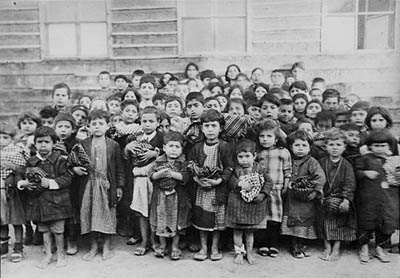
Armenian_orphans_in_Aleppo_collected_from_Arabs_by_Karen_Jeppe

What is the definition of orphan? I know this sounds pretty straightforward but depending on who you talk to the definition of what an orphan is can vary widely. Most people assume that an orphan is a child that has no parents. But orphan can also define many other situations where the child might have a parent or two; they just aren’t around to care for the child. Both UNICEF and World Vision define an orphan as a child who has lost one or both parents.

I, along with an exceptional team, run a large orphanage. We care for about 120 children from newborn up through adulthood in a family like setting. The bulk of our children are not technically orphans in the traditional sense; this sometimes surprises people. “If they’re not an orphan, why are they in your home?” Well, it gets complicated.

If a parent or parents are in prison, rehab, or some other institutional situation where they can’t care for their child, the child needs to go somewhere. Frequently there is no extended family available or willing to care for the thousands of children whose parents are no longer in their lives. These children are technically not “orphans” but still need a home. Of the children in our care, 70% will never see blood relatives again. The parents might be out there somewhere; it’s just that reunification is impossible. We are big fans of adoption, but it’s not a reality for most children. Because there are still parents somewhere, the children are older, or there are siblings in the picture, adoptions are pretty rare.

Some children are brought to us due to severe abuse or neglect. Some have gone through things that would rip your heart out if I were to detail them here. Even though they have been removed from a home situation for their protection, they still technically have parents and are not “orphans.” They need to be cared for, counseled, and brought to a place of healing.

Occasionally a woman will give birth and for any number of reasons decide to abandon that child. The mother might be too young, they might have hidden the pregnancy, or they don’t want to acknowledge it, they might be going through some deep psychological issues. For whatever reason, in any society, a percentage of infants are abandoned by their parents. Once again these children are not technically orphans, they have parents somewhere. These abandoned children need to be cared for and raised in a way to show them how valuable they are. They need to be shown that they are not a mistake or just something to be thrown away. Being abandoned at that level leaves some deep scars.

The work of orphan care is rarely black-and-white, there are a vast amount of gray areas that we work in every day. Many people accuse orphanages of breaking up families just for the sake of filling their dorms. I’m not saying some orphanages haven’t done this, or even continue to do this, but in my experience, it’s less frequent than some people would lead you to believe.

Most of our children are referred to us by social workers just like they would be assigned to foster care families in the US, but occasionally a child will be brought to us by a parent asking us to take their child. We will do everything in our power to keep the family together. Whether it’s counseling, short-term financial help, housing, etc. we fight to keep families together. We’ve even gone so far as hiring qualified single mothers so that they could stay here with their children in a safe place. We feel a healthy family is without a doubt the very best option for a child. Unfortunately, for many children, the family option is not on the table.

So why this rambling explanation of the difficulties of defining an orphan? I just wanted to bring up the idea that orphan care can be very nuanced, complicated, and it can be hard to peg down solid answers. Orphaned and abandoned children don’t fit into our preconceived boxes. In any ministry, there are Solomon like judgment calls made frequently. What is your definition of homeless? What is your definition of a “special needs” child? Words and definitions matter a great deal, but the realities are people are messy, and we need to meet them where they are. We are all on a sliding scale of messed up. Just because a child doesn’t fit our exact definition of orphan, doesn’t mean they don’t have needs. Too many children in this world are desperate for a place to call home, filled with people who genuinely care about them.

In orphan care, we need to see each child as God sees us. God sees each one of us as individuals with needs, desires, and profound pains that are uniquely our own. Psalm 68:5 says, “Father of the fatherless and protector of widows, is God in his holy habitation.” God cares deeply for each one of his children. He cares so deeply for us; we should also care for those lost children all around us, whether it’s a true orphan, an abandoned child, or the lonely child next door or in our church. There are more “orphans” among us than we might realize: act accordingly.

Please share on Facebook or wherever you spend time online.
Orphans Are A Big Deal To God

pexels-photo-798096Anyone who works with orphaned or abandoned children can quote James 1:27 by heart: “Religion that God our Father accepts as pure and faultless is this: to look after orphans and widows in their distress and to keep oneself from being polluted by the world.” It’s the go-to verse whenever one is teaching or sharing about orphan care. But references to orphans, and God’s heart for the orphan, are sprinkled throughout the Bible. If we want to care about the things that are important to God, orphans and orphan care need to be in that mix.
Below are a few biblical themes that come up often regarding orphans:

God has deep compassion for orphans: Hosea 14:3 “For in You the fatherless find compassion.” Psalm 68:5 “Father of the fatherless and protector of widows, is God in his holy habitation.” There are verses throughout the Bible that teach us that God has great compassion for the fatherless. He has profound and endless love for His children. He hurts for those who are hurting and seeks to comfort them. Biblically, it is clear that caring for orphans is close to the heart of God. His heart is with the outcast, those that society looks down on. Our God is one of profound compassion.

God seeks justice for orphans: Isaiah 1:17 “Learn to do right! Seek justice, encourage the oppressed. Defend the cause of the fatherless, plead the case of the widow.” We live in a broken world. There are great injustices in this world and there will be until we die. Different forms of abuse, corruption, and abandoned children are just a few of the many unjust issues that are so common. We are surrounded by so much pain that it’s easy to become blind to it. God is not. As painful as it might be, we cannot live in denial to the vile things that go on all around us. If we are walking with our Lord, we need to be defending those in need, the fatherless, those who can not defend themselves. Justice is a fundamental part of God’s character. He seeks to correct injustices and we are called to do the same. Psalm 82:3-4 “Defend the weak and the fatherless; uphold the cause of the poor and the oppressed. Rescue the weak and the needy; deliver them from the hand of the wicked.”

God’s people Share Their Resources with Orphans: Deuteronomy 10:18 “He defends the cause of the fatherless and the widow, and loves the alien, giving him food and clothing.” Deuteronomy 14:29 “And the Levite, because he has no portion or inheritance with you, and the sojourner, the fatherless, and the widow, who are within your towns, shall come and eat and be filled, that the Lord your God may bless you in all the work of your hands that you do.” We are called to give to others. We can not get around this one. Most people reading this have been richly blessed financially, and we need to be acutely aware that all this blessing isn’t ours. The riches we have are God’s, and we have a responsibility to use them for His glory and His work. I’m a big believer in having a “diversified portfolio” of giving. Yes, give to the church, but then spread the funds around to causes that matter to God. There are well-run organizations around the world who know how to use what little they have to create great impact for the Kingdom, and orphan care. Seek out responsible, well run organizations and back them. Money is like cow manure, spread it around and it can do some good, just stack it up and it really stinks.

God has adopted us into His Family, He wants us to do the same for others. John 14:18 “I will not leave you as orphans; I will come to you.” We have the incredible privilege to call God our Father. Through nothing we have done, other than accept this gift, we have been adopted into His family, and the family of believers. We have been given a Heavenly Father and countless brothers and sister in this world. By being adopted into this grand family, we are part of something richer and more profound than anything we can imagine. For an orphan or abandoned child, they know they are alone in this world, and they hurt to belong to a family. We might not think we could ever actually adopt a child, but it is something to consider. There is no greater gift we can give to another person than adopting them into our family. God has done this for us. If we can, we need to pay it forward. If we can’t adopt, we can help those who have or are adopting.

Orphan care is near to the heart of God. As we grow in our relationship with Him, we begin to take on His image. As we grow in our faith, our compassion for those hurting around us needs to grow. Our compassion for the abandoned, and caring for the orphaned and abandoned around us is a natural progression of our faith. Find your way to care for orphans. It’s important to God, it needs to be important to us.

Please share on Facebook or wherever you hang-out online.

“It’s Good Enough For Orphans.”

asia_children_joy_life_missions_myanmar_orphans_people-1174482-jpgd.jpegOver the years, I like to think I’ve become a patient man, my wife might disagree, but I still like to believe that I’ve mellowed. A few comments can still get me angry to the point that I reach for my blood pressure meds: “It’s good enough for Mexico,” or the more offensive “It’s good enough for an orphanage.” Or the similar thought process that’s the absolute most offensive: “It’s good enough for orphans.” There are times that behind my smiling facade, I want to punch someone.

There are a lot of definitions of “orphan” in the child care field: a child with no living relatives, a child that’s been abandoned, or a child that’s been removed from parents that are so abusive they’ve lost all parental rights. The common tragedy in all of this is a child who is alone in this world. Depending on who you talk to, and how the statistics are put together, there are around 150 million orphaned or abandoned children somewhere in the world. There is an astounding amount of need out there.

I only share these statistics to show the breadth and depth of the problem. It’s a broken world with a lot of messed up people, and there are a LOT of hurting kids out there. One of the problems is when you reduce orphans to a number it stops being a hurt, scared, child in need and becomes a figure on a spreadsheet or just another blog post. You can look at the big picture, but we as a church and individuals need to see the life of each individual child in need as a tragedy that needs to be addressed. Each abandoned child had his or her own story, needs, and horrible situations that have played out, and they are suffering because of it. They are not numbers in a system. They are precious children, created in God’s image, that society has failed to care for.

Most orphanages and foster care situations are fairly sad or outright horrible. There might be some great people involved, but they are frequently undertrained, underfunded, and under-appreciated. When people visit our home for the first time, the reaction is pretty predictable: “This place is great, it looks like Disneyland.” I’m not saying this to show how great we are; I’m saying this to show what low expectations people have of orphanages. So many orphanages are sad and depressing places that society has come to expect them to be bad. Sadly, society has also come to accept that an orphanage and foster care situation has to be less than it should be. We need to do better. We need a higher standard.

At our orphanage, we host a great number of short-term mission groups every year. We’ve seen the best and worst of teams. We can tell very quickly what the attitude of the group is, and how much thought went into their trip. There is one visiting group that has never donated funding, but we love to have them visit because of the way they love our kids. They perform dramas and run activities that draw our kids in, and shows them how important they are. You can tell this group wants to minister at a level that’s incredible, practiced, and worthy of our kids. We also have the groups that buy the ready-made craft from the back of a Sunday school supplies catalog and they just don’t care when they’re here. By their actions and attitudes, they are clearly saying: “It’s good enough for orphans.”

Once, I was speaking at a Rotary Club and during the “question and answer” time, I was asked by someone “How nice should an orphanage be?” You could tell by his tone that he thought our orphanage was a little too nice. I probably answered harsher than should have by replying: “Well, if you got hit and killed by a semi later today, how nice of a home would you like your children placed into?” By mentally placing our own kids into an orphanage, it brings into sharp focus the level of quality our work with orphans should have.

As Christians, whatever we do should be of the highest quality, especially orphan care. It’s not that we’re earning favor with God, it’s that we’re representing and serving our King. Jesus wasn’t kidding when He said, “Whatever you do to the least of these you do unto Me.” What are we offering our King?

Biblically it’s clear that the church, and individuals in the church, have a responsibility to care for orphans: James 1:27. “Religion that God our Father accepts as pure and faultless is this: to look after orphans and widows in their distress…” We have this example and mandate. Some churches do a GREAT job of seeking out and caring for the lost. I’ve encountered churches that are known for their culture of orphan care, foster care, and adoption. I recently spoke at a church gathering where over half the people present had either adopted children or been adopted, by someone in the church. All churches should be known as “The ones who care for orphans.”

Nobody is perfect. No ministry or individual is always going to get it right every time. But whether it’s serving in our community, or during a mission trip, it needs to be done with quality. We need to look at how we care for orphans and widows. We need to ask ourselves if we are saying with our attitudes and actions: “It’s good enough for orphans.”

Please share on Facebook or wherever you hang-out online.

Orphan Care is a Short-Term Gig

pexels-photo-167300When caring for children at risk, children who are abandoned or orphaned, it’s important to realize it’s just for a season. You need to know that, for many reasons, children you’re caring for are going to leave. We need to be ready for it, and we need to help them be ready for it.

Frequently children leave your care to go into questionable situations, and it will rip your heart out. Sometimes we initiate the change; usually it’s outside influences. Sometime they will head into great situations, some not so great. As people who are called to serve children, we need to realize the time we have with the children in our care is frequently shorter than it should be, and that time is precious. “Normal” parents have at least eighteen years to speak into a child’s life; we don’t have that luxury. The short time we have with these children will impact them the rest of their lives.

I have been in orphan care for almost 25 years. I still remember my first year, when the team here decided that we needed to kick a teen boy, Raul, out of the orphanage. Think about that for a minute: a child who’s already been abandoned, we were going to remove from what I thought we were building as the last refuge. This teen boy had become so rebellious, and such a danger to the other children and staff, that we needed to remove him from our home. We tried every form of discipline and professional counseling we could, but nothing broke through. His tearful pleading for “one last chance” as he was being taken away to a smaller, stricter orphanage will be burned into my memory forever. His departure tore me up for weeks.

About five years ago a 15-year-old girl, Maria, who had been in our care for several years was returned to her mother. We didn’t feel great about it, nor did Maria, but we didn’t have a say in the matter. All we could do was watch her leave and hope and pray that the social worker made the right decision.

Recently, two wonderful young girls were returned by our government social worker to their parents. We did not believe for a moment this was a good thing. For a number of reasons we did not feel this was the right decision, but the social workers had completed home visits and felt it was right to return these girls to their family. The girls had shared with us the horrible treatment they had received in their home and when the parents visited we could see it was just an unhealthy situation. It was VERY frustrating, and several of our staff were very upset, but you can only do what you can do.

It can be a long hard battle as we fight for what’s best for a child. Ask anyone who works in foster care about the frustrations experienced as children are moved around and often placed back with unstable or questionable family. Don’t get me wrong, when it’s a healthy situation I am 100% in favor of the family reunification. But frequently these are Solomon like decisions made by well-meaning but fallible people. When the decision is right it’s great; when the decision is wrong, it places children in harm’s way.

All we can do is plant the seeds, pray over our children, and hope for the best. Whether it’s our biological children that get married and move on when they become adults, or a temporary care situation and the child leaves us when they are much younger, their future is not in our control. All we can do is give them tools they will need to make healthy decisions. We need to show them how to handle the incredible challenges that life will place in their paths. They, like us, are in God’s hands.

About ten years after we “kicked Raul out,” he dropped by for a visit. We had lost track of him and assumed we would never see him again. But, the time he spent with us had a deep and positive impact on his life. He came back with his wife and two children to show them where he had spent several years and to introduce us. We had a long talk, and he shared that he now understands why he needed to be moved. He also now felt it was the best decision we could have made for his life. It was hard, but it was a wake-up call for him. It turned his life around, and he was now doing well with a family of his own.

A few weeks ago Maria got in contact with us, and we went out to lunch. We were right about her mom. Maria’s mother ignored her, never put her in school, and spent most of her time drinking and partying. After several months with mom Maria went with dad, who was no better. But, Maria remembered what she had been taught. She is now on her own, doing well, active in a church, and is planning her wedding. The seeds we planted took root.

There is a point to this rambling blog. What we do in child care, while we can, matters more than we know. Not all stories have happy endings. Most of the time we will never know about the lives of the children once they leave us. But when it works, the moments when we emotionally connect with a child, the time we spend listening to them, the examples we set changes lives. Use what little time you have as the precious gift it is.

“Religion that God our Father accepts as pure and faultless is this: to look after orphans and widows in their distress…” James 1:27

(Names were changed to protect the privacy of people mentioned here.)

Please share on Faceook or wherever you hangout on line.