
Avoid Turkeys In Your Life

TurkeysSeveral years ago there was a popular bumper sticker that said: “It’s hard to soar with eagles when you’re surrounded by turkeys.” Although it was meant as a joke, there is actually a great deal of truth in those few words. Who you surround yourself with has a significant impact on everything you do. Choose carefully who you spend your time with, and who is on your team. In missions, in orphan care, and in life, quality people make the difference.

I run a large orphanage in Baja Mexico together with an exceptional team. Everyone on our team gets one day off a week to get out and do whatever they want. Shopping, beach, whatever they feel they need to recharge their batteries for the non-stop work around here. Recently, a young man on our team, who typically never took his day off, started to disappear every Monday. Him going away isn’t a problem, but it became VERY regular for the exact same hours. I got kind of curious and asked him about it. It turns out, on his one day off from the work at our orphanage, he found a second orphanage caring for children rescued out of sex trafficking in Tijuana. So, on his one day off, he chose to help even more kids, in even rougher situations. I LOVE the quality and character of the members of our team. Every single one of them are humble servants.

Over the years we’ve had a considerable number of people join our staff for an extended time of six months or longer (usually much longer). We always make a focused effort to carefully get to know the person and have them spend some time here so we can watch them. We also perform several background checks before anyone gets the privilege of being part of what we do. This surprises a lot of people since these are volunteer positions. Think about that. We ask people to find their own support, and give up their plans for a chunk of their lives, to serve the children in our care. Most people assume we’ll take whoever we can get, but we turn away a lot of people.

“Wait a minute, you depend on volunteers, but you turn volunteers away?” Absolutely, some people bring more headaches than blessings. There is nothing more costly and stress-inducing than a bad volunteer. I have what I refer to as my “caller ID scale”: When a name pops up on my caller ID, and my first response is “cool,” that’s someone I want in my life. If caller ID pops up of someone I work with, and my first thought is “oh cr-p, what now,” is that person bringing blessing or stress? The minute you read the last sentence I’m sure a few people in your life came to mind. Our lives are better if most of the people we work and serve with are quality people who bring joy.

So who should you surround yourself with? Who should be on your team? Here are a few things to consider:

Do they accept when they’ve been wrong, or do they shift the blame to someone else? If someone owns their mistakes and learns from them, they bring peace to a situation and not drama. Adam in the garden was the first human to shift the blame: “She made me do it.” Man has been shifting blame (and blaming women) for all their problems ever since that day.

Do they have a servants heart? Jesus was the perfect servant, always looking to bless and encourage those around Him. We need more people in our lives that are ready to serve just because it’s the right thing to do, it honors God, and it brings joy.

Do they have a positive attitude? God is in control. God can use all things. If a person is always negative, always pointing out flaws, always expecting the worst, they do not have an accurate idea of who God is. They are also hard to be around.

The bottom line is are they humble. Humble is not putting yourself down, it’s not thinking of yourself at all. Humility focuses on building others up, serving others, and seeking to give God all the glory. Humility is not expecting anything in return for service and finding joy in other people receiving the blessing. Humility is a big deal, none of us get it right, but we need people in our lives who try.

Jesus spent time selecting the twelve that he would work with. He spent a great deal of time in prayer and knew who He was looking for. He worked with and taught everyone who came along but His inner circle was different, select, just the right ones. The twelve He selected weren’t perfect (some far from perfect) but He knew who He wanted on His team. Not a single apostle was an accident or just the first who showed up.

In missions, ministry, or almost any area of life, your team is a big deal. Yes, God can use anyone, but if you have the privilege of selecting your team, please do so with care. Nothing will impact your success or failure more in missions, and in life, than who you’re working with. You are only as good as the people you are partnering with, in any endeavor. Choose wisely, fly with eagles, avoid the turkeys.

Please share on Facebook or wherever you hang-out online.
You Have a Greater Impact Than You Think

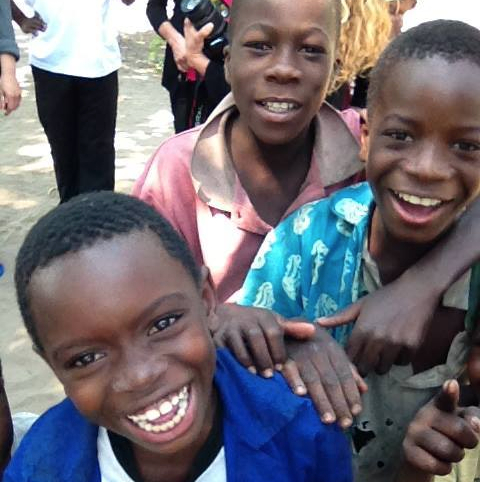
Africa3When you’re traveling on a short-term mission trip, how you’re perceived might be very different than you might imagine. Being accurately self-aware is difficult and very few people get it right. You have an image of yourself and who you are, other people have an entirely different image of you, and what you can do. Until we come to a closer understanding of how people actually see us, it’s hard to build relationships and move past the polite niceties of life.
Years ago, I was visiting West Africa with my wife and a small team helping with staff training at an orphanage in Ghana. About an hour from the orphanage was a small grade school that had been, in large part, funded by a friend of ours from the United States. Our friend had asked us to stop by the school to say “Hi”, and to see how they were doing. It didn’t seem like that big of a deal. As is often the case in short-term missions, what we envisioned or intended turned out to be vastly different than what happened.

We had scheduled our “down day” from the work at the orphanage and had called the school to ask permission to come by in the morning to visit. Not a big deal, we thought we would meet with a teacher or two, maybe shake hands with the director, and hit the road. Yikes, were we wrong. When we pulled up, it looked like they had some traditional festival going on. We quickly found out that the “festival” was because some FRIENDS of the guy who funded the place were dropping by. They had suspended classes and put together a program with a few speeches honoring our visit; then each class performed a traditional dance for the benefit of our small team. After the dances they brought out some cookies and a few cokes for us as refreshments. It was a heart-warming, special time. It was also wildly awkward. We were nobody, we hadn’t done anything, but they shut the school down for us for the day. Afterward, it led to some great discussions and a lot of soul-searching among our team.

Money, or the perception of money, changes everything. In hindsight, we realized us showing up to that school was like Bill Gates and Warren Buffet (two of the richest people in the world) stopping by for dinner. Our team collectively was fairly broke, but in the eyes of the people at the school, we were wealthy beyond their imagination. Just the idea that we could pay to travel halfway around the world was a mind-boggling amount of money for them. We wanted to have a real conversation with the school director, but we could tell right away that it was just too weird all around. She was too intimidated by our perceived wealth and connections; she was too afraid to offend, the relationship was just out of balance. We did everything we could to tell them we were nobodies but it just wasn’t going to work.

We need to think about what our impact is in missions by just being present, for good or bad. We assume just showing up and watching might have no impact, but as we saw happen at the school, our visit might have wildly unintended consequences.

Here at our orphanage, we hold Sunday service on site in our small chapel. The service is kid-focused and a special, set-aside time for our family here in our home. We have a lot of visiting groups, and they’re sometimes surprised when they find out they’re not allowed in our service. “But we just want to watch and experience it.” OK, but if we add 10, 20, 30 Americans to our service, it just becomes a show for the American teams. It shifts the focus from our kids, and God, to a cultural presentation for our visitors. Not our goal.

We love our groups; we love when they visit, but for the good of the children in our home we need to maintain boundaries. If a group wants to experience a local service that’s great, we just send them to one of the many local churches in our area. We know their presence will change the dynamic of the local church service, but we’ve talked to the local pastors, and they’re fine with the groups joining in. The groups are welcome there. But the reality is they will change the “feel” of the service just by being present as foreigners. Foreigners that are perceived as being financially wealthy and well connected.

Short-term missions are important. Organizations around the world need help and want teams to come. I’m a huge advocate for short-term missions, and the powerful changes trips can bring into the lives of all those involved, both the teams going and the teams hosting. But it’s so important to do it in as healthy a way as possible.

We need to serve with humility, to serve with sensitivity, and to serve in a way that has as positive an impact as possible. Place yourself into the minds of the people you will be visiting, imagine the impact. Seek to be self-aware, to understand how people view you and be aware of how you are perceived. To be empathetic to others, to understand what they are experiencing, is one of the first steps to effective ministry.

Please share on Facebook or where you hang-out online.

You can receive these articles in your e-mail each Monday by signing up to “follow”

Orphans Are A Big Deal To God

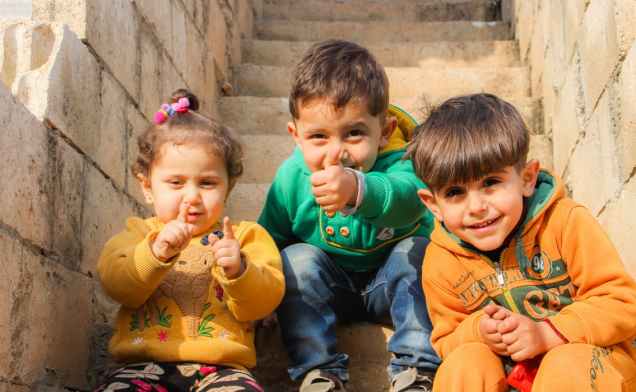
pexels-photo-798096Anyone who works with orphaned or abandoned children can quote James 1:27 by heart: “Religion that God our Father accepts as pure and faultless is this: to look after orphans and widows in their distress and to keep oneself from being polluted by the world.” It’s the go-to verse whenever one is teaching or sharing about orphan care. But references to orphans, and God’s heart for the orphan, are sprinkled throughout the Bible. If we want to care about the things that are important to God, orphans and orphan care need to be in that mix.
Below are a few biblical themes that come up often regarding orphans:

God has deep compassion for orphans: Hosea 14:3 “For in You the fatherless find compassion.” Psalm 68:5 “Father of the fatherless and protector of widows, is God in his holy habitation.” There are verses throughout the Bible that teach us that God has great compassion for the fatherless. He has profound and endless love for His children. He hurts for those who are hurting and seeks to comfort them. Biblically, it is clear that caring for orphans is close to the heart of God. His heart is with the outcast, those that society looks down on. Our God is one of profound compassion.

God seeks justice for orphans: Isaiah 1:17 “Learn to do right! Seek justice, encourage the oppressed. Defend the cause of the fatherless, plead the case of the widow.” We live in a broken world. There are great injustices in this world and there will be until we die. Different forms of abuse, corruption, and abandoned children are just a few of the many unjust issues that are so common. We are surrounded by so much pain that it’s easy to become blind to it. God is not. As painful as it might be, we cannot live in denial to the vile things that go on all around us. If we are walking with our Lord, we need to be defending those in need, the fatherless, those who can not defend themselves. Justice is a fundamental part of God’s character. He seeks to correct injustices and we are called to do the same. Psalm 82:3-4 “Defend the weak and the fatherless; uphold the cause of the poor and the oppressed. Rescue the weak and the needy; deliver them from the hand of the wicked.”

God’s people Share Their Resources with Orphans: Deuteronomy 10:18 “He defends the cause of the fatherless and the widow, and loves the alien, giving him food and clothing.” Deuteronomy 14:29 “And the Levite, because he has no portion or inheritance with you, and the sojourner, the fatherless, and the widow, who are within your towns, shall come and eat and be filled, that the Lord your God may bless you in all the work of your hands that you do.” We are called to give to others. We can not get around this one. Most people reading this have been richly blessed financially, and we need to be acutely aware that all this blessing isn’t ours. The riches we have are God’s, and we have a responsibility to use them for His glory and His work. I’m a big believer in having a “diversified portfolio” of giving. Yes, give to the church, but then spread the funds around to causes that matter to God. There are well-run organizations around the world who know how to use what little they have to create great impact for the Kingdom, and orphan care. Seek out responsible, well run organizations and back them. Money is like cow manure, spread it around and it can do some good, just stack it up and it really stinks.

God has adopted us into His Family, He wants us to do the same for others. John 14:18 “I will not leave you as orphans; I will come to you.” We have the incredible privilege to call God our Father. Through nothing we have done, other than accept this gift, we have been adopted into His family, and the family of believers. We have been given a Heavenly Father and countless brothers and sister in this world. By being adopted into this grand family, we are part of something richer and more profound than anything we can imagine. For an orphan or abandoned child, they know they are alone in this world, and they hurt to belong to a family. We might not think we could ever actually adopt a child, but it is something to consider. There is no greater gift we can give to another person than adopting them into our family. God has done this for us. If we can, we need to pay it forward. If we can’t adopt, we can help those who have or are adopting.

Orphan care is near to the heart of God. As we grow in our relationship with Him, we begin to take on His image. As we grow in our faith, our compassion for those hurting around us needs to grow. Our compassion for the abandoned, and caring for the orphaned and abandoned around us is a natural progression of our faith. Find your way to care for orphans. It’s important to God, it needs to be important to us.

Please share on Facebook or wherever you hang-out online.

“It’s Good Enough For Orphans.”

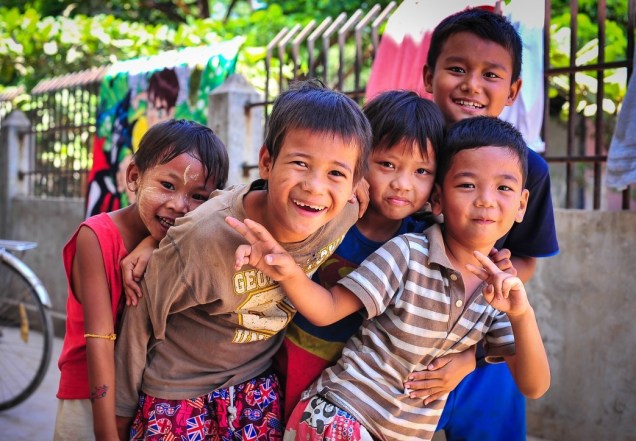
asia_children_joy_life_missions_myanmar_orphans_people-1174482-jpgd.jpegOver the years, I like to think I’ve become a patient man, my wife might disagree, but I still like to believe that I’ve mellowed. A few comments can still get me angry to the point that I reach for my blood pressure meds: “It’s good enough for Mexico,” or the more offensive “It’s good enough for an orphanage.” Or the similar thought process that’s the absolute most offensive: “It’s good enough for orphans.” There are times that behind my smiling facade, I want to punch someone.

There are a lot of definitions of “orphan” in the child care field: a child with no living relatives, a child that’s been abandoned, or a child that’s been removed from parents that are so abusive they’ve lost all parental rights. The common tragedy in all of this is a child who is alone in this world. Depending on who you talk to, and how the statistics are put together, there are around 150 million orphaned or abandoned children somewhere in the world. There is an astounding amount of need out there.

I only share these statistics to show the breadth and depth of the problem. It’s a broken world with a lot of messed up people, and there are a LOT of hurting kids out there. One of the problems is when you reduce orphans to a number it stops being a hurt, scared, child in need and becomes a figure on a spreadsheet or just another blog post. You can look at the big picture, but we as a church and individuals need to see the life of each individual child in need as a tragedy that needs to be addressed. Each abandoned child had his or her own story, needs, and horrible situations that have played out, and they are suffering because of it. They are not numbers in a system. They are precious children, created in God’s image, that society has failed to care for.

Most orphanages and foster care situations are fairly sad or outright horrible. There might be some great people involved, but they are frequently undertrained, underfunded, and under-appreciated. When people visit our home for the first time, the reaction is pretty predictable: “This place is great, it looks like Disneyland.” I’m not saying this to show how great we are; I’m saying this to show what low expectations people have of orphanages. So many orphanages are sad and depressing places that society has come to expect them to be bad. Sadly, society has also come to accept that an orphanage and foster care situation has to be less than it should be. We need to do better. We need a higher standard.

At our orphanage, we host a great number of short-term mission groups every year. We’ve seen the best and worst of teams. We can tell very quickly what the attitude of the group is, and how much thought went into their trip. There is one visiting group that has never donated funding, but we love to have them visit because of the way they love our kids. They perform dramas and run activities that draw our kids in, and shows them how important they are. You can tell this group wants to minister at a level that’s incredible, practiced, and worthy of our kids. We also have the groups that buy the ready-made craft from the back of a Sunday school supplies catalog and they just don’t care when they’re here. By their actions and attitudes, they are clearly saying: “It’s good enough for orphans.”

Once, I was speaking at a Rotary Club and during the “question and answer” time, I was asked by someone “How nice should an orphanage be?” You could tell by his tone that he thought our orphanage was a little too nice. I probably answered harsher than should have by replying: “Well, if you got hit and killed by a semi later today, how nice of a home would you like your children placed into?” By mentally placing our own kids into an orphanage, it brings into sharp focus the level of quality our work with orphans should have.

As Christians, whatever we do should be of the highest quality, especially orphan care. It’s not that we’re earning favor with God, it’s that we’re representing and serving our King. Jesus wasn’t kidding when He said, “Whatever you do to the least of these you do unto Me.” What are we offering our King?

Biblically it’s clear that the church, and individuals in the church, have a responsibility to care for orphans: James 1:27. “Religion that God our Father accepts as pure and faultless is this: to look after orphans and widows in their distress…” We have this example and mandate. Some churches do a GREAT job of seeking out and caring for the lost. I’ve encountered churches that are known for their culture of orphan care, foster care, and adoption. I recently spoke at a church gathering where over half the people present had either adopted children or been adopted, by someone in the church. All churches should be known as “The ones who care for orphans.”

Nobody is perfect. No ministry or individual is always going to get it right every time. But whether it’s serving in our community, or during a mission trip, it needs to be done with quality. We need to look at how we care for orphans and widows. We need to ask ourselves if we are saying with our attitudes and actions: “It’s good enough for orphans.”

Please share on Facebook or wherever you hang-out online.